
 Oil On CanvasWallArtDutch Golden Age Landscape
 19th Century
 80.0 x 107.0 cm
 メトロポリタン美術館
当社のアーティストが、お客様のご希望のサイズと額縁に合わせて、キャンバスに手描きで制作する油彩画です。 ( プリント版に切り替え デジタル画像販売へ切り替え)





























作品のオリジナル比率に合わせた、当店の規定サイズからお選びください。

特定のフレームやスペースに合わせて、ご希望のサイズをご入力いただけます。選択されたサイズが元の画像の比率と異なる場合、アートワークをトリミングするか、手描きで要素を追加して絵画を拡張いたします。デジタルモックアップ を制作し、制作開始前にご確認(承認)をいただきます。
画面上のプレビューは、実際のトリミングや拡張を正確に反映しているものではありません。最終的な構図は、モックアップによってのみ正確にご確認いただけます。
カスタムサイズもご利用いただけますが、元の比率を維持するためには、あらかじめ用意されたリストからサイズを選択することをお勧めいたします。

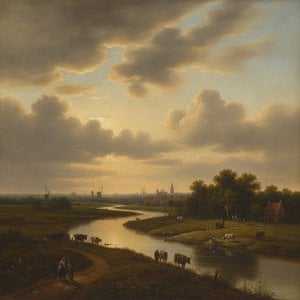
Landscape with Cattle
複製画のサイズ
Jacob van Strij’s “Landscape with Cattle” stands as a quintessential example of Dutch Golden Age landscape painting, embodying the serene beauty and meticulous observation characteristic of this artistic period. Executed in 1785 – 1800, this oil on canvas measuring 80 x 107 cm captures a tranquil rural scene that transcends mere depiction; it’s an invitation to contemplate the harmony between humanity and nature.
Initially dismissed as a Cuyp attribution due to a misleading inscription on the lower right corner—a common occurrence during the time—scholarly research has definitively established Strij's authorship. Comparisons with signed works by Cuyp revealed subtle stylistic differences, bolstering the conviction that this painting represents an independent artistic endeavor.
Strij’s approach aligns closely with the Baroque tradition yet subtly diverges from its theatrical exuberance. Like many artists of his era, he drew inspiration from the monumental landscapes of Rembrandt and Cuyp, prioritizing atmospheric perspective and tonal modulation to convey depth and realism. However, Strij eschews the dramatic contrasts favored by Cuyp, opting for softer lighting that illuminates the scene with a diffused glow—a technique particularly adept at capturing the ethereal quality of winter mornings.
The artist’s meticulous attention to detail is evident in every brushstroke. The textured surface of the canvas reflects the materiality of the pigments themselves, demonstrating Strij's mastery of oil paint and his ability to render natural forms with remarkable accuracy. Particularly noteworthy are the depictions of the cattle—their fur meticulously brushed to convey a palpable sense of warmth and vitality—and the reflections shimmering on the river’s surface.
"Landscape with Cattle" reflects the broader cultural landscape of the Dutch Republic during the Enlightenment. The painting speaks to an idealized vision of rural life, mirroring the philosophical preoccupation with simplicity and contemplation prevalent at the time. Furthermore, it embodies the fascination for scientific observation—a hallmark of the era—as evidenced by the artist’s careful rendering of geological formations and plant species.
The inclusion of a village nestled along the riverbank adds another layer of significance to the composition. This depiction harkens back to earlier Baroque landscapes that celebrated the grandeur of aristocratic estates, subtly reminding viewers of the social hierarchy inherent in Dutch society. Yet, unlike those monumental works, “Landscape with Cattle” prioritizes intimacy and immediacy—a deliberate choice that underscores Strij’s artistic sensibility.
Beyond its aesthetic merits, "Landscape with Cattle" resonates on an emotional level. The tranquil atmosphere conveyed by the painting evokes feelings of peace and contentment—a balm for the anxieties of urban life during the Enlightenment. The presence of livestock symbolizes fertility and prosperity, reinforcing the pastoral ethos that underpinned Dutch artistic culture.
Ultimately, Jacob van Strij’s “Landscape with Cattle” remains a testament to the enduring power of landscape art to inspire contemplation and capture the sublime beauty of the natural world. Its meticulous execution and harmonious composition solidify its place as one of the most celebrated achievements of Dutch Golden Age painting.


1756 - 1815 , オランダ
Discover the breathtaking beauty of Dutch Golden Age landscapes. Explore the mastery of light, chiaroscuro, and 17th-century realism through an expert art history lens, celebrating the enduring legacy of the Dutch Masters for discerning collectors and art lovers.

オランダ黄金時代の10大傑作を紐解く!レンブラント、フェルメール…バロック絵画の魅力と時代背景を深く探求。WahooArtで、至高のアートコレクションと空間演出のヒントを見つけよう。高品質なアートプリントで、お部屋を華やかに。

レンブラントの傑作25選。光と影の魔術師が描いた魂を揺さぶる名画の世界へ。美術史に残る自画像、夜警、宗教画…WahooArtで高品質なアートプリントやインテリアアートをお楽しみください。コレクションはこちら→

Explore the captivating winter landscapes of Charles Leickert, a master of Dutch Golden Age light & atmosphere. Discover his techniques, symbolism, and lasting legacy – a comprehensive study for art enthusiasts and collectors.

Discover the luminous mastery of Dutch Golden Age landscapes. Our expert guide explores the atmospheric realism of masters like Van Goyen and Cuyp. Elevate your space with museum-quality, hand-painted oil reproductions from WahooArt.com. Art history, beautifully realized.


 プレビュー
プレビュー
 シェアする
シェアする シェアする
シェアする
 詳細を見る
詳細を見る ガイド
ガイド

 ダウンロード
 似ている作品
 X線調査
X線調査 スライドショー
 統計情報
統計情報 詳細を見る
詳細を見る









 ガラスオプションは、110cm未満のサイズでのみご利用いただけます。


