
オンラインプレビューをはるかに凌ぐ、高解像度で鮮明なデジタル画像をご購入いただけます。
各ファイルは、社内の専門家が高度なツールと熟練した手作業によるレタッチを用いて、細心の注意を払って準備されています。すべての画像において、卓越した鮮明度、正確な色彩再現性、そして繊細なディテールを保証いたします。
最終ファイルは、プロフェッショナルな編集・印刷環境ですぐにご利用いただけるよう最適化された状態で、72時間以内にメールにてお届けいたします。これは、一流のデザインスタジオ、出版社、ギャラリーから信頼されているものと同等の品質です。
個人での鑑賞、印刷、クリエイティブなプロジェクト用に、高解像度ファイルをダウンロードできます。 ( プリント版に切り替え 手描きの絵画を購入)
WahooArt.com を選ぶことは、単に画像を手に入れることではありません。それは、プロの手によって精密に仕上げられ、満足保証が付いた高品質なデジタルアートワークを受け取ることを意味します。ご注文いただいた際に自動的に付随する内容は、以下の通りです:

ご注文から72時間以内に、高解像度のデジタル画像ファイルがメールでお手元に届きます。すぐにそのままご利用いただけます。

お客様の作品は、高度なAIツールと専門家による手作業の編集を組み合わせてプロフェッショナルに最適化されており、細部のディテール、鮮明さ、そして正確な色再現性を最大限に引き出しています。

ファイルを誤って削除したり、紛失してしまったりしましたか?ご安心ください。いつでも無料で再送いたします。

関税や手数料、配送料を気にすることなく、お気に入りのアートワークをすぐにお楽しみいただけます。デジタルダウンロードは常に免税です。

プロ仕様のツールとカラーマネジメント技術を用いることで、デジタル画像が元の色を最大限に忠実に再現することを保証いたします。

ご購入いただいたデジタル画像にご満足いただけない場合は、100日以内であれば、理由を問わず修正または100%の返金対応をさせていただきます。

ご満足いただけない場合は、デジタルファイルを受け取ってから100日以内であれば、理由を問わず全額返金いたします。

3枚購入で10%OFF - 5枚購入で15%OFF - 10枚以上購入で20%OFF。クリエイティブなプロジェクト、ギャラリー、エージェンシーに最適です。

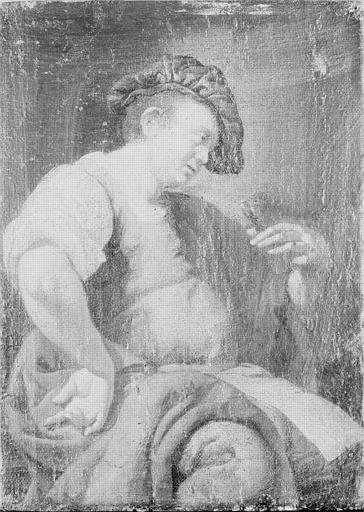
In the golden era of Dutch painting, few traditions captured the quiet intimacy of human existence as exquisitely as the Leiden School. At the heart of this movement stood Jacob Toorenvliet (1640–1719), a master whose brushwork served as a vital bridge between the legendary precision of Gerrit Dou and the evolving sensibilities of the late seventeenth century. Born into a lineage of artistic excellence in Leiden, Toorenvliet was the son of Abraham Toorenvliet, a respected glass painter and drawing instructor. This upbringing provided him with more than just a name; it gifted him an early immersion in the meticulous observation and technical rigor that would become the hallmark of his career.
Toorenvliet’s artistic journey was far from a solitary path within the borders of the Netherlands. His formative training under masters such as Frans van Mieris the Elder, Matthijs Naeveu, and the incomparable Gerrit Dou instilled in him the principles of fijnschilderij—the art of fine painting. This style demanded an almost superhuman level of detail, where every texture, from the sheen of silk to the glint of a copper vessel, was rendered with breathtaking clarity. However, it was his Grand Tour of Europe, beginning in 1659, that truly expanded his artistic horizon. Traveling through Italy and witnessing the dramatic light of Rome and the vibrant atmosphere of Venice, Toorenvliet absorbed the influence of Caravaggio and Rembrandt, blending Northern precision with a newfound Southern warmth and atmospheric depth.
As Toorenvliet traversed the continent, his work began to reflect a sophisticated synthesis of cultures. During his time in Italy, he became a member of the Bentvueghels, an eccentric guild of Northern artists sketching in Rome, adopting the nickname Jazon. This period of wandering allowed him to document not only the human condition but also the architectural splendor of the Mediterranean. His depictions of Venetian vistas and Florentine landscapes demonstrate a remarkable ability to capture light and space, moving beyond the enclosed domesticity of his Dutch roots to embrace a more expansive, panoramic vision.
Upon returning to the Netherlands, Toorenvliet’s repertoire flourished with genre scenes that resonated deeply with the contemporary appetite for narrative realism. His subjects were often found in moments of quiet contemplation or everyday industry:
The choice of medium was as crucial as his subject matter. Toorenvliet frequently worked on copper plates, a surface that allowed for unparalleled smoothness and tonal subtlety. This technique enabled him to execute the fine details required by the fijnschilderij tradition while maintaining a luminous quality that made his portraits and interiors appear almost tactile.
As the seventeenth century drew to a close, Toorenvliet remained a steadfast guardian of the Leiden tradition. Following the deaths of his mentors, he became one of the last great representatives of the school, ensuring that the meticulous standards of Dou and Mieris were passed down to subsequent generations. His leadership within the Guild of Saint Luke in Leiden and his role as a co-founder of the Leiden Drawing Academy in 1694 underscore his commitment to the institutionalization of artistic excellence.
The historical significance of Jacob Toorenvliet lies in his ability to harmonize the disparate worlds of Northern European detail and Southern European light. He did not merely imitate the masters who came before him; rather, he infused their technical rigor with a cosmopolitan spirit born of his travels. Today, his works stand as windows into a vanished world—a world of quiet domesticity, bustling markets, and the enduring pursuit of beauty through the lens of absolute precision.

1640 - 1719 , Netherlands

 プレビュー
プレビュー
 シェアする
シェアする シェアする
シェアする
 詳細を見る
詳細を見る ガイド
ガイド

 ダウンロード
 似ている作品
 X線調査
X線調査 スライドショー
 統計情報
統計情報 詳細を見る
詳細を見る


