
 Social Realism
 1980
1980 76.0 x 121.0 cm
 Ben Uri Gallery and Museum
当社のアーティストが、お客様のご希望のサイズと額縁に合わせて、キャンバスに手描きで制作する油彩画です。 ( プリント版に切り替え デジタル画像販売へ切り替え)
作品のオリジナル比率に合わせた、当店の規定サイズからお選びください。

特定のフレームやスペースに合わせて、ご希望のサイズをご入力いただけます。選択されたサイズが元の画像の比率と異なる場合、アートワークをトリミングするか、手描きで要素を追加して絵画を拡張いたします。デジタルモックアップ を制作し、制作開始前にご確認(承認)をいただきます。
画面上のプレビューは、実際のトリミングや拡張を正確に反映しているものではありません。最終的な構図は、モックアップによってのみ正確にご確認いただけます。
カスタムサイズもご利用いただけますが、元の比率を維持するためには、あらかじめ用意されたリストからサイズを選択することをお勧めいたします。

Four Card Players
複製画のサイズ

Born in Limoges, France, in 1841, Pierre-Auguste Renoir emerged as one of the most celebrated figures of the Impressionist movement. His life was a testament to artistic dedication, marked by both personal challenges and an unwavering pursuit of capturing the ephemeral beauty of everyday moments. From humble beginnings, Renoir’s career blossomed through relentless experimentation with color, light, and brushstroke—transforming ordinary scenes into vibrant celebrations of human experience.
Renoir's early artistic training was somewhat unconventional. Initially apprenticed to his father, Charles Renoir, a porcelain manufacturer, he developed a keen eye for detail and an understanding of craftsmanship. However, it was the École des Beaux-Arts in Paris that provided him with formal instruction, though he quickly chafed against its rigid academic standards. He found himself drawn to the burgeoning circle of artists experimenting with new approaches—a group that would ultimately define the Impressionist movement. Influenced by Eugène Boudin’s plein air painting and the revolutionary work of Claude Monet, Renoir began to prioritize capturing fleeting impressions over precise representation.
The 1870s proved pivotal for Renoir's artistic development. He joined Monet and Alfred Sisley in establishing a studio known as “Le Studium,” where they shared ideas, critiqued each other’s work, and tirelessly painted outdoors—a practice central to the Impressionist philosophy. Early works like "The Loge" (1876) and "Bathers at Asnières" (1877) demonstrate this shift towards capturing the effects of light and atmosphere. These paintings were revolutionary for their loose brushwork, vibrant color palettes, and focus on depicting scenes from modern Parisian life—a departure from the traditional subjects favored by the Salon.
Renoir's artistic output flourished during the 1880s, a period often referred to as the “golden age” of Impressionism. He became increasingly interested in depicting scenes of social life—particularly those centered around pleasure and leisure. His paintings of dance halls, cafes, and outdoor gatherings captured the vibrant energy and joie de vivre of Parisian society. "Dance at Le Moulin de la Galette" (1876) is perhaps his most famous work from this period, a dazzling depiction of a bustling dance hall filled with elegantly dressed figures bathed in dappled sunlight.
However, Renoir’s personal life was marked by both joy and sorrow. In 1885, he married Anna Cloëte Guillaumin, a talented artist herself. They had four children together—Pierre-Auguste Jr., Gustave, Martine, and Isabelle—who became frequent models for his paintings. Tragedy struck in 1919 when Pierre-Auguste Jr. died suddenly, plunging Renoir into deep grief. This loss profoundly impacted his work, leading him to explore themes of memory, nostalgia, and the passage of time.
As Renoir aged, his style underwent a subtle but significant transformation. While he continued to employ his characteristic vibrant colors and loose brushwork, his compositions became more structured and refined. He developed a greater interest in portraiture, producing numerous captivating portraits of friends, family members, and fellow artists—including Monet, Sisley, and Edgar Degas. His later works, such as “Luncheon of the Boating Party” (1880) and "Portrait of Madame Renoir" (1919), demonstrate a mastery of form and an exquisite sensitivity to color and light.
Renoir’s exploration of memory and nostalgia became increasingly prominent in his later paintings. He often depicted scenes from his past—particularly those associated with his youth in Limoges—infused with a sense of wistful longing. These works, characterized by their soft colors and hazy atmosphere, offer a poignant reflection on the passage of time and the enduring power of memory.
Pierre-Auguste Renoir died in Cagnes-sur-Mer, France, in 1919, leaving behind a vast and influential body of work. His paintings are celebrated for their joyous depictions of everyday life, their masterful use of color and light, and their profound emotional resonance. Renoir’s contributions to the Impressionist movement were immense, helping to establish it as one of the most important artistic movements in history.
His influence extends far beyond the realm of painting. Renoir's emphasis on capturing fleeting moments and celebrating the beauty of ordinary life has resonated with artists across a wide range of disciplines—from photography and film to literature and music. Today, his work continues to inspire and delight audiences around the world, serving as a testament to the enduring power of art to capture the essence of human experience.

1919 - 1986 , United Kingdom
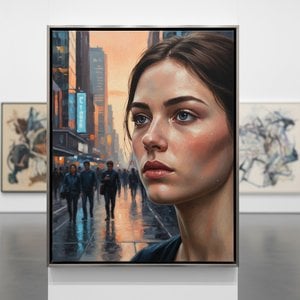
Explore the profound depth of Contemporary Realism. Discover how hyper-realistic art captures modern emotion through technical mastery, offering collectors a sophisticated way to preserve the soul of human experience through exquisite, museum-quality oil paintings and fine art.


 プレビュー
プレビュー
 シェアする
シェアする シェアする
シェアする
 詳細を見る
詳細を見る

 ダウンロード
 似ている作品
 X線調査
X線調査 スライドショー
 統計情報
統計情報 詳細を見る
詳細を見る






































 ガラスオプションは、110cm未満のサイズでのみご利用いただけます。


