設置イメージを確認 ARで壁に飾るイメージを見る プリント版に切り替え デジタル画像販売へ切り替え 送る
詳細情報 ガイドを表示 お気に入りに追加 画像をダウンロード 似ている作品 X線調査 スライドショー Q&A 統計情報

March

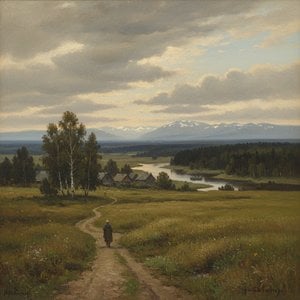
Experience the serene beauty of Isaac Levitan's 'March.' This iconic Russian landscape painting captures a snowy winter scene with remarkable detail and evokes a sense of peaceful solitude.

ロシア風景画の巨匠、イサーク・レヴィタン(1860-1900)。「秋日」「Владимирка道路」など、憂いを帯びた叙情的な風景でロシアの大地を表現。感情豊かな「ムード風景」の先駆者として、19世紀ロシア美術に大きな足跡を残しました。

手描き油彩複製画

当社のアーティストが、お客様のご希望のサイズと額縁に合わせて、キャンバスに手描きで制作する油彩画です。 ( プリント版に切り替え デジタル画像販売へ切り替え)

Corner sample of the P118B picture frame: 成型ポリスチレン, 5 cm wide and 3 cm thick
P118B ¥10
Corner sample of the P118H picture frame: 成型ポリスチレン, 5 cm wide and 3 cm thick
P118H ¥10
Corner sample of the P118W picture frame: 成型ポリスチレン, 5 cm wide and 3 cm thick
P118W ¥10
Corner sample of the P438Z picture frame: 成型ポリスチレン, 5.5 cm wide and 3.5 cm thick
P438Z ¥10
Corner sample of the P508JH picture frame: 成型ポリスチレン, 7 cm wide and 3.5 cm thick
P508JH ¥12
Corner sample of the P508YH picture frame: 成型ポリスチレン, 7 cm wide and 3.5 cm thick
P508YH ¥12
Corner sample of the P805H picture frame: 成型ポリスチレン, 5 cm wide and 3.5 cm thick
P805H ¥10
Corner sample of the P805Z picture frame: 成型ポリスチレン, 5 cm wide and 3.5 cm thick
P805Z ¥10
Corner sample of the P919BZ picture frame: 成型ポリスチレン, 7 cm wide and 3.5 cm thick
P919BZ ¥10
Corner sample of the P919G picture frame: 成型ポリスチレン, 7 cm wide and 3.5 cm thick
P919G ¥10
Corner sample of the P919XJ picture frame: 成型ポリスチレン, 7 cm wide and 3.5 cm thick
P919XJ ¥10
Corner sample of the P959ZH picture frame: 成型ポリスチレン, 5 cm wide and 3 cm thick
P959ZH ¥10
Corner sample of the P968JZ picture frame: 成型ポリスチレン, 6 cm wide and 4 cm thick
P968JZ ¥12
Corner sample of the W106C picture frame: 天然木, 5 cm wide and 3 cm thick
W106C ¥8
Corner sample of the W218G picture frame: 天然木, 5 cm wide and 3 cm thick
W218G ¥10
Corner sample of the W218JH picture frame: 天然木, 5 cm wide and 3 cm thick
W218JH ¥8
Corner sample of the W218Y picture frame: 天然木, 5 cm wide and 3 cm thick
W218Y ¥10
Corner sample of the W307PJ picture frame: 天然木, 6 cm wide and 3 cm thick
W307PJ ¥10
Corner sample of the W316G picture frame: 天然木, 6 cm wide and 3 cm thick
W316G ¥10
Corner sample of the W316PJ picture frame: 天然木, 6 cm wide and 3 cm thick
W316PJ ¥8
Corner sample of the W316Y picture frame: 天然木, 6 cm wide and 3 cm thick
W316Y ¥10
Corner sample of the W398PJ picture frame: 天然木, 5 cm wide and 3 cm thick
W398PJ ¥8
Corner sample of the W4111J picture frame: 天然木, 6.5 cm wide and 3.5 cm thick
W4111J ¥10
Corner sample of the W500HY picture frame: 天然木, 7 cm wide and 5 cm thick
W500HY ¥15
Corner sample of the W500JH picture frame: 天然木, 7 cm wide and 5 cm thick
W500JH ¥15
Corner sample of the W692G picture frame: 天然木, 8 cm wide and 4 cm thick
W692G ¥12
Corner sample of the W849H picture frame: 天然木, 5 cm wide and 3 cm thick
W849H ¥8
Corner sample of the W940BG picture frame: 天然木, 7.5 cm wide and 4.5 cm thick
W940BG ¥15
Corner sample of the W953PJ picture frame: 天然木, 6 cm wide and 3.5 cm thick
W953PJ ¥8

標準サイズ
カスタムサイズ
CM
INCH

作品のオリジナル比率に合わせた、当店の規定サイズからお選びください。

横幅
高さ

フレームや壁のスペースに合わせて、ご希望の幅と高さを入力してください。本作品は手描きのため、異なる比率のサイズをご希望の場合、絵画の周囲を少し広げて描くか、あるいは端を少しカットして調整することが可能です。お客様のご要望に合わせます。制作を開始する前に、仕上がりを確認するためのデジタルモックアップをお送りいたします。このページに表示されている画像は完成品の実物ではなく、あくまでモックアップによるイメージです。

カスタマイズの例:顔をお客様の写真に置き換える、ペットを追加する(例:猫を犬に変更)、背景に隠れたメッセージを入れる、背景の風景や要素を変更するなど。
ご注文後、WahooArt.com チームより詳細な指示をお送りするとともに、仕上がりイメージ(モックアップ)をご提供いたします。

世界中への配送()は、通常の5週間ではなく、3〜4週間でお届けいたします。(28 10月)。品質には一切妥協いたしません。

世界中へ無料エクスプレス配送
高品質なリネンキャンバス
配送時完全保険付
関税・輸入税の払い戻し保証
忠実な色彩再現の保証
100日間返品保証(製造上の欠陥がある場合のみ)
100% 全額返金保証
まとめ買い割引のご案内

合計金額

¥ 42809

March

再現技法

複製画サイズ一覧

-

合計金額

¥ 42809

作品情報

  • Artist: Isaak Levitan
  • Influences: Impressionism
  • Notable elements: Snowy road, dog, trees
  • Title: March
  • Location: Tretyakov Gallery, Moscow
  • Medium: Oil on Canvas

アート・クイズ

各質問の正解は1つだけです。

問題 1:
What is the primary subject of Isaac Levitan’s painting, ‘March’?
問題 2:
In what year was Isaac Levitan’s painting ‘March’ created?
問題 3:
Which artistic movement is most closely associated with Isaac Levitan’s style?
問題 4:
The painting ‘March’ depicts a scene set in which region of Russia?
問題 5:
What medium did Levitan primarily use to create ‘March’?

The Essence of Russian Moodscapes

Isaac Ilyich Levitan's "March" isn't merely a depiction of a winter landscape; it’s a profound distillation of the Russian soul, captured in oil on canvas with an almost palpable sense of melancholy and quiet contemplation. Painted in 1895 during his time in the Gorka estate near Vyshnevolotsky, this work embodies Levitan's signature style – what he himself termed “mood landscapes.” He wasn’t interested in grand vistas or dramatic events; instead, he sought to convey the emotional atmosphere of a place, imbuing it with a feeling that resonated deeply within him. The painting isn’t about the coldness of winter, but rather the introspection and solitude it evokes – a theme central to much of his oeuvre.

A Symphony of Light and Color

Levitan's masterful technique is immediately apparent in "March." He employs a restrained palette dominated by muted blues, greys, and browns, punctuated by subtle hints of ochre and the stark white of the snow. The light, diffused and soft, seems to emanate from an unseen source, bathing the scene in a gentle glow. Notice how he builds up layers of paint – delicate washes for the sky, textured strokes for the trees, and precise details for the dog and the distant house. This layering creates a remarkable sense of depth and atmosphere, drawing the viewer into the heart of the winter landscape. The brushwork is loose and expressive, reflecting the artist’s emotional response to his subject matter – not a photographic representation, but an interpretation.

Historical Context: Levitan and the Peredvizhniki

To fully appreciate "March," it's crucial to understand its place within the broader context of Russian art at the end of the 19th century. Levitan was a key figure in the *Peredvizhniki* (Wanderers), a group of artists who rejected the academic traditions of the Imperial Academy of Arts and instead sought to depict everyday life and rural Russia with honesty and empathy. The *Peredvizhniki* championed realism, often focusing on scenes of hardship and social injustice, but Levitan’s work transcends mere social commentary. He was deeply influenced by the Barbizon School in France, particularly their emphasis on capturing the essence of nature through light and color. His connection to Chekhov, a prominent writer of the time, further shaped his artistic vision – both men shared a sensitivity to the beauty and melancholy of the Russian landscape.

Symbolism and Emotional Resonance

The inclusion of the dog, walking along the snow-covered road, is particularly evocative. It represents not just companionship but also a sense of journey and perhaps even loneliness. The distant house suggests a refuge, a place of warmth and security, yet it’s dwarfed by the vastness of the winter landscape, reinforcing the feeling of isolation. The two birds, perched high in the trees, offer a fleeting moment of beauty and hope amidst the prevailing stillness. "March" isn't simply a winter scene; it’s an exploration of human emotions – solitude, longing, and the quiet dignity of existence—a reflection on the Russian soul itself.

A Legacy of Moodscapes

“March” stands as one of Levitan’s most celebrated works, exemplifying his unique ability to capture the emotional heart of the Russian landscape. It's a testament to his profound understanding of light, color, and atmosphere, and his remarkable sensitivity to the human condition. Reproductions of this painting continue to resonate with viewers today, offering a glimpse into a world of quiet beauty and enduring contemplation. It’s a piece that invites us to slow down, breathe deeply, and connect with the timeless power of nature.

よくあるご質問

「March」は、イサク・イリイチ・レヴィタンの制作活動におけるどの時期の作品にあたりますか?

「March」は、イサク・イリイチ・レヴィタンのキャリアにおけるMature Periodに属します。この分類は、作品をアーティストの画業の変遷に関連付けるものです。

イサク・イリイチ・レヴィタンには、他にどのような別名や通称がありますか?

イサク・イリイチ・レヴィタンは、イサク・レヴィタンという名でも知られています。

イサク・イリイチ・レヴィタンによる「March」は、どの程度知られていますか?

イサク・イリイチ・レヴィタン作「March」の記録されている人気度はRecognizedです。


アーティストについて

Isaak Ilyich Levitan - A Symphony of the Russian Soul

Isaak Ilyich Levitan, a name synonymous with the evocative power of Russian landscape painting, was more than just a chronicler of nature; he was a poet of the land, a translator of its moods into visual form. Born in 1860 in Kibarty (present-day Lithuania) to a Jewish family who later settled in Moscow, Levitan’s life was marked by both profound hardship and an unwavering dedication to his art. The early loss of his mother and father instilled within him a sensitivity that would permeate his canvases with a melancholic beauty—a characteristic that would define his artistic vision throughout his career.

Early Life and Artistic Formation

Levitan's formative years were shaped by considerable adversity. Orphaned shortly after birth, he endured homelessness and poverty as a child, experiences which profoundly impacted his worldview and fueled an innate desire to find solace in the natural world. Recognizing his talent early on, he enrolled at the Moscow School of Painting, Sculpture and Architecture in 1873, where he was mentored by Alexei Savrasov—a pivotal encounter that instilled in him Savrasov’s distinctive approach to landscape painting: capturing not merely visual appearance but also the intangible essence of atmosphere and emotion. Savrasov championed Levitan's burgeoning ability to translate feeling into form, guiding him toward a path of artistic exploration rooted in profound observation and emotional honesty. This influence would prove instrumental in shaping Levitan’s signature style—characterized by muted palettes, subtle tonal gradations, and masterful use of light and shadow.

The Birth of Mood Landscape: Savrasov's Influence

Savrasov’s teachings solidified Levitan’s conviction that landscape painting could transcend mere representation to become a conduit for spiritual contemplation. Rejecting the prevailing academic conventions of his time—particularly the idealized depictions favored by Neoclassical artists—Savrasov encouraged Levitan to embrace a radically different aesthetic: *mood landscape*. This genre prioritized conveying emotion over topographical accuracy, seeking to evoke feelings of tranquility, solitude, or melancholy through carefully crafted compositions and evocative color harmonies. As Savrasov himself famously remarked, “The artist must not depict what he sees but what he feels.” This ethos resonated deeply with Levitan, informing his artistic practice from its inception and establishing him as a pioneer of this transformative movement within Russian art.

A Distinctive Artistic Voice: Exploring Emotion Through Landscape

Levitan swiftly distinguished himself as an artist capable of capturing profound emotion through landscape—a feat that cemented his reputation as one of the foremost practitioners of mood landscape. His canvases pulsated with palpable feeling, reflecting his own inner turmoil and grappling with themes of loss, longing, and mortality. Unlike many of his contemporaries who adhered to rigid stylistic conventions, Levitan cultivated a uniquely expressive style characterized by loose brushstrokes, diffused tonal ranges, and an intuitive grasp of atmospheric effects. Works such as *Autumn Day. Sokolniki* (1879)—painted during his formative years—exemplify this distinctive aesthetic—a testament to Levitan’s ability to distill complex emotions into deceptively simple visual forms. The painting's subdued palette and delicate rendering of light create a sense of wistful nostalgia, hinting at the transience of beauty and the inevitability of change.

Major Achievements and Legacy

Levitan’s artistic journey culminated in recognition from the Imperial Academy of Arts—a testament to his growing stature within the Russian art world. He subsequently served as head of the landscape studio at Moscow School of Painting, Sculpture and Architecture, nurturing the talent of aspiring artists and perpetuating Savrasov's legacy of emotional landscape painting. His influence extended far beyond his students, shaping the trajectory of Russian landscape art for decades to come—inspiring generations of painters to explore the expressive potential of nature with unwavering sensitivity and conviction. Levitan’s enduring contribution to Russian culture lies in his ability to transform visual observation into profound artistic contemplation—a feat that continues to captivate audiences today. His paintings remain a poignant reminder of the beauty and melancholy inherent in the human condition, forever enshrined as masterpieces of mood landscape and symbols of Russia's soulful spirit.

アーティスト情報

  • Artistic Movement Or Style: ムードランド風景画、リアリズム
  • Artists Who Influenced This Artist: ['アレクセイ・サヴァロフ」「ヴィタリー・ポレノフ」\n }']
  • Date Of Birth: August 30, 1860
  • Date Of Death: July 22, 1900
  • Full Name: Isaak Ilyich Levitan
  • Nationality: ロシア語
  • Notable Artworks: ['秋の日のソコリンキ」「ウラジミールカ通り」「永遠の休息」「春の洪水」「嵐の日」「ヴェスパーの鐘']
  • Place Of Birth: Kibarty, Lithuania
テーマ、スタイル、特徴別に分類された作品を探索しましょう。