設置イメージを確認 ARで壁に飾るイメージを見る 手描きの複製画を注文する デジタル画像販売へ切り替え 送る
詳細情報 ガイドを表示 お気に入りに追加 画像をダウンロード 似ている作品 X線調査 スライドショー 統計情報

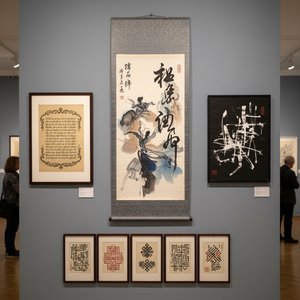
Calligraphy (Bokuseki)

Striking black ink characters define this profound Zen calligraphy by the iconoclastic monk Ikkyū Sōjun from the Muromachi Period, offering a rare glimpse into spiritual mastery available for your collection.

Ikkyū Sōjun (1394-1481) was a renowned Japanese Zen Buddhist monk, poet & calligrapher. Explore his iconoclastic art, infused with Zen ideals, challenging monastic norms and impacting Japanese literature.

ジークレー/アートプリント

スピーディーな制作と多彩な仕上げオプションが魅力の、ミュージアムクオリティなジークレー・キャンバスプリント。 ( 手描きの複製画を注文する デジタル画像販売へ切り替え)

Corner sample of the P118B picture frame: 成型ポリスチレン, 5 cm wide and 3 cm thick
P118B ¥10
Corner sample of the P118H picture frame: 成型ポリスチレン, 5 cm wide and 3 cm thick
P118H ¥10
Corner sample of the P118W picture frame: 成型ポリスチレン, 5 cm wide and 3 cm thick
P118W ¥10
Corner sample of the P438Z picture frame: 成型ポリスチレン, 5.5 cm wide and 3.5 cm thick
P438Z ¥10
Corner sample of the P508JH picture frame: 成型ポリスチレン, 7 cm wide and 3.5 cm thick
P508JH ¥12
Corner sample of the P508YH picture frame: 成型ポリスチレン, 7 cm wide and 3.5 cm thick
P508YH ¥12
Corner sample of the P805H picture frame: 成型ポリスチレン, 5 cm wide and 3.5 cm thick
P805H ¥10
Corner sample of the P805Z picture frame: 成型ポリスチレン, 5 cm wide and 3.5 cm thick
P805Z ¥10
Corner sample of the P919BZ picture frame: 成型ポリスチレン, 7 cm wide and 3.5 cm thick
P919BZ ¥10
Corner sample of the P919G picture frame: 成型ポリスチレン, 7 cm wide and 3.5 cm thick
P919G ¥10
Corner sample of the P919XJ picture frame: 成型ポリスチレン, 7 cm wide and 3.5 cm thick
P919XJ ¥10
Corner sample of the P959ZH picture frame: 成型ポリスチレン, 5 cm wide and 3 cm thick
P959ZH ¥10
Corner sample of the P968JZ picture frame: 成型ポリスチレン, 6 cm wide and 4 cm thick
P968JZ ¥12
Corner sample of the W106C picture frame: 天然木, 5 cm wide and 3 cm thick
W106C ¥8
Corner sample of the W218G picture frame: 天然木, 5 cm wide and 3 cm thick
W218G ¥10
Corner sample of the W218JH picture frame: 天然木, 5 cm wide and 3 cm thick
W218JH ¥8
Corner sample of the W218Y picture frame: 天然木, 5 cm wide and 3 cm thick
W218Y ¥10
Corner sample of the W307PJ picture frame: 天然木, 6 cm wide and 3 cm thick
W307PJ ¥10
Corner sample of the W316G picture frame: 天然木, 6 cm wide and 3 cm thick
W316G ¥10
Corner sample of the W316PJ picture frame: 天然木, 6 cm wide and 3 cm thick
W316PJ ¥8
Corner sample of the W316Y picture frame: 天然木, 6 cm wide and 3 cm thick
W316Y ¥10
Corner sample of the W398PJ picture frame: 天然木, 5 cm wide and 3 cm thick
W398PJ ¥8
Corner sample of the W4111J picture frame: 天然木, 6.5 cm wide and 3.5 cm thick
W4111J ¥10
Corner sample of the W500HY picture frame: 天然木, 7 cm wide and 5 cm thick
W500HY ¥15
Corner sample of the W500JH picture frame: 天然木, 7 cm wide and 5 cm thick
W500JH ¥15
Corner sample of the W692G picture frame: 天然木, 8 cm wide and 4 cm thick
W692G ¥12
Corner sample of the W849H picture frame: 天然木, 5 cm wide and 3 cm thick
W849H ¥8
Corner sample of the W940BG picture frame: 天然木, 7.5 cm wide and 4.5 cm thick
W940BG ¥15
Corner sample of the W953PJ picture frame: 天然木, 6 cm wide and 3.5 cm thick
W953PJ ¥8

標準サイズ
カスタムサイズ
CM
INCH

作品のオリジナル比率に合わせた、当店の規定サイズからお選びください。

横幅
高さ

額縁や壁のスペースに合わせて、ご希望の幅と高さを入力してください。プリントはカットすることは可能ですが、元の画像より大きくすることはできないため、異なる比率のサイズを選択された場合は、画像の一部が欠けることになります。印刷を開始する前に、内容を確認していただくためのデジタルモックアップをお送りいたします。このページに表示されている画像は、実際のカット後の状態を示すものではありません。実際の仕上がりはモックアップにてご確認ください。

世界中への配送()は、標準の4〜5週間ではなく、2週間でお届けいたします。(24 10月)

世界中へ無料エクスプレス配送
高品質なリネンキャンバス
配送時完全保険付
関税・輸入税の払い戻し保証
忠実な色彩再現の保証
100日間返品保証(製造上の欠陥がある場合のみ)
100% 全額返金保証
まとめ買い割引のご案内

合計金額

¥ 10712

Calligraphy (Bokuseki)

ジークレー/アートプリント

複製画サイズ一覧

-

合計金額

¥ 10712

作品情報

  • Title: Calligraphy (Bokuseki)
  • Location: Tokugawa Art Museum, Nagoya, Japan
  • Artist: Ikkyū Sōjun
  • Subject or theme: Zen Buddhist ideals

The Soul in Ink: The Raw Power of Ikkyū Sōjun’s Calligraphy

In the quiet, contemplative spaces of a curated collection, few pieces command attention with such visceral intensity as the Calligraphy (Bokuseki) by the legendary Zen master Ikkyū Sōjun. This work is not merely an arrangement of characters on paper; it is a direct transmission of spirit, a moment of profound enlightenment captured in the rhythmic dance of black ink. To behold this piece is to witness the "traces of ink" that define the Bokuseki tradition, where the brushstroke serves as a mirror to the artist's internal state. The composition, characterized by its striking contrast and spontaneous energy, invites the viewer into a meditative dialogue with the Muromachi period, offering a window into a time when art and spiritual practice were inextricably linked.

The technique employed here is a masterclass in controlled spontaneity. Each character emerges from the aged, textured paper with a weight that suggests both permanence and fleetingness. The ink varies in density, from deep, saturated blacks that anchor the composition to lighter, more translucent washes that suggest movement and breath. This interplay of light and shadow within the strokes creates a three-dimensional quality, making the calligraphy feel alive, as if the energy of the monk’s hand is still vibrating upon the surface. For the discerning collector or interior designer, this piece offers a sophisticated focal point, bringing an organic, historical gravity to modern minimalist settings or classical East Asian-inspired interiors.

A Legacy of Rebellion and Zen Truth

To understand the emotional depth of this calligraphy, one must understand the man behind the brush. Ikkyū Sōjun was no ordinary monk; he was a radical iconoclast who famously challenged the rigid, often hypocritical, monastic structures of his era. His life was a whirlwind of poetry, eccentricity, and profound spiritual inquiry. This rebellious spirit is etched into every line of his calligraphy. Unlike the more formal, disciplined styles of courtly calligraphy, Ikkyū’s work embraces a certain ruggedness and unvarnished truth. It reflects the Zen ideal of mushin, or "no-mind," where the ego vanishes, leaving only the pure, unfiltered expression of the present moment.

The historical significance of this piece is further elevated by its provenance and cultural weight. Held within prestigious institutions like the Tokugawa Art Museum, such works are recognized as vital artifacts of Japanese heritage. For those seeking to incorporate art into their homes that transcends mere decoration, this reproduction offers more than aesthetic beauty; it provides a connection to a lineage of profound philosophical thought. It is an invitation to embrace imperfection, to find beauty in the weathered and the worn, and to cultivate a space of deep, resonant peace.

よくあるご質問

Ikkyū Sōjun作「Calligraphy (Bokuseki)」で主役となっている色は何ですか?

Ikkyū Sōjun作「Calligraphy (Bokuseki)」はNeutralsのパレットを使用しており、Phthalo Green (#1d231f)が基調となっています。

Zenの作品「Calligraphy (Bokuseki)」は、どのような感情を伝えていますか?

「Calligraphy (Bokuseki)」のZen様式には、Spiritualな感情が添えられています。

「Calligraphy (Bokuseki)」のガイドはどこにありますか?

Ikkyū Sōjun作「Calligraphy (Bokuseki)」のガイドページでは、印刷して活用できる2枚構成のファクトシートを提供しています。これには、作品とその詳細情報をまとめたデータテーブル、アーティストの生涯における時代背景を示す年代チャート、同アーティストによる他の作品、測定されたカラーパレット、そしてそのままコピーして使用できる4つの形式の引用文献情報が含まれています。


アーティストについて

The Rebel Monk: The Life and Spirit of Ikkyū Sōjun

Ikkyū Sōjun (1394–1481) remains one of the most captivating and paradoxical figures in the history of Japanese Zen Buddhism. A man of profound contradictions, he was simultaneously a high-ranking monk and a wandering iconoclast, a scholar of deep philosophical insight and a poet of raw, uninhibited emotion. Born into the turbulent era of the Muromachi Period, Ikkyū’s very existence was marked by social complexity; as the illegitimate son of Emperor Go-Komatsu, his lineage placed him at the intersection of imperial prestige and monastic exile. This early life of displacement and struggle deeply informed his later rejection of rigid institutional hierarchies, leading him to seek a spiritual truth that resided not in the sterile confines of a monastery, but in the messy, vibrant reality of human experience. His formative years were shaped by the rigorous Gozan Zen tradition, an intellectual movement heavily influenced by Chinese culture and classical literature. Under the tutelage of esteemed masters, Ikkyū mastered the delicate arts of calligraphy, poetry, and Chinese scholarship. Yet, even as he ascended through the ranks of the Zen hierarchy, a spirit of rebellion began to take root. He famously challenged the very foundations of monastic discipline, most notably his vocal opposition to the requirement of celibacy. To Ikkyū, true enlightenment could not be achieved by suppressing the natural human condition; instead, he believed that the sacred and the profane were inextricably linked, a philosophy that would later define the radical aesthetic of his creative output.

A Calligraphy of Chaos and Clarity

The artistic legacy of Ikkyū Sōjun is most vibrantly expressed through his calligraphy and poetry, works that serve as a direct mirror to his turbulent soul. His calligraphic style often eschewed the polished, formal perfection demanded by traditional monastic training in favor of something far more visceral and spontaneous. In his brushstrokes, one can sense the tension between disciplined technique and an irrepressive urge for freedom. This approach was not merely a stylistic choice but a spiritual manifestation—a way to capture the fleeting, ungraspable nature of Zen realization. His works, such as the evocative Portrait of Daruma, often utilize bold, sweeping motions that convey a sense of urgency and existential weight. Beyond the ink on paper, Ikkyū’s poetic voice revolutionized Japanese literature by infusing it with a raw, often provocative honesty. He utilized the medium to critique the hypocrisy of the religious establishment and to celebrate the beauty found in the ephemeral and the earthly. His poetry often dances between the profound and the playful, much like his own persona. This duality allowed him to bridge the gap between high intellectualism and popular culture, leaving an indelible mark on the development of Japanese lyrical expression. Through his verses, he invited his readers to look past the veneer of social decorum and confront the essential truths of life, death, and desire.

Legacy of an Iconoclast

The historical significance of Ikkyū Sōjun extends far beyond the boundaries of Zen monasticism. He was a pivotal figure in shaping the cultural landscape of the Muromachi Period, influencing how art, literature, and spirituality would interact for centuries to come. By dismantling the wall between the sacred monastery and the secular world, he paved the way for a more integrated and humanistic approach to Japanese aesthetics. His influence can be traced through the development of subsequent poetic movements and the evolution of Zen-inspired arts that prioritize spontaneity and directness over rigid adherence to form. Today, Ikkyū is remembered not just as a monk, but as a cultural icon whose spirit of rebellion continues to resonate. While popular culture sometimes reduces him to the whimsical character seen in animated legends, the true Ikkyū was a formidable intellectual force who dared to redefine the boundaries of faith and art. His life serves as a powerful testament to the idea that true spiritual mastery lies in the courage to embrace one's whole humanity—flaws, passions, and all. Through his enduring works, he continues to challenge us to find the extraordinary within the ordinary and the divine within the human.
Ikkyū Sōjun

Ikkyū Sōjun

1394 - 1481 , Japan

アーティスト情報

  • Full Name: Ikkyū Sōjun
  • Nationality: Japanese
  • Date Of Birth: 1394
  • Date Of Death: 1481
  • Place Of Birth: Echizen, Japan
  • Notable Artworks:
    • Portrait of Daruma
    • Title(Japanese): 木彫根付 蛸壺
  • Artistic Movement Or Style: Zen Buddhism
  • Artists Who Influenced This Artist:
    • Botetsu
    • Ken’ō Sōi
    • Kasō Sōdon
  • Artists Or Movements Influenced By This Artist: ['Rinzai Zen']