EtchingWallArtContemporary Realism
 187019th Century
 20.0 x 27.0 cm
 Courtauld Gallery
迅速な制作と多彩な仕上げオプションを備えた、ミュージアムクオリティのジークレーまたはキャンバスプリント。 ( 手描きの絵画を購入 デジタル画像販売へ切り替え)





























作品のオリジナル比率に合わせた、当店の規定サイズからお選びください。

特定のフレームやスペースに合わせて、ご自身でサイズを指定することも可能です。選択されたサイズが元の画像の比率と一致しない場合、作品をトリミングするか、鏡面反射または単色での塗りつぶしによって画像を拡張いたします。制作を開始する前に、ご確認用のデジタルモックアップをお送りいたします。
画面上のプレビューには、実際のトリミングや拡張は反映されませんのでご注意ください。最終的な構図を正確に確認できるのは、モックアップのみとなります。
カスタムサイズも承っておりますが、元の比率を維持するためには、あらかじめ用意されたリストからサイズを選択することをお勧めいたします。

The Hypochondriac (Le Malade imaginaire)
複製画のサイズ
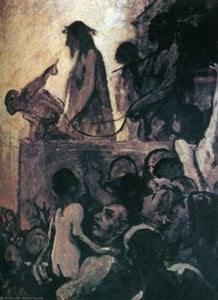
In the realm of French Realism, few works capture the biting wit and social scrutiny of Honoré Daumier quite like "The Hypochondriac" (Le Malade imaginaire). Executed around 1870, this evocative drawing serves as a profound visual distillation of Molière’s legendary satirical play. Daumier does not merely illustrate a theatrical moment; he breathes life into the very essence of human folly and the absurdity of medical pretension. The scene presents a dramatic tableau where the boundaries between stagecraft and reality blur, inviting the viewer to witness the tension between the delusional patient, Argan, and the self-important physician, Purgon. It is a work that transcends its 19th-century origins, offering a timeless commentary on how easily authority can be used to mask incompetence.
The composition is anchored by a palpable sense of atmosphere, achieved through Daumier’s masterful command of light and shadow. The room feels intimate yet claustrophobic, mirroring the psychological entrapment of the hypochondriac himself. Through his use of chiaroscuro-like effects, Daumier directs our gaze across the figures—from the bearded doctor engaged in intense dialogue to the whimsical presence of a jester holding a bottle. This interplay of light does more than define form; it sculpts the emotional weight of the scene, highlighting the dramatic friction between the characters and creating a sense of theatrical depth that pulls the observer into the heart of the drama.
To behold "The Hypochondriac" is to appreciate the technical brilliance of Daumier’s dry etching process. By applying acid to a zinc plate coated with bitumen, the artist achieved a remarkable level of detail that allows for incredible textural nuance. Every line carries intention, contributing to a sense of movement and life that is rare in works of this period. The tonal modulations are particularly striking; they provide a velvety richness to the shadows and a sharp clarity to the highlights, lending the black and white medium a near-painterly quality. This meticulous draftsmanship allows the viewer to feel the heavy fabrics of the costumes and the somber stillness of the room.
For the discerning collector or interior designer, this piece offers a sophisticated aesthetic that balances historical gravity with expressive energy. The monochromatic palette makes it an exceptionally versatile choice for high-end decor, capable of anchoring a gallery wall or serving as a focal point in a study lined with books. It possesses that rare quality of "living art"—a work that does not merely sit on a wall but actively engages the room, sparking conversation and inviting deep contemplation of the human condition.
Beyond its technical merits, the emotional impact of Daumier’s work lies in its unapologetic honesty. As a chronicler of the tumultuous currents of 19th-century France, Daumier used his art as a weapon against hypocrisy. In "The Hypochondriac," he captures the precise moment where medical authority meets theatrical farce. The symbolism is subtle yet pervasive: the bottles, the costumes, and the exaggerated gestures all serve to lampoon the inflated egos of those who claim expertise over life and death. It is an invitation to look beneath the surface of societal roles and recognize the comedy—and the tragedy—inherent in our shared delusions.
Owning a high-quality reproduction of this masterpiece allows one to preserve a fragment of art history’s most sharp-witted era. Whether you are drawn to its connection to Molière, its exquisite Realist technique, or its ability to add a layer of intellectual depth to a modern space, "The Hypochondriac" remains an enduring icon of artistic bravery and observational genius.


1808 - 1879 , フランス

Explore 10 defining masterpieces of Romantic Realism! Discover Courbet, Millet & Daumier's powerful paintings—capturing emotion and social realities. Find museum-quality reproductions for your home at WahooArt.com.

時代を写し出す写実主義の名作10選。クールベ、ミレーなど巨匠たちの世界と技法を紐解き、至高のアートが空間にもたらす感動を体験してください。WahooArt.comで、ミュージアム品質の複製と洗練されたインテリアを見つけましょう。

Explore the captivating world of 19th-century Realism! Discover key artists like Courbet & Millet, masterpieces, and the powerful social commentary behind this influential art movement. Expert insights at WahooArt.

Explore the captivating world of Realism! Discover key artists like Courbet, defining techniques & its lasting impact on art history. Expert insights and high-quality reproductions at WahooArt.

Explore the life & work of Honoré Daumier, a master of 19th-century French realism and satire. Discover his powerful lithographs, paintings, and sculptures critiquing society – and his lasting influence on modern art.


 プレビュー
プレビュー
 シェアする
シェアする シェアする
シェアする
 詳細を見る
詳細を見る

 ダウンロード
 似ている作品
 X線調査
X線調査 スライドショー
 統計情報
統計情報 詳細を見る
詳細を見る









 ガラスオプションは、110cm未満のサイズでのみご利用いただけます。