
x


 Oil On CanvasWallArtFauvism
 1919Modern
 100.0 x 60.0 cm




























作品のオリジナル比率に合わせた、当店の規定サイズからお選びください。

特定のフレームやスペースに合わせて、ご希望のサイズをご入力いただけます。選択されたサイズが元の画像の比率と異なる場合、アートワークをトリミングするか、手描きで要素を追加して絵画を拡張いたします。デジタルモックアップ を制作し、制作開始前にご確認(承認)をいただきます。
画面上のプレビューは、実際のトリミングや拡張を正確に反映しているものではありません。最終的な構図は、モックアップによってのみ正確にご確認いただけます。
カスタムサイズもご利用いただけますが、元の比率を維持するためには、あらかじめ用意されたリストからサイズを選択することをお勧めいたします。

The Black Table
複製画のサイズ
“The Black Table,” painted in 1919 by Henri Matisse, presents a serene domestic scene imbued with the artist’s signature vibrancy. The painting depicts a woman seated at a black table, her form gently framed by potted plants and a vase of flowers resting on her lap. The composition is carefully balanced; the dark table acts as an anchor, contrasting beautifully with the lighter hues of the woman's dress (a striking blue) and the vibrant yellows of her hat. Two potted plants flank the scene – one positioned near the top left corner and another towards the bottom right, adding depth and visual interest. A cup sits on a nearby surface, subtly contributing to the overall sense of quiet intimacy. The chair itself features a cushion, further softening the composition.
This work exemplifies Matisse’s mastery of Fauvism, an art movement characterized by bold, non-naturalistic colors and expressive brushwork. Matisse rejected traditional representational techniques, instead prioritizing emotional impact through color. In “The Black Table,” the use of blue and yellow is particularly noteworthy – these complementary colors create a harmonious balance while simultaneously generating visual excitement. The application of paint is fluid and deliberate; lines are often simplified or abstracted, contributing to the painting’s overall sense of decorative elegance. Notice how Matisse uses flat planes of color rather than detailed shading, a hallmark of his style.
Created in 1919, “The Black Table” reflects a period of relative calm for Matisse following World War I. Having settled on the French Riviera, he began to explore themes of domesticity and leisure with renewed focus. The Fauvist movement, which had initially caused controversy, was gaining recognition as a significant force in modern art. Matisse’s work during this time demonstrated a shift towards greater clarity and simplification, while retaining the vibrant color palette that defined his style. “The Black Table” stands as a testament to Matisse's ability to synthesize these elements into a cohesive and compelling visual experience.
Beyond its aesthetic appeal, "The Black Table" evokes a sense of tranquility and quiet contemplation. The woman’s relaxed posture and the still life arrangement suggest a moment of peaceful repose. While not overtly symbolic, the black table itself can be interpreted as representing stability and grounding amidst the vibrant colors surrounding it. The flowers symbolize beauty and fleeting moments, while the overall composition conveys a feeling of harmonious balance – a reflection of Matisse's artistic philosophy and his desire to create art that celebrates life’s simple pleasures.


1869 - 1954 , フランス
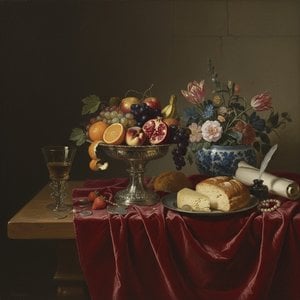
Embark on a sophisticated journey through the history of still life art. From Dutch Golden Age masterpieces to Baroque opulence, explore the profound symbolism and timeless beauty of the world's most exquisite table compositions.


最新の美術ニュース、限定オファー、そしてインテリアのアイデアをいち早くお届けします。
お客様のプロジェクトについてお聞かせください。当社の美術専門家が、お客様に合わせた3つのパーソナライズされた芸術提案をご提供いたします。
あなたにぴったりの3作品を無料で厳選いたします


 プレビュー
プレビュー
 プリントを購入
 シェアする
シェアする シェアする
シェアする
 詳細を見る
詳細を見る

 ダウンロード
 似ている作品
 X線調査
X線調査 スライドショー
 詳細を見る
詳細を見る









 ガラスオプションは、110cm未満のサイズでのみご利用いただけます。


