

スピーディーな制作と多彩な仕上げオプションが魅力の、ミュージアムクオリティなジークレー・キャンバスプリント。 ( 手描きの複製画を注文する デジタル画像販売へ切り替え)





























作品のオリジナル比率に合わせた、当店の規定サイズからお選びください。

特定のフレームやスペースに合わせて、ご自身でサイズを指定することも可能です。選択されたサイズが元の画像の比率と一致しない場合、作品をトリミングするか、鏡面反射または単色での塗りつぶしによって画像を拡張いたします。制作を開始する前に、ご確認用のデジタルモックアップをお送りいたします。
画面上のプレビューには、実際のトリミングや拡張は反映されませんのでご注意ください。最終的な構図を正確に確認できるのは、モックアップのみとなります。
カスタムサイズも承っておりますが、元の比率を維持するためには、あらかじめ用意されたリストからサイズを選択することをお勧めいたします。

Christ before Pilate (detail)
複製画サイズ一覧
The painting “Christ before Pilate” by Hans Multscher, created around 1437, is not merely a depiction of a biblical scene; it’s a profound meditation on power, judgment, and the weight of human responsibility. Multscher, a pivotal figure bridging the Gothic and burgeoning Renaissance in Germany, masterfully captures a tense, almost suffocating atmosphere within this single composition. He wasn't simply replicating a narrative from scripture; he was distilling its essence – the agonizing confrontation between divine authority and earthly doubt – into a powerfully resonant visual experience. The painting’s enduring appeal lies not just in its technical skill but in its ability to evoke a deep sense of empathy for both Christ and Pilate, forcing the viewer to confront uncomfortable questions about faith, guilt, and the nature of leadership.
Multscher’s style is immediately recognizable as a significant step forward in German art. Departing from the stylized forms of late Gothic painting, he embraces a newfound realism that anticipates the meticulous detail and naturalistic portrayal characteristic of the Northern Renaissance. Observe how he renders the textures of the clothing – the heavy wool of Christ's robe, the rough linen of Pilate’s tunic – with astonishing accuracy. The faces are equally compelling; Christ’s expression is one of quiet resignation mingled with a profound sorrow, while Pilate’s face reflects a mixture of weariness and reluctant apprehension. The artist skillfully employs chiaroscuro—the dramatic contrast between light and shadow—to heighten the emotional impact, drawing our attention to key figures and creating a sense of depth within the crowded scene. The use of oil paint allowed for layering and blending, contributing significantly to the richness and luminosity of the work.
Beyond its realistic depiction, “Christ before Pilate” is rich in symbolic detail. The gathering of onlookers – a diverse group representing Roman officials, Jewish elders, and common citizens – underscores the universal nature of Christ’s trial. The presence of the bowls and cups suggests the offer of compromise, the temptation to avert judgment through earthly means. Note the subtle gestures: Christ's outstretched hands, Pilate’s averted gaze, the nervous fidgeting of the guards—each detail contributes to the narrative tension. The inclusion of animals – a dog and a bird – adds an element of earthy realism and perhaps hints at the broader themes of judgment and innocence. The positioning of these figures is deliberate; they frame Christ within a microcosm of human society, highlighting the conflict between divine law and human desire.
Created during a period of significant artistic transition in Germany, “Christ before Pilate” reflects Multscher’s engagement with both established Gothic traditions and emerging Renaissance influences. His work is closely linked to the Wurzach Altar, a monumental altarpiece that once dominated the church of Wurzach in southern Germany. The wings of this altar, now separated into panels, are particularly significant for their depiction of the Passion narrative. Multscher’s contribution—the central panel depicting Christ before Pilate—is considered one of the most compelling and emotionally resonant images from the entire altarpiece. His workshop produced numerous copies and variations on this theme, demonstrating its enduring appeal to artists and viewers alike. The painting's influence can be seen in subsequent depictions of the Passion narrative, solidifying Multscher’s place as a key figure in the development of German art.
Today, reproductions of “Christ before Pilate” continue to captivate audiences with its timeless message and masterful execution. It serves as a poignant reminder of the complexities of faith, justice, and the enduring power of human emotion—a testament to Hans Multscher’s artistic vision and his profound understanding of the human condition.


1400 - 1467 , ドイツ
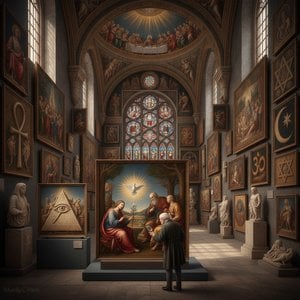
Explore the profound power of religious symbolism in art history. From Renaissance masterpieces to sacred iconography, uncover the hidden meanings behind divine details in a deep dive into classical art excellence.

 設置イメージを確認
 送る
送る シェア
シェア
 詳細情報
詳細情報 ガイドを表示

 画像をダウンロード
 似ている作品
 X線調査
X線調査 スライドショー
 統計情報
統計情報


 続きを読む
続きを読む









 ガラスオプションは、110cm未満のサイズでのみご利用いただけます。


