
迅速な制作と多彩な仕上げオプションを備えた、ミュージアムクオリティのジークレーまたはキャンバスプリント。 ( 手描きの絵画を購入 デジタル画像販売へ切り替え)





























作品のオリジナル比率に合わせた、当店の規定サイズからお選びください。

特定のフレームやスペースに合わせて、ご自身でサイズを指定することも可能です。選択されたサイズが元の画像の比率と一致しない場合、作品をトリミングするか、鏡面反射または単色での塗りつぶしによって画像を拡張いたします。制作を開始する前に、ご確認用のデジタルモックアップをお送りいたします。
画面上のプレビューには、実際のトリミングや拡張は反映されませんのでご注意ください。最終的な構図を正確に確認できるのは、モックアップのみとなります。
カスタムサイズも承っておりますが、元の比率を維持するためには、あらかじめ用意されたリストからサイズを選択することをお勧めいたします。

Untitled (975)
複製画のサイズ
Hans Holbein the Younger's "Untitled (975)" presents a compelling and enigmatic portrait, a quintessential example of the Northern Renaissance master’s unparalleled ability to capture not just physical appearance but also the very soul of his subjects. The painting depicts a man – identified only by this designation – rendered with an almost unnerving realism, immediately drawing the viewer into a direct confrontation. His stern gaze, fixed upon us across the centuries, speaks of authority, perhaps religious or secular, yet simultaneously hints at a profound inner contemplation. The meticulous detail evident in every fold of his robe and the glint of the gold chain surrounding his neck underscores Holbein’s dedication to precise observation and masterful technique – hallmarks that defined his artistic legacy.
Holbein was renowned for his painstaking approach, a direct inheritance from his father, Hans Holbein the Elder. This wasn't simply about replicating what he saw; it was about dissecting reality and reconstructing it on canvas with an almost scientific precision. The use of oil paint allowed him to build up layers of color – glazes – achieving luminous effects and subtle gradations that were revolutionary for his time. Notice the way light catches the folds of the robe, creating a sense of volume and texture. Similarly, the rendering of the man’s face is remarkable for its psychological depth; the slight furrow in his brow, the set of his jaw, all contribute to an impression of quiet intensity. The inclusion of two secondary figures – one at the upper left and another near the bottom right – adds a layer of complexity, suggesting a scene of observation or perhaps even judgment, further enriching the narrative potential of the portrait.
Created during Holbein’s time in England (approximately 1532-1536), this work reflects the artistic currents of the Tudor court. The subject's attire – a robe with a gold chain – strongly suggests a figure of high status, likely a religious dignitary or an important member of the court. Such portraits were not merely decorative; they served as powerful statements of identity and authority within a hierarchical society. Holbein’s commissions for Henry VIII and other prominent figures demonstrate his ability to navigate the complex political landscape of the era while simultaneously producing works of enduring artistic merit. The painting's ambiguity – the lack of a clear title or identifying details – adds to its mystique, inviting viewers to project their own interpretations onto the subject.
"Untitled (975)" continues to captivate audiences with its arresting realism and psychological depth. Holbein’s ability to convey not just appearance but also character and mood is a testament to his genius. This portrait exemplifies the Northern Renaissance's focus on humanism, exploring the complexities of individual identity within a broader historical context. A hand-painted reproduction offers an unparalleled opportunity to experience the power and beauty of this iconic work firsthand, bringing Holbein’s masterful technique and profound insights into your own space.


1497 - 1543 , イタリア
Discover the distinction between WahooArt's hand-painted oil reproductions and archival Giclée prints. An expert guide for elite collectors seeking texture, depth, and museum-quality excellence for their private collections.
Unlock your creative potential with WahooArt. Learn how to scale your art business through our automated print and premium oil reproduction services, transforming your original works into a global, passive income stream without compromising academic excellence.
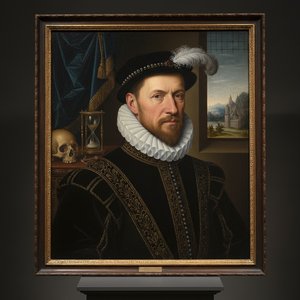
Explore the breathtaking precision of Hans Holbein the Younger. From Tudor royal portraits to intricate Northern Renaissance details, discover the mastery behind his legendary works and learn how to bring this historical grandeur into your collection with museum-quality reproductions.

Master the nuances of Giclée printing with our expert guide. Discover how pigment-based inks and museum-grade substrates create fade-resistant, high-fidelity art reproductions designed for discerning collectors seeking unparalleled quality and longevity.


 プレビュー
プレビュー
 シェアする
シェアする シェアする
シェアする
 詳細を見る
詳細を見る ガイド
ガイド

 ダウンロード
 似ている作品
 X線調査
X線調査 スライドショー
 統計情報
統計情報

 詳細を見る
詳細を見る









 ガラスオプションは、110cm未満のサイズでのみご利用いただけます。


![ジャン・ド・ダンティヴィルとジョルジュ・ド・セルヴの二重肖像画(別名:大使たち)[細部]](/media/artworks/images-thumb/bb/ab/bbab7ce77b7dd15d23d21114a63b51a4.jpg)

![ジャン・ド・ダンティヴィルとジョルジュ・ド・セルヴの二重肖像画(別名『大使たち』)[細部]](/media/artworks/images-thumb/42/81/42813dc49b2f72bce897aaf8b747ad5b.jpg)


