
当社のアーティストが、お客様のご希望のサイズと額縁に合わせて、キャンバスに手描きで制作する油彩画です。 ( プリント版に切り替え デジタル画像販売へ切り替え)





























作品のオリジナル比率に合わせた、当店の規定サイズからお選びください。

特定のフレームやスペースに合わせて、ご希望のサイズをご入力いただけます。選択されたサイズが元の画像の比率と異なる場合、アートワークをトリミングするか、手描きで要素を追加して絵画を拡張いたします。デジタルモックアップ を制作し、制作開始前にご確認(承認)をいただきます。
画面上のプレビューは、実際のトリミングや拡張を正確に反映しているものではありません。最終的な構図は、モックアップによってのみ正確にご確認いただけます。
カスタムサイズもご利用いただけますが、元の比率を維持するためには、あらかじめ用意されたリストからサイズを選択することをお勧めいたします。

Untitled (940)
複製画のサイズ
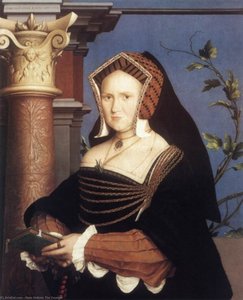
In the quiet presence of Hans Holbein the Younger’s Untitled (940), one does not merely observe a portrait; one enters a profound dialogue with history. This captivating work depicts a woman of dignified composure, her likeness rendered with that unmistakable Northern Renaissance precision that has captivated collectors for centuries. Set against a subtly textured backdrop, the composition is anchored by two stately columns and the organic silhouette of a prominent tree—elements that do more than frame the subject; they ground her within a carefully constructed universe of stability and growth. As you gaze upon her, there is an immediate sense of encountering a soul preserved in time, captured with a level of detail that feels startlingly modern even five centuries later.
The technical mastery on display is nothing short of breathtaking. Holbein, a titan of the 16th century, utilizes the medium of oil on canvas to achieve a luminous, almost breathing quality in the subject's skin tones. Through the meticulous layering of thin glazes, he captures the softest nuances of light and shadow, allowing the textures of her black dress and ruffled collar to emerge with tactile clarity. This technique creates a sense of depth that invites the eye to linger on the subtle folds of fabric and the delicate way she holds a book or piece of paper, suggesting an intellect as refined as her appearance. For the discerning interior designer, such a piece offers a focal point of unparalleled sophistication, bringing a sense of academic weight and timeless elegance to any curated space.
Beyond the surface beauty lies a rich tapestry of symbolic meaning, deeply rooted in the humanist spirit of the Tudor era. During his tenure at the English court under Henry VIII, Holbein became a master at embedding subtle narratives within his portraiture. Here, the architectural columns serve as emblems of authority and permanence, reflecting the social standing of a noblewoman within the rigid hierarchy of the period. In contrast, the inclusion of the tree introduces a vital element of nature, representing life, resilience, and an enduring beauty that transcends the fleeting moments of human existence. This duality between the man-made and the natural creates a balanced, harmonious composition that resonates with emotional depth.
The emotional impact of this masterpiece is found in its quietude. There is no grand gesture or dramatic movement; instead, Holbein relies on the woman's steady gaze to bridge the gap between the past and the present. Her expression, a delicate blend of inner contemplation and quiet grace, prompts the viewer to reflect on themes of dignity and perhaps even a hint of unspoken vulnerability. To possess a reproduction of this work is to bring more than just decoration into a home; it is to invite an atmosphere of intellectual curiosity and serene reflection. It remains a testament to Holbein’s unique ability to transform mere pigment into a profound human experience, making it an essential acquisition for those who value art that speaks to the heart as much as the eye.


1497 - 1543 , イタリア

Explore the captivating world of Angelo Chiacchio, a master of mid-century American illustration. Discover his evolution, signature style, and lasting impact on commercial art & design. Learn about his legacy at the Museum of American Illustration.

Explore 10 iconic paintings dominated by black tones, from Rembrandt’s chiaroscuro to Goya's dark expressions. Discover the stories behind these masterpieces & find museum-quality art reproductions for your home at .
Explore the captivating world of Edmund Dulac, a master of Golden Age illustration! Discover his enchanting fairy tales, Art Nouveau style, and lasting influence on art & design. Learn about *The Rubaiyat* and more.
Explore the captivating world of Victorian illustration! Discover Pre-Raphaelite influences, key artists like Rossetti & Stephens, and the era's rich narrative detail. A deep dive for art enthusiasts.

Explore the captivating world of Kay Rasmus Nielsen, a celebrated Golden Age illustrator renowned for his Art Nouveau fairy tale art & Disney contributions. Discover his unique style, enduring legacy, and how to collect his enchanting works.


 プレビュー
プレビュー
 シェアする
シェアする シェアする
シェアする
 詳細を見る
詳細を見る ガイド
ガイド

 ダウンロード
 似ている作品
 X線調査
X線調査 スライドショー
 統計情報
統計情報

 詳細を見る
詳細を見る









 ガラスオプションは、110cm未満のサイズでのみご利用いただけます。




![ジャン・ド・ダンティヴィルとジョルジュ・ド・セルヴの二重肖像画(別名:大使たち)[細部]](/media/artworks/images-thumb/bb/ab/bbab7ce77b7dd15d23d21114a63b51a4.jpg)

![ジャン・ド・ダンティヴィルとジョルジュ・ド・セルヴの二重肖像画(別名『大使たち』)[細部]](/media/artworks/images-thumb/42/81/42813dc49b2f72bce897aaf8b747ad5b.jpg)


