
x


オンラインプレビューをはるかに凌ぐ、高解像度で鮮明なデジタル画像をご購入いただけます。
各ファイルは、社内の専門家が高度なツールと熟練した手作業によるレタッチを用いて、細心の注意を払って準備されています。すべての画像において、卓越した鮮明度、正確な色彩再現性、そして繊細なディテールを保証いたします。
最終ファイルは、プロフェッショナルな編集・印刷環境ですぐにご利用いただけるよう最適化された状態で、72時間以内にメールにてお届けいたします。これは、一流のデザインスタジオ、出版社、ギャラリーから信頼されているものと同等の品質です。
WahooArt.com を選ぶことは、単に画像を手に入れることではありません。それは、プロの手によって精密に仕上げられ、満足保証が付いた高品質なデジタルアートワークを受け取ることを意味します。ご注文いただいた際に自動的に付随する内容は、以下の通りです:

ご注文から72時間以内に、高解像度のデジタル画像ファイルがメールでお手元に届きます。すぐにそのままご利用いただけます。

お客様の作品は、高度なAIツールと専門家による手作業の編集を組み合わせてプロフェッショナルに最適化されており、細部のディテール、鮮明さ、そして正確な色再現性を最大限に引き出しています。

ファイルを誤って削除したり、紛失してしまったりしましたか?ご安心ください。いつでも無料で再送いたします。

関税や手数料、配送料を気にすることなく、お気に入りのアートワークをすぐにお楽しみいただけます。デジタルダウンロードは常に免税です。

プロ仕様のツールとカラーマネジメント技術を用いることで、デジタル画像が元の色を最大限に忠実に再現することを保証いたします。

ご購入いただいたデジタル画像にご満足いただけない場合は、60日以内であれば、修正または100%の返金(理由を問う必要はありません)をさせていただきます。

ご満足いただけない場合は、デジタルファイルを受け取ってから60日以内であれば、理由を問わず全額返金いたします。

3枚購入で10%OFF - 5枚購入で15%OFF - 10枚以上購入で20%OFF。クリエイティブなプロジェクト、ギャラリー、エージェンシーに最適です。

Hanne-Rose Genzken, known widely as Isa Genzken, emerged as a pivotal figure in the contemporary art landscape, her journey beginning in the quiet northern German city of Bad Oldesloe in 1948. Her formative years unfolded against the backdrop of post-war Germany, an environment steeped in reconstruction and grappling with its complex past—a context that would subtly yet profoundly influence her artistic trajectory. She pursued formal training at the Hamburg University of Fine Arts from 1968 to 1971, followed by studies at the Berlin University of the Arts. Recognizing the financial demands of art school, Genzken supplemented her education with part-time modeling work, an experience that perhaps subtly informed her later engagement with notions of representation and the body in her sculptures.
A crucial turning point arrived in 1973 when she transferred to the Kunstakademie Düsseldorf. This move placed her within a vibrant artistic milieu alongside peers like Katharina Fritsch and Thomas Struth, fostering an environment of critical dialogue and experimentation. The academy’s faculty—including influential figures such as Joseph Beuys, Bernd and Hilla Becher, and Gerhard Richter—provided a stimulating intellectual atmosphere that encouraged Genzken to push the boundaries of artistic convention.
Isa Genzken’s work defies easy categorization. While sculpture remains central to her practice, she consistently expands into diverse media including photography, video, film, collage, and even assemblage. This refusal to be confined by a single discipline is a hallmark of her artistic approach. Her early sculptures, particularly the Hyperbolos and Ellipsoids series from the late 1970s, demonstrate a fascination with minimalist forms and geometric abstraction. However, these were not merely exercises in formal purity; they subtly questioned the utopian ideals often associated with Minimalism.
Throughout the 1980s, Genzken’s work began to engage more directly with architecture, exploring themes of urban space, modernity, and alienation. She conceived a series of plaster and concrete sculptures that investigated architectural structures—often fragmented or incomplete—reflecting a critical perspective on the built environment. This period also saw her collaboration with Gerhard Richter on the design of the König-Heinrich-Platz underground station in Duisburg, an ambitious project that further solidified her interest in public space.
Genzken’s life has been marked by both artistic triumph and personal challenges. Her diagnosis with bipolar disorder profoundly impacted her creative process, leading to periods of intense productivity interspersed with times of withdrawal and treatment for substance abuse. She openly acknowledges the influence of these experiences on her work, suggesting that her art serves as a means of processing and confronting complex emotional states.
The 1990s witnessed a significant shift in Genzken’s aesthetic. She began incorporating found objects—plastic furniture, mannequins, everyday detritus—into her sculptures and installations. These assemblages often possess a raw, unsettling quality, reflecting the anxieties and contradictions of contemporary consumer culture. The Empire/Vampire series, created in response to the September 11th attacks, exemplifies this period, using fragmented figures and discarded materials to evoke a sense of trauma and disorientation.
Isa Genzken’s influence on contemporary art is undeniable. Her willingness to embrace diverse media, her critical engagement with architecture and consumer culture, and her unflinching exploration of personal experience have inspired generations of artists. She challenges traditional notions of sculpture, blurring the boundaries between high art and everyday life.
Her work resonates deeply within a postmodern context, questioning grand narratives and embracing fragmentation and ambiguity. She is celebrated for her ability to create works that are both visually striking and intellectually provocative—works that demand attention not only for their formal qualities but also for the complex social and political issues they address.
Isa Genzken continues to live and work in Berlin, remaining a vital force in the contemporary art world. Her prolific output and unwavering commitment to experimentation ensure her enduring legacy as one of the most important artists of our time.
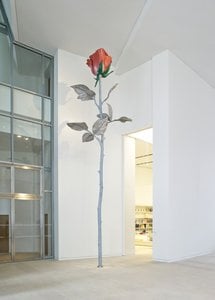
1948 - , Germany


最新の美術ニュース、限定オファー、そしてインテリアのアイデアをいち早くお届けします。
お客様のプロジェクトについてお聞かせください。当社の美術専門家が、お客様に合わせた3つのパーソナライズされた芸術提案をご提供いたします。
あなたにぴったりの3作品を無料で厳選いたします


 プレビュー
プレビュー
 プリントを購入
 シェアする
シェアする シェアする
シェアする
 詳細を見る
詳細を見る

 ダウンロード
 似ている作品
 X線調査
X線調査 スライドショー

 詳細を見る
詳細を見る


