アート相談を無料で

x
プリントを購入 プリントを購入画像を 購入する 画像を 購入する シェアするシェアする
詳細を見る詳細を見る お気に入りに追加 お気に入りに追加 ダウンロードダウンロード 似ている作品似ている作品 X線X線 スライドショースライドショー

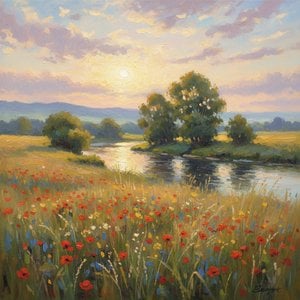
Red Landscape

Discover 'Red Landscape' by Gyula Bathyany – a stunning impressionistic oil painting of Hungarian hills bathed in golden light. Explore romantic realism & textural brushwork.

Explore the evocative paintings of Gyula Bathyany! Captivating landscapes & figures in a distinctive style – Hungarian artist known for his romantic realism & timeless beauty.

手描き油彩複製画

当社のアーティストが、お客様のご希望のサイズと額縁に合わせて、キャンバスに手描きで制作する油彩画です。

Standard
custom
CM
INCH

作品のオリジナル比率に合わせた、当店の規定サイズからお選びください。

高さ

特定のフレームやスペースに合わせて、ご希望のサイズをご入力いただけます。選択されたサイズが元の画像の比率と異なる場合、アートワークをトリミングするか、手描きで要素を追加して絵画を拡張いたします。デジタルモックアップ を制作し、制作開始前にご確認(承認)をいただきます。
画面上のプレビューは、実際のトリミングや拡張を正確に反映しているものではありません。最終的な構図は、モックアップによってのみ正確にご確認いただけます。
カスタムサイズもご利用いただけますが、元の比率を維持するためには、あらかじめ用意されたリストからサイズを選択することをお勧めいたします。

カスタマイズの例:顔をお客様の写真に置き換える、ペットを追加する(例:猫を犬に変更)、背景に隠れたメッセージを入れる、背景の風景や要素を変更するなど。
ご注文後、WahooArt.com チームより詳細な指示をお送りするとともに、仕上がりイメージ(モックアップ)をご提供いたします。

世界中への配送()は、通常の5週間ではなく、3〜4週間でお届けいたします。(5 7月)。品質には一切妥協いたしません。

why_choose_icon
世界中へ無料エクスプレス配送
why_choose_icon
高品質なリネンキャンバス
why_choose_icon
配送時完全保険付
why_choose_icon
関税・輸入税の払い戻し保証
why_choose_icon
忠実な色彩再現保証
why_choose_icon
60日間返品保証(製造上の欠陥のみ)
why_choose_icon
100% 全額返金保証
why_choose_icon
まとめ買い割引のご案内

合計金額

-

reproduction

Red Landscape

複製技法

複製画のサイズ

-

合計金額

-

関連作品


アーティストの略歴

Early Life and Artistic Beginnings

Gyula Batthyány, born in Ikervár on May 10th, 1887, inherited a lineage steeped in Hungarian history and aristocracy. His father, Count Lajos Batthyány, was a prominent figure—governor of Fiume and a member of parliament—while his mother, Countess Ilona Andrássy, further cemented the family’s position within Hungary's elite circles. Perhaps most significantly, he was the great-grandson of Lajos Batthyány, the nation’s first Prime Minister, a connection that would subtly inform his later artistic explorations of Hungarian identity and society. Even in early childhood, a precocious talent manifested; by the age of three, young Gyula had already begun to draw, hinting at the creative path he was destined to follow. His formal education commenced at the prestigious Hungarian Academy of Fine Arts, where he studied under the guidance of János Vaszary. However, his artistic horizons extended beyond Hungary’s borders. In 1907, he ventured to Munich to learn from Angelo Jank, and subsequently spent time at the Académie Julian in Paris (1910-1913), forging friendships with luminaries like Léon Bakst—a relationship that would profoundly shape his aesthetic sensibilities. A year after his Parisian studies, Batthyány’s work was already garnering attention, exhibited at the Ernst Museum in Budapest, signaling the emergence of a distinctive artistic voice.

A Career Defined by Style and Social Commentary

Batthyány's career unfolded against a backdrop of shifting social and political currents in Hungary. He first gained recognition through exhibitions alongside Beck Ö. Fülöp in 1914 at the Ernst Museum, establishing himself within the Budapest art scene. Regular displays followed at the Art Gallery and National Salon between 1921 and 1938, solidifying his presence as a key figure of Hungarian modernism. In 1922, he founded an artist colony in Bicske, fostering a creative environment that allowed him to further develop his unique style. From the 1920s onward, Batthyány’s artistic pursuits expanded into theater design, heavily influenced by the set and costume work of Sergei Diaghilev's collaborator, Leonid Bakst. This foray into theatricality would become a defining characteristic of his paintings—a sense of drama, pose, and carefully constructed artifice. His works often depicted scenes from aristocratic society, but these were not simple celebrations of wealth or privilege. Instead, Batthyány offered a subtly satirical commentary on the hollowness and decadence lurking beneath the surface of elegance. He uniquely portrayed luxurious pleasure girls, elegant gentlemen, gangsters—posing, theatrical characters inhabiting an aristocratic milieu brimming with sultry eroticism.

Influences and Artistic Development

Batthyány’s artistic style was a complex synthesis of various influences, blending elements of late Art Nouveau with Expressionist tendencies and a touch of Mannerism. The elongated figures in his paintings recall the work of El Greco, while the overall decorativeness hints at the illustration styles of Surrealism and Art Deco. He drew inspiration from artists like Daumier, whose social realism resonated with Batthyány’s own critical perspective on society. However, he wasn't merely imitating these masters; he forged a distinctive visual language characterized by gracefully elongated forms, swirling organic shapes, and a dreamlike quality that set his work apart. His paintings are not static representations of reality but rather energetic compositions where form and color intertwine to create an atmosphere of tension and intrigue. The use of texture—often achieved through mixed media—further enhances the emotional impact of his works, adding depth and complexity to their surfaces.

Major Achievements and Historical Significance

Throughout his career, Batthyány received numerous accolades for his artistic achievements, including silver medals in San Francisco (1916) and Barcelona (1930), as well as a gold medal in Paris (1934). He also earned a bronze medal at the 1937 World Exhibition in Paris. However, perhaps his most significant achievement lies not in awards but in the enduring power of his paintings to capture a specific moment in Hungarian history and society. His works offer a glimpse into the lives of the aristocracy—their pleasures, their anxieties, and their moral ambiguities. He was a known opponent of national socialists, which led to his unjust imprisonment for eight years in 1952. Despite spending five years incarcerated in Márianosztra and having his property confiscated, he continued to create art, albeit under difficult circumstances. After his release, he lived in relative seclusion until his death in Polgárdi in 1959. Today, Batthyány’s paintings are held in the collection of the Hungarian National Gallery and other museums around the world, serving as a testament to his artistic vision and historical importance. His legacy endures as a powerful voice of social commentary and a master of evocative realism.
  • Notable Works: “Spanish Gentlemen,” “Remembrance,” “Red Landscape.”
  • Influences: El Greco, Daumier, Léon Bakst.
  • Style Characteristics: Romantic Realism, Expressionist portraiture, theatricality, mixed media texture.
gyula batthyany

gyula batthyany

1887 - 1959 , Hungary

基本情報

  • Artistic Movement Or Style: Romantic Realism
  • Artists Or Movements Influenced By This Artist: ['El Greco']
  • Artists Who Influenced This Artist:
    • János Vaszary
    • Angelo Jank
    • Leon Bakst
  • Date Of Birth: 1887
  • Full Name: Gyula Batthyány
  • Nationality: Hungarian
  • Notable Artworks:
    • Spanish Gentlemen
    • In The Harem
    • Red Landscape
  • Place Of Birth: Ikervár, Hungary