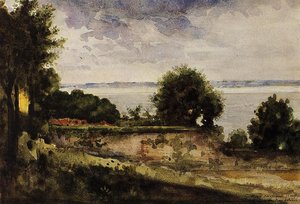
迅速な制作と多彩な仕上げオプションを備えた、ミュージアムクオリティのジークレーまたはキャンバスプリント。 ( 手描きの絵画を購入 デジタル画像販売へ切り替え)





























作品のオリジナル比率に合わせた、当店の規定サイズからお選びください。

特定のフレームやスペースに合わせて、ご自身でサイズを指定することも可能です。選択されたサイズが元の画像の比率と一致しない場合、作品をトリミングするか、鏡面反射または単色での塗りつぶしによって画像を拡張いたします。制作を開始する前に、ご確認用のデジタルモックアップをお送りいたします。
画面上のプレビューには、実際のトリミングや拡張は反映されませんのでご注意ください。最終的な構図を正確に確認できるのは、モックアップのみとなります。
カスタムサイズも承っておりますが、元の比率を維持するためには、あらかじめ用意されたリストからサイズを選択することをお勧めいたします。

The Scottish Horseman
複製画のサイズ
Gustave Moreau's "The Scottish Horseman" is not merely a depiction of a rider and his steed; it’s an evocative journey into the realm of Romanticism, steeped in Symbolist ideals. Painted around the 1850s, this work stands as a fascinating bridge between the artist’s early academic training and the burgeoning mystical style that would define his career. The painting immediately draws the eye to its central figure – a lone horseman clad in traditional Scottish attire, galloping across a dramatic landscape beneath a swirling, cloud-laden sky. The composition is dynamic, imbued with a sense of forward momentum as both man and beast seem propelled by an unseen force. It’s a scene that whispers of adventure, freedom, and the untamed spirit of the Highlands.
Moreau's artistic lineage is clearly visible in “The Scottish Horseman,” particularly through his debt to Eugène Delacroix. Delacroix’s influence isn’t simply stylistic; it’s a shared sensibility for dramatic composition, vibrant color, and the exploration of exotic or historically resonant subjects. The painting recalls Delacroix's own masterpiece, "Tam O'Shanter," inspired by Robert Burns’ ballad, in its depiction of a wild ride against a tempestuous backdrop. Moreau, having studied Delacroix’s work firsthand, absorbed this passion for narrative and emotional intensity. However, Moreau doesn’t merely imitate; he infuses the scene with his own unique sensibility, moving beyond straightforward illustration towards a more symbolic and atmospheric representation. The horseman isn't simply *in* the landscape; he is inextricably linked to it, embodying its rugged beauty and untamed energy.
While seemingly a straightforward depiction of Scottish life, “The Scottish Horseman” operates on multiple layers. The kilt-clad figure isn’t just a representation of national identity; he embodies a romanticized vision of Celtic heritage – a connection to ancient myths and legends. The mountainous terrain, rendered with a dramatic interplay of light and shadow, suggests both physical challenge and spiritual ascent. The turbulent sky hints at the unpredictable forces of nature and perhaps even the inner turmoil of the rider himself. Moreau was deeply fascinated by mythology and literature, and his paintings are often laden with symbolic meaning. In this work, the horse itself can be interpreted as a symbol of power, freedom, and untamed instinct, while the solitary figure suggests a quest for self-discovery or a confrontation with fate. The painting’s enduring appeal lies in its ability to evoke these complex emotions and interpretations.
Moreau's technical skill is evident in every brushstroke of “The Scottish Horseman.” He masterfully balances meticulous detail – particularly in the rendering of the horse’s musculature and the folds of the kilt – with a broader, more atmospheric approach to the landscape. The use of color is equally impressive; muted tones are punctuated by flashes of light that draw the eye and create a sense of drama. The painting's surface isn’t smooth or polished; it retains a visible texture, adding to its tactile quality and emphasizing the artist’s hand in its creation. This technique contributes to the overall feeling of movement and energy, making the scene feel alive and immediate. It is this combination of technical precision and emotional depth that solidifies Moreau's place as a pivotal figure in the Symbolist movement.


1826 - 1898 , フランス
Embark on a visual journey through the romantic world of horse carriage art. Discover the mastery of equestrian oil paintings, from Impressionist textures to classical realism, and learn how to bring timeless elegance into your home with museum-quality reproductions.


 プレビュー
プレビュー
 シェアする
シェアする シェアする
シェアする
 詳細を見る
詳細を見る

 ダウンロード
 似ている作品
 X線調査
X線調査 スライドショー
 統計情報
統計情報
 詳細を見る
詳細を見る









 ガラスオプションは、110cm未満のサイズでのみご利用いただけます。