迅速な制作と多彩な仕上げオプションを備えた、ミュージアムクオリティのジークレーまたはキャンバスプリント。 ( 手描きの絵画を購入 デジタル画像販売へ切り替え)





























作品のオリジナル比率に合わせた、当店の規定サイズからお選びください。

特定のフレームやスペースに合わせて、ご自身でサイズを指定することも可能です。選択されたサイズが元の画像の比率と一致しない場合、作品をトリミングするか、鏡面反射または単色での塗りつぶしによって画像を拡張いたします。制作を開始する前に、ご確認用のデジタルモックアップをお送りいたします。
画面上のプレビューには、実際のトリミングや拡張は反映されませんのでご注意ください。最終的な構図を正確に確認できるのは、モックアップのみとなります。
カスタムサイズも承っておりますが、元の比率を維持するためには、あらかじめ用意されたリストからサイズを選択することをお勧めいたします。

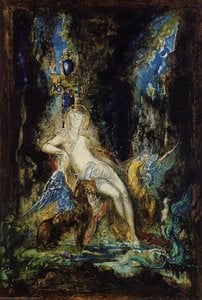
Oedipus the Wayfarer
複製画のサイズ
Gustave Moreau's *Oedipus the Wayfarer* is not merely a depiction of a famous myth; it’s an immersive journey into the heart of human destiny, rendered with a breathtaking intensity that defines the Symbolist movement. The painting captures the pivotal moment before Oedipus answers the Sphinx’s infamous riddle – a confrontation poised between intellect and fate, courage and foreboding. A young, resolute warrior stands before the majestic creature, not as an aggressor, but as a figure accepting a challenge laid down by ancient forces. This isn't a battle of strength, but a profound intellectual duel where the very fabric of Oedipus’s life hangs in the balance.
Moreau masterfully weaves symbolism throughout the composition, elevating it beyond simple illustration. The Sphinx’s immense wings speak to her divine origins and otherworldly power, while Oedipus's spear isn’t brandished as a weapon but held with a quiet determination—a symbol of his willingness to confront the unknown. The desolate, rocky landscape itself is laden with meaning, evoking a sense of timelessness and the weight of history pressing down upon the solitary figure. The artist’s technique further amplifies this dramatic effect. Visible brushstrokes and a richly textured application of paint create an almost sculptural quality on the canvas. Moreau's palette—dominated by deep browns, blues, and greens, punctuated with highlights of white and gold—contributes to the painting’s somber yet captivating atmosphere. He employs chiaroscuro – dramatic contrasts between light and shadow – to draw the viewer’s eye towards the central figures, heightening the sense of mystery and depth. While hinting at a flattened perspective characteristic of Romanticism, Moreau subtly suggests a vast, receding landscape, amplifying the feeling of awe-inspiring grandeur.
Gustave Moreau (1826-1898) was a central figure in the Symbolist movement, a reaction against the prevailing Realism and Naturalism of 19th-century art. Symbolists sought to express subjective emotions and ideas through evocative imagery rather than direct representation, and Moreau’s fascination with mythology, biblical stories, and exotic themes perfectly aligned with this aesthetic. He wasn't interested in simply *showing* a scene; he aimed to evoke feelings, suggest hidden meanings, and explore the depths of the human psyche. Though initially overlooked by some critics, his work experienced a significant resurgence in appreciation during the 1960s, solidifying his place as one of the most important Symbolist painters. His influence can be seen in the works of artists like Matisse and Rouault, who were captivated by his unique blend of detail, symbolism, and emotional intensity. A visit to the Musée Gustave Moreau in Paris offers an unparalleled opportunity to immerse oneself fully in his extraordinary artistic world—a preserved studio-home filled with over 1200 paintings, watercolors, and drawings.
*Oedipus the Wayfarer* is more than just a visually stunning artwork; it’s profoundly emotionally resonant. The painting evokes feelings of anticipation, mystery, and perhaps even a touch of foreboding. Its dramatic composition and rich symbolism make it a compelling focal point for any interior space. A reproduction of this masterpiece would lend an air of intellectual sophistication and timeless elegance to a study, library, or living room—inviting contemplation and sparking conversation. It’s a piece that speaks to the enduring power of myth and the complexities of the human spirit, offering a window into the eternal struggle between fate and free will. The painting's depth invites repeated viewing, revealing new layers of meaning with each encounter.


1826 - 1898 , フランス

Discover the profound allure of oil on canvas. Explore the mastery of impasto textures, the science of pigment longevity, and expert guides to selecting museum-quality reproductions that elevate your collection with timeless elegance and tactile depth.

Explore the breathtaking world of the Pre-Raphaelite Brotherhood. Discover how this movement redefined Victorian art through vivid detail, mythological depth, and romanticism. An expert guide for classic art enthusiasts seeking to rediscover these timeless masterpieces.

Embark on a sophisticated journey through the eternal allure of mythological art. Discover how master painters breathe life into ancient legends, from Greek deities to Baroque masterpieces, and learn to curate these timeless narratives within your own exquisite art collection.

Discover the enduring allure of oil on canvas. Explore how master techniques like impasto and glazing create the depth, texture, and emotional resonance found in the world's greatest masterpieces. An essential guide for fine art enthusiasts and discerning collectors.

Discover the enduring legacy of oil on board painting. Explore how historical techniques, rich impasto textures, and structural durability create timeless masterpieces that bridge Renaissance grandeur with modern art collecting excellence.


 プレビュー
プレビュー
 シェアする
シェアする シェアする
シェアする
 詳細を見る
詳細を見る ガイド
ガイド

 ダウンロード
 似ている作品
 X線調査
X線調査 スライドショー
 統計情報
統計情報
 詳細を見る
詳細を見る









 ガラスオプションは、110cm未満のサイズでのみご利用いただけます。