
迅速な制作と多彩な仕上げオプションを備えた、ミュージアムクオリティのジークレーまたはキャンバスプリント。 ( 手描きの絵画を購入 デジタル画像販売へ切り替え)





























作品のオリジナル比率に合わせた、当店の規定サイズからお選びください。

特定のフレームやスペースに合わせて、ご自身でサイズを指定することも可能です。選択されたサイズが元の画像の比率と一致しない場合、作品をトリミングするか、鏡面反射または単色での塗りつぶしによって画像を拡張いたします。制作を開始する前に、ご確認用のデジタルモックアップをお送りいたします。
画面上のプレビューには、実際のトリミングや拡張は反映されませんのでご注意ください。最終的な構図を正確に確認できるのは、モックアップのみとなります。
カスタムサイズも承っておりますが、元の比率を維持するためには、あらかじめ用意されたリストからサイズを選択することをお勧めいたします。

mere gregoire
複製画のサイズ
In the mid-19th century, the art world was often dominated by grand, idealized narratives and theatrical flourishes. However, Gustave Courbet, a defiant pioneer of the Realism movement, chose to turn his gaze toward the profound beauty found in the ordinary. His masterpiece, "Mere Grégoire," serves as a breathtaking window into this philosophy. Executed in 1862, the painting transcends a simple portrait of a peasant woman; it is an intimate study of stillness and the dignity of the human spirit. When one encounters this work, whether in a gallery or as a meticulously crafted reproduction in a private collection, there is an immediate sense of being invited into a moment of sacred, quiet contemplation.
The subject matter is deceptively simple yet emotionally complex. A woman sits upon a bench, her posture embodying a deep sense of repose and introspection. Her hands, clasped gently before her chest, act as a silent language, communicating a subtle vulnerability and the weight of inner reflection. Courbet deliberately avoids the aristocratic subjects favored by his contemporaries, choosing instead to champion the complexity of everyday life. This choice imbues the piece with a timeless social relevance, making it an ideal selection for those who appreciate art that speaks to the fundamental truths of the human experience.
To behold "Mere Grégoire" is to witness Courbet’s technical brilliance and his commitment to the tactile reality of the world. Eschewing the smooth, polished finishes of academic painting, Courbet utilized a heavy impasto technique. By applying pigment in thick, textured layers, he created a palpable physicality that allows light to dance across the surface of the canvas, capturing the nuances of shadow and form with remarkable accuracy. This ruggedness is not merely a stylistic choice but a way to ground the subject in a tangible, earthy reality.
The artist’s palette is a masterclass in understated elegance. He relies on muted, organic tones—rich ochres, deep browns, and warm reds—which create a sense of warmth and stability. The striking red background provides a dramatic contrast that adds immense depth to the composition, pushing the figure forward and demanding the viewer's attention. For interior designers, this sophisticated use of color offers a versatile anchor for a room, providing a sense of historical weight and classical luxury that complements both modern minimalist settings and traditional, richly textured decors.
Beyond the physical presence of the sitter, Courbet weaves delicate threads of symbolism throughout the composition to enrich its narrative depth. Beside the woman rests a vase of flowers, a classic motif representing beauty, fragility, and the fleeting nature of life. The addition of two butterflies fluttering through the scene introduces an element of ephemeral grace, contrasting the heavy, grounded presence of the woman with the lightness of nature. These elements work in harmony to create an atmosphere of serenity, inviting the observer to slow down and find peace within the frame.
For the discerning collector, "Mere Grégoire" offers more than just visual appeal; it offers an emotional sanctuary. The painting’s ability to evoke a sense of calm and introspection makes it a powerful tool for creating atmosphere in any living space. It is a piece that does not shout for attention but rather commands respect through its quiet strength. Owning a high-quality reproduction of this work allows one to bring a fragment of 19th-century revolutionary spirit into the home, serving as a constant reminder of the profound beauty found in life's most silent, unadorned moments.


1819 - 1877 , フランス
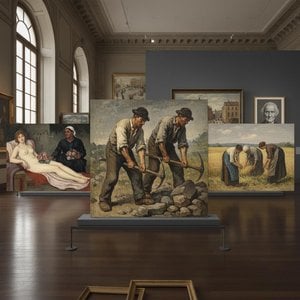
Explore the profound impact of Realism in art history. From Gustave Courbet's revolutionary techniques to the celebration of everyday life, discover how this movement captured the unfiltered truth of existence through masterful observation and raw, unyielding detail.


 プレビュー
プレビュー
 シェアする
シェアする シェアする
シェアする
 詳細を見る
詳細を見る

 ダウンロード
 似ている作品
 X線調査
X線調査 スライドショー
 統計情報
統計情報

 詳細を見る
詳細を見る









 ガラスオプションは、110cm未満のサイズでのみご利用いただけます。


