

迅速な制作と多彩な仕上げオプションを備えた、ミュージアムクオリティのジークレーまたはキャンバスプリント。 ( 手描きの絵画を購入 Switch to Digital Image)





























作品のオリジナル比率に合わせた、当店の規定サイズからお選びください。

特定のフレームやスペースに合わせて、ご自身でサイズを指定することも可能です。選択されたサイズが元の画像の比率と一致しない場合、作品をトリミングするか、鏡面反射または単色での塗りつぶしによって画像を拡張いたします。制作を開始する前に、ご確認用のデジタルモックアップをお送りいたします。
画面上のプレビューには、実際のトリミングや拡張は反映されませんのでご注意ください。最終的な構図を正確に確認できるのは、モックアップのみとなります。
カスタムサイズも承っておりますが、元の比率を維持するためには、あらかじめ用意されたリストからサイズを選択することをお勧めいたします。

Man with Pipe
複製画のサイズ
Gustave Courbet’s “Man with Pipe,” now residing within the esteemed Museu Nacional de Arte Antiga in Lisbon, Portugal, isn't merely a portrait; it’s a carefully constructed tableau of observation and introspection. Painted around 1848-49 during a pivotal period in Courbet’s artistic development, this oil on canvas transcends simple representation to become a profound meditation on the human condition – a quiet intensity captured within a confined space. The painting immediately draws the viewer in with its stark simplicity: a solitary man, seated indoors, lost in thought as he holds a pipe between his lips. Yet, beneath this apparent stillness lies a complex web of symbolism and artistic intent that continues to fascinate art historians and collectors alike.
Courbet’s decision to depict himself – or at least a figure strongly resembling him – was revolutionary for its time. Self-portraits were uncommon among established artists, often viewed with suspicion as narcissistic indulgences. Courbet, however, used this genre to explore his own evolving identity and artistic philosophy. The painting's composition is deliberately restrained, emphasizing the man’s face and posture. The dark background, a hallmark of Courbet’s style, serves not merely as a backdrop but actively contributes to the scene’s mood – creating depth and drawing attention to the subject’s features. Notice how the muted tones heighten the sense of introspection, suggesting a world beyond the frame.
“Man with Pipe” is a cornerstone of Courbet’s Realist movement, a direct challenge to the idealized aesthetics of Romanticism and Neoclassicism. Courbet rejected the notion that art should strive for beauty or grandeur, instead advocating for an honest depiction of everyday life – as he saw it. This commitment to portraying reality without embellishment was fiercely debated during his lifetime, with critics accusing him of vulgarity and a lack of artistic merit. However, Courbet’s insistence on observing and recording the world around him paved the way for future generations of artists, including Impressionists and Post-Impressionists.
The inclusion of the clock in the background is particularly significant. It anchors the scene firmly within a specific time and place – an interior setting that suggests contemplation and solitude. The red scarf adds a subtle splash of color, preventing the painting from becoming overly somber and hinting at a touch of warmth or perhaps even melancholy. Courbet’s meticulous attention to detail—the texture of the man's beard, the folds in his clothing, the subtle shadows on his face—demonstrates his commitment to capturing the essence of his subject with unparalleled accuracy.
Beyond its technical merits, “Man with Pipe” is rich in symbolic meaning. The pipe itself has become an iconic image associated with Courbet’s work, representing not just smoking but also contemplation, introspection, and perhaps even rebellion against societal norms. The man's gaze – direct, unwavering, and slightly melancholic – invites the viewer to share his thoughts and feelings. Some scholars interpret this intense stare as a reflection of Courbet’s own intellectual and artistic struggles. The painting can be seen as a portrait not just of a man, but of a soul grappling with questions of identity, purpose, and the complexities of human existence.
Reproductions by WahooArt offer an exceptional opportunity to experience the power and beauty of this seminal work firsthand. The meticulous detail and vibrant colors faithfully capture Courbet’s artistic vision, allowing you to bring this captivating portrait into your own home or studio. Explore their collection today and discover a timeless masterpiece.


1819 - 1877 , フランス
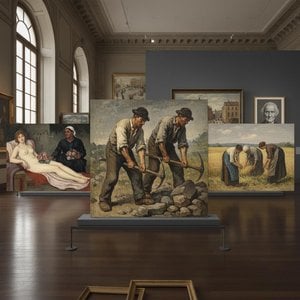
Explore the profound impact of Realism in art history. From Gustave Courbet's revolutionary techniques to the celebration of everyday life, discover how this movement captured the unfiltered truth of existence through masterful observation and raw, unyielding detail.

 プレビュー
プレビュー
 シェアする
シェアする シェアする
シェアする
 詳細を見る
詳細を見る

 ダウンロード
 似ている作品
 X線調査
X線調査 スライドショー
 Stats
Stats


 詳細を見る
詳細を見る









 ガラスオプションは、110cm未満のサイズでのみご利用いただけます。


