
迅速な制作と多彩な仕上げオプションを備えた、ミュージアムクオリティのジークレーまたはキャンバスプリント。 ( 手描きの絵画を購入 デジタル画像販売へ切り替え)





























作品のオリジナル比率に合わせた、当店の規定サイズからお選びください。

特定のフレームやスペースに合わせて、ご自身でサイズを指定することも可能です。選択されたサイズが元の画像の比率と一致しない場合、作品をトリミングするか、鏡面反射または単色での塗りつぶしによって画像を拡張いたします。制作を開始する前に、ご確認用のデジタルモックアップをお送りいたします。
画面上のプレビューには、実際のトリミングや拡張は反映されませんのでご注意ください。最終的な構図を正確に確認できるのは、モックアップのみとなります。
カスタムサイズも承っておりますが、元の比率を維持するためには、あらかじめ用意されたリストからサイズを選択することをお勧めいたします。

Josef Lewinsky as Carlos
複製画のサイズ
Gustav Klimt's “Josef Lewinsky as Carlos in Clavigo,” painted in 1895, isn’t merely a portrait; it’s a meticulously constructed allegory of theatricality, memory, and the very nature of performance. This arresting work, housed within the Galerie Belvedere in Vienna, transcends simple representation to become a shimmering meditation on art itself, inviting viewers into a dreamlike world where reality and illusion intertwine. Klimt, a pivotal figure in the Vienna Secession movement, masterfully employed his signature style—a potent blend of Symbolism, Art Nouveau, and elements of Byzantine iconography—to capture the essence of Josef Lewinsky, a celebrated Viennese actor known for his dramatic interpretations of Goethe’s tragedy.
The painting immediately draws the eye with its opulent use of gold leaf, a technique Klimt perfected during his “golden phase.” This lavish application isn't gratuitous; it serves to elevate the subject and imbue the scene with an aura of timelessness and mythic significance. The background fades into a hazy, almost ethereal expanse, dominated by shades of grey and brown, creating a sense of depth and drawing attention to Lewinsky’s central form. He is depicted in a dark green suit, a deliberate choice that contrasts sharply with the shimmering gold, further emphasizing his presence within this dreamscape.
Klimt deliberately layered symbolism throughout the composition to enrich its meaning. The most prominent element is the inclusion of three distinct figures flanking Lewinsky – a stylized mask, a statue, and a living woman. These represent the various facets of theatrical performance: the mask embodies anonymity and illusion, the statue symbolizes the enduring nature of art, and the woman represents the audience’s engagement with the drama. The presence of the Delphic tripod, an ancient symbol of wisdom and knowledge, subtly references the intellectual and philosophical underpinnings of Goethe's play, Clavigo, which explores themes of fate, love, and morality.
Lewinsky himself is positioned slightly off-center, his face turned towards the left, creating a sense of introspection. His posture—arms crossed, body tilted—suggests both confidence and vulnerability, capturing the complex emotions of a performer inhabiting a role. The sheet music with the initials “OP” – likely an abbreviation for ‘Opera’ – reinforces the painting's connection to the world of theatre and musicality, hinting at the emotional power of dramatic storytelling.
Klimt’s masterful brushwork is evident in the layering of colors and textures. The smooth gradients in the background contrast with the rougher areas around the edges and within the ghostly figures, creating a dynamic visual experience. The painting was created during a period of significant artistic experimentation in Vienna, as Klimt pushed beyond traditional academic styles to explore new forms of expression. He drew inspiration from Japanese art, particularly its emphasis on flatness, decorative patterns, and symbolic imagery – elements that are subtly reflected in “Josef Lewinsky as Carlos.”
The painting’s historical context is crucial to understanding its significance. Vienna at the end of the 19th century was a vibrant cultural center, grappling with rapid social and political changes. The Secession movement emerged as a reaction against these shifts, advocating for artistic freedom and innovation. Klimt's work embodies this spirit of rebellion, challenging conventional notions of beauty and representation.
“Josef Lewinsky as Carlos in Clavigo” is more than just a portrait; it’s an evocative exploration of the human condition. The painting’s dreamlike atmosphere, rich symbolism, and masterful technique create a powerful emotional resonance, inviting viewers to contemplate the relationship between art, memory, and performance. It's a testament to Klimt’s ability to capture not only the outward appearance of his subjects but also their inner lives—a feat that continues to captivate audiences today. The painting remains a cornerstone of Viennese Symbolism and a poignant reminder of the enduring power of artistic expression.


1862 - 1918 , オーストリア

Embark on a sophisticated journey through the splendor of Austrian art. From Gustav Klimt’s golden masterpieces to the elegance of the Viennese Secession, discover the history and symbolism behind Europe's most iconic works for the discerning collector.
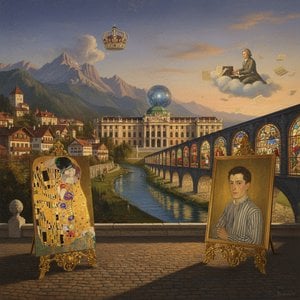
Embark on a sophisticated journey through Austrian art history. Explore the golden brilliance of Gustav Klimt and the elegance of the Vienna Secession through an expert lens, celebrating the enduring soul of Central European masterpieces.

Explore the profound impact of the Vienna Secession movement. Discover how visionaries like Gustav Klimt revolutionized modern art through symbolism, gold leaf, and bold ornamentation in this deep dive into the aesthetic revolution that redefined the visual landscape of Europe.


 プレビュー
プレビュー
 シェアする
シェアする シェアする
シェアする
 詳細を見る
詳細を見る

 ダウンロード
 似ている作品
 X線調査
X線調査 スライドショー
 統計情報
統計情報

 詳細を見る
詳細を見る









 ガラスオプションは、110cm未満のサイズでのみご利用いただけます。


