
迅速な制作と多彩な仕上げオプションを備えた、ミュージアムクオリティのジークレーまたはキャンバスプリント。 ( 手描きの絵画を購入 デジタル画像販売へ切り替え)





























作品のオリジナル比率に合わせた、当店の規定サイズからお選びください。

特定のフレームやスペースに合わせて、ご自身でサイズを指定することも可能です。選択されたサイズが元の画像の比率と一致しない場合、作品をトリミングするか、鏡面反射または単色での塗りつぶしによって画像を拡張いたします。制作を開始する前に、ご確認用のデジタルモックアップをお送りいたします。
画面上のプレビューには、実際のトリミングや拡張は反映されませんのでご注意ください。最終的な構図を正確に確認できるのは、モックアップのみとなります。
カスタムサイズも承っておりますが、元の比率を維持するためには、あらかじめ用意されたリストからサイズを選択することをお勧めいたします。

The Scullery Maid
複製画のサイズ
In the grand tapestry of the Italian Baroque, where soaring ceilings and heroic deities often command the viewer's gaze, Giuseppe Maria Crespi’s “The Scullery Maid” offers a profound and intimate alternative. Painted around 1710, this masterpiece serves as a tender window into the domestic rhythms of Bolognese life. Rather than reaching for the heavens, Crespi directs our attention downward, to the humble, earthbound reality of a kitchen in motion. The scene captures a woman lost in the quiet rhythm of her labor, standing at a table cluttered with the honest tools of her trade. There is a palpable sense of presence in the room; through the arrangement of simple bowls, scattered bottles, and the warmth of a nearby oven, Crespi invites us to inhabit this space, making the viewer not merely an observer, but a silent witness to a private moment of daily existence.
The emotional resonance of the work lies in its ability to find dignity within the mundane. There is no grand drama here, only the steady, rhythmic pulse of life. For the modern collector or interior designer, this painting offers a unique psychological depth; it does not demand attention through spectacle, but earns it through a quiet, enduring grace. It is a piece that breathes life into a room, providing a sense of groundedness and historical soul that more flamboyant works often lack.
Crespi, famously known as “Lo Spagnuolo” due to his penchant for Spanish-inspired fashion, brought an unconventional spirit to the Bolognese School. In “The Scullery Maid,” his technical brilliance is most evident in his masterful command of chiaroscuro. He does not use light simply to illuminate, but to sculpt the atmosphere itself. The way the light falls across the woman’s hands and the surfaces of the kitchen implements creates a dramatic interplay between visibility and mystery. This technique pulls the subject out of the shadows, lending her a sculptural weight and a lifelike vitality that feels almost tactile.
His palette is a sophisticated study in restraint, utilizing muted, earthy tones that ground the composition in a tangible reality. These subtle hues—sepia, ochre, and deep umber—work in harmony to create a sense of warmth and aged texture. This deliberate lack of garish color ensures that the focus remains on the textures of the scene: the coolness of ceramic, the roughness of stone, and the soft fabric of the maid's attire. For those seeking to curate an environment of sophisticated elegance, the tonal balance of this work provides a perfect anchor, blending seamlessly with both classical and contemporary interior aesthetics.
To understand “The Scullery Maid” is to understand Crespi’s rebellion against the idealized traditions of his era. While his contemporaries were busy painting mythological legends, Crespi was finding the extraordinary within the ordinary. He pioneered a form of genre painting that prioritized psychological truth over academic perfection. This commitment to realism allows the painting to transcend its 18th-century origins; the woman’s focused expression and the lived-in clutter of her workspace are themes that remain universally relatable across centuries.
Owning a high-quality reproduction of this work is an opportunity to bring a piece of art history's most intimate revolution into one's personal collection. It is more than just a depiction of a kitchen; it is an invitation to appreciate the beauty in the overlooked and the sacredness of the everyday. Whether placed in a sunlit study or a sophisticated dining area, Crespi’s work serves as a constant reminder of the profound artistry found in the simplest of human endeavors.


1665 - 1747 , イタリア

Immerse yourself in the dramatic beauty of the Baroque era. From Caravaggio’s chiaroscuro to Rembrandt's mastery, explore 10 iconic works that defined an age. Find museum-quality art reproductions and curated decor inspiration at WahooArt.com. Discover all masterpieces on WahooArt.com.
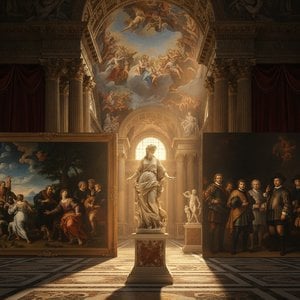
Step into the drama of the Baroque era. Explore 10 iconic masterpieces featuring breathtaking chiaroscuro and legendary artists. Find inspiration for your collection with museum-quality art reproductions at WahooArt.com. Discover all masterpieces on WahooArt.com


 プレビュー
プレビュー
 シェアする
シェアする シェアする
シェアする
 詳細を見る
詳細を見る ガイド
ガイド

 ダウンロード
 似ている作品
 X線調査
X線調査 スライドショー
 統計情報
統計情報


 詳細を見る
詳細を見る









 ガラスオプションは、110cm未満のサイズでのみご利用いただけます。


