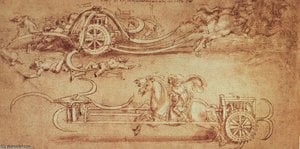
A Florentine Polymath: The Life and Legacy of Giulio Parigi
Giulio Parigi, born in Florence on April 6, 1571, emerged from a family deeply interwoven with the artistic fabric of the Medici court. His father, Alfonso di Santi Parigi, already an established architect and set designer serving the Grand Duke of Tuscany, provided young Giulio with an immersive education within a world of creative endeavor. This upbringing wasn’t merely observational; it was a hands-on apprenticeship in the arts of design, construction, and theatrical illusion. While initially enrolling at the Academy of Design as a painter in 1594, demonstrating early artistic inclinations, his path quickly converged with the family tradition. By 1597, he had formally integrated into the Grand Ducal Court, embarking on rigorous training under not only his father but also prominent figures like Bartolomeo di Antonio Ammannati and Bernardo Buontalenti – a renowned architect and theatre engineer. This diverse mentorship forged a unique skillset, blending architectural precision with the dynamism of stagecraft and the ingenuity of engineering principles. Parigi wasn’t simply learning trades; he was absorbing a holistic approach to artistic creation, one that would define his remarkable career.
Architectural Innovations and Medici Patronage
Parigi's contributions to Florentine architecture are both substantial and innovative. He didn’t merely replicate existing styles but actively shaped the urban landscape with forward-thinking designs. The Loggia del Grano, completed in 1619, stands as a testament to this vision. It was among the first public buildings to embrace the loggia style – a covered arcade for market trading – establishing a blueprint that would spread across Europe throughout the 16th and 17th centuries. This wasn’t just about aesthetics; it was about functionality, creating vibrant public spaces conducive to commerce and community life. His involvement with the Boboli Gardens (1617-1622) further showcased his versatility, constructing the enchanting Grotto of Vulcan (*Grotticina di Vulcano*) and designing a second axis that expanded the garden’s layout with elaborate bosquets. The reconstruction of Villa di Poggio Imperiale (1620-1622) demonstrated his skill in restoring and adapting existing structures, breathing new life into historical landmarks. Further commissions like the Ospedale dei Medicanti (1621), a public hospital, and the Church of San Felice in Piazza (1634-1635) solidified his reputation as an architect capable of balancing aesthetic beauty with practical needs. These projects weren’t isolated endeavors; they were integral to the Medici's ambitious program of urban renewal and artistic patronage.
The Stage as a Canvas: Parigi and Theatrical Design
Beyond architecture, Giulio Parigi carved out a significant legacy in theatrical design, becoming one of the most innovative stage designers of the 17th century. Working extensively for the Medici court, he transformed the theatre into a realm of illusion and spectacle. While few of his original sets have survived, historical accounts paint a vivid picture of elaborate productions featuring intricate machinery capable of simulating natural phenomena – storms, celestial events, and dramatic transformations. This wasn’t simply about creating visually appealing backdrops; it was about immersing the audience in a believable world, enhancing the emotional impact of the performance. His designs profoundly influenced figures like Inigo Jones, who was simultaneously creating similar theatrical spectacles for the English court, demonstrating Parigi's international reach. He designed sets for groundbreaking operas such as Ottavio Rinuccini’s *Festa dell’Agnolo Gabriello* (1620) and Marco da Gagliano’s *La regina Sant’Orsola* (1624), pioneering new mechanical devices to elevate these productions. His son, Alfonso Parigi the Younger, continued this family tradition, further cementing their impact on theatrical design.
A Renaissance Man and Enduring Influence
Giulio Parigi was a true polymath, transcending traditional artistic boundaries with expertise in oil painting, drawing, frescoes, engraving, cabinet-making, jewelry design, landscape architecture, civil and military engineering, and of course, architecture. He wasn’t merely skilled in these disciplines; he synthesized them, bringing a unique perspective to each project. His academy served as a center for learning, where he imparted his knowledge of geometry, perspective, mechanics, and architectural principles to a new generation of artists and engineers – including Cosimo de' Medici himself. A privilege granted by Grand Duke Ferdinand II in 1623 underscored Parigi’s central role in the artistic culture of his time, acknowledging that no significant “factory or work” had been conceived, executed, and perfected without his involvement during previous reigns. His son and grandson, Alfonso Parigi the Younger, continued to build upon this legacy, ensuring that the family's influence resonated throughout Florentine art and design for generations. Giulio Parigi’s enduring significance lies not only in his individual achievements but also in his embodiment of the Renaissance ideal – a harmonious blend of artistry, intellect, and innovation.
Exploring Parigi’s Art Today
- Maid drawing water from a well near a farmhouse: A captivating 18th-century monochrome drawing showcasing his mastery of linear perspective and detailed hatching techniques.
- Wall Painting From The Uffizi Gallery: An oil painting that exemplifies Renaissance art with its dramatic depiction of a fortified city under attack, revealing atmospheric detail and conflict.
- A fantastic figure on horseback holding a conch design for a cavalcade: A magnificent Baroque painting featuring a dynamic scene of a noble figure on horseback, demonstrating his skill in capturing movement and grandeur.
These works, available as hand-painted reproductions through platforms like WahooArt.com, offer a glimpse into the world of Giulio Parigi – a world where art, architecture, and engineering converged to create lasting beauty and innovation. His legacy continues to inspire artists and designers today, reminding us of the power of creativity and the enduring impact of a truly versatile mind.


 プリント版に切り替え


 設置イメージを確認
 送る
送る シェア
シェア
 詳細情報
詳細情報 ガイドを表示

 画像をダウンロード
 似ている作品
 X線調査
X線調査 スライドショー
 Q&A
Q&A 統計情報
統計情報 続きを読む
続きを読む