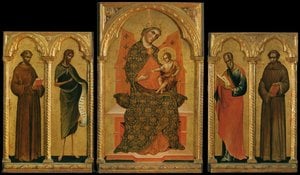
Oil On PanelWallArtProto-Renaissance
 Late Medieval
 133.0 x 41.0 cm
 ウフィツィ美術館
迅速な制作と多彩な仕上げオプションを備えた、ミュージアムクオリティのジークレーまたはキャンバスプリント。 ( 手描きの絵画を購入 デジタル画像販売へ切り替え)





























作品のオリジナル比率に合わせた、当店の規定サイズからお選びください。

特定のフレームやスペースに合わせて、ご自身でサイズを指定することも可能です。選択されたサイズが元の画像の比率と一致しない場合、作品をトリミングするか、鏡面反射または単色での塗りつぶしによって画像を拡張いたします。制作を開始する前に、ご確認用のデジタルモックアップをお送りいたします。
画面上のプレビューには、実際のトリミングや拡張は反映されませんのでご注意ください。最終的な構図を正確に確認できるのは、モックアップのみとなります。
カスタムサイズも承っておりますが、元の比率を維持するためには、あらかじめ用意されたリストからサイズを選択することをお勧めいたします。

Ognissanti Polyptych: lateral panel
複製画のサイズ
To stand before Giovanni da Milano’s Ognissanti Polyptych: lateral panel is to encounter a moment suspended in time, a profound meditation rendered in pigment and gold. Created around 1360, this remarkable piece serves as a poignant emblem of the Proto-Renaissance fervor that gripped Florence during its formative years. More than mere pigment on wood, it acts as an intimate invitation to contemplate themes of devotion and familial love. The panel, now housed within the hallowed halls of the Galleria degli Uffizi, captures a sense of spiritual solemnity that transcends the centuries, offering a glimpse into the very soul of 14th-century Italian piety.
The composition is a masterclass in emotional resonance and structural harmony. The lateral panel depicts two women standing side by side, their postures conveying an unmistakable gesture of tenderness and mutual support. One figure appears to hold the other, creating a palpable sense of unity and compassion that anchors the viewer's gaze. This intimate connection is framed by a stylized castle façade, adorned with a vibrant stained glass window—a motif frequently employed in Florentine churches to evoke the celestial light of heaven. An arrow pointing towards the center serves as a subtle yet powerful symbolic guide, directing our eyes toward the heart of the scene and emphasizing the profound bond shared between the figures.
Giovanni da Milano’s artistic lineage traces back to the legendary Giotto di Bondone, whose groundbreaking naturalistic style revolutionized Tuscan painting. However, Giovanni was no mere imitator; he possessed a unique ability to skillfully blend Giocchetto’s expressive gestures with the enduring, elegant conventions of Gothic art. This harmonious fusion is most evident in the meticulous detail of the drapery folds and the nuanced facial expressions that distinguish his work. While retaining a sense of medieval spiritual weight, there is an emerging naturalism in the way the figures occupy space, hinting at the transformative era that would eventually lead to the masterpieces of Michelangelo and Raphael.
The technique employed in this tempera on wood panel reflects the painstaking craftsmanship of the period. The artist’s ability to manipulate light and shadow—even within the rigid framework of Gothic tradition—creates a sense of depth and presence that is truly captivating. For the discerning collector or interior designer, this piece offers more than just aesthetic beauty; it provides a historical anchor. A high-quality reproduction of this panel brings with it the weight of history, making it an ideal centerpiece for spaces that value intellectual depth, classical elegance, and a connection to the profound spiritual narratives of the Italian Renaissance.


1346 - 1369 , イタリア

レオナルド・ダ・ヴィンチの至宝25選。モナリザ、最後の晩餐…ルネサンス美術を代表する名画の世界へ。芸術史、技法、そして感動の物語を紐解き、お部屋に飾る高級複製画で特別な空間を。WahooArt.comで全コレクションをご覧ください。

Explore the life & art of Giovanni Fattori, a leading figure of the Macchiaioli movement. Discover his revolutionary realism, captivating Tuscan landscapes, and lasting impact on Italian painting. Learn more at WahooArt.

Explore the profound artistic journey of Giovanni Giacometti, father to Alberto. Discover his unique transition from Surrealism to Existentialist sculpture and painting – a compelling study for elite collectors and art enthusiasts.

Explore Leonardo da Vinci’s timeless masterpieces with WahooArt. Discover insights into his art, science, and legacy – trusted expertise for discerning collectors seeking authentic reproductions & investment opportunities.

Journey back to the dawn of Renaissance art! Explore 10 iconic Proto-Renaissance masterpieces by Giotto, Cimabue & Duccio. Discover their stories, techniques & lasting impact. Find museum-quality reproductions for your home at WahooArt.com


 プレビュー
プレビュー
 シェアする
シェアする シェアする
シェアする
 詳細を見る
詳細を見る ガイド
ガイド

 ダウンロード
 似ている作品
 X線調査
X線調査 スライドショー
 統計情報
統計情報 詳細を見る
詳細を見る









 ガラスオプションは、110cm未満のサイズでのみご利用いただけます。