
当社のアーティストが、お客様のご希望のサイズと額縁に合わせて、キャンバスに手描きで制作する油彩画です。 ( プリント版に切り替え デジタル画像販売へ切り替え)





























作品のオリジナル比率に合わせた、当店の規定サイズからお選びください。

特定のフレームやスペースに合わせて、ご希望のサイズをご入力いただけます。選択されたサイズが元の画像の比率と異なる場合、アートワークをトリミングするか、手描きで要素を追加して絵画を拡張いたします。デジタルモックアップ を制作し、制作開始前にご確認(承認)をいただきます。
画面上のプレビューは、実際のトリミングや拡張を正確に反映しているものではありません。最終的な構図は、モックアップによってのみ正確にご確認いただけます。
カスタムサイズもご利用いただけますが、元の比率を維持するためには、あらかじめ用意されたリストからサイズを選択することをお勧めいたします。

Villa Falconieri
複製画のサイズ
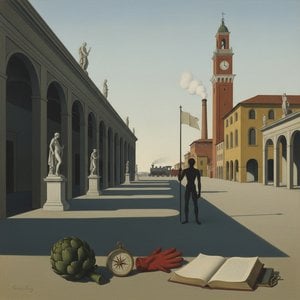
Giorgio de Chirico's Villa Falconieri isn’t merely a depiction of an Italian estate; it’s a meticulously crafted portal into a realm of unsettling beauty, a visual distillation of memory and melancholy. Painted in 1920, this oil on canvas transports the viewer to a space simultaneously familiar and profoundly strange – a place where classical grandeur collides with the disquieting logic of dreams. The painting immediately establishes an atmosphere of profound stillness, punctuated by sharp contrasts between light and shadow, creating a sense of suspended time, as if the scene is caught in an eternal afternoon.
The composition itself is a masterclass in controlled disorientation. A stately villa, its façade hinting at centuries of history, dominates the center, yet it’s subtly obscured by the towering presence of cypress trees – symbols deeply rooted in Italian culture, often associated with mourning and remembrance. These dark sentinels frame the building, casting long, dramatic shadows that stretch across the meticulously rendered landscape. The placement of two small figures—a man engaged in a mundane task and another seemingly lost in thought—adds a human element to this otherwise monumental scene, inviting us to contemplate our own place within this enigmatic space. The perspective is deliberately skewed, creating an unsettling sense of depth and drawing the eye into the painting’s heart.
De Chirico's style during this period—often referred to as “metaphysical art”—is instantly recognizable. It’s a synthesis of realism and surrealism, where everyday objects are imbued with symbolic weight and placed within illogical spatial arrangements. Notice the meticulous detail in the stonework of the villa, contrasted against the slightly blurred quality of the distant landscape – a technique that contributes to the painting's dreamlike atmosphere. The visible brushstrokes, applied with a deliberate looseness, add texture and a sense of immediacy, as if the artist is inviting us into his creative process.
The color palette is deliberately restrained, dominated by cool blues, greens, and grays – colors that evoke a sense of twilight or early morning. Subtle touches of warmer tones—in the stonework and the figures’ clothing—provide moments of visual relief, preventing the scene from becoming entirely bleak. The sky itself shifts between pale blues and deep indigos, mirroring the emotional complexity of the artwork.
Villa Falconieri is steeped in symbolism, reflecting de Chirico’s fascination with mythology, philosophy, and the subconscious. The villa itself represents a bygone era of aristocratic grandeur, while the cypress trees evoke themes of mortality and remembrance. The figures in the foreground are deliberately ambiguous, their actions suggesting contemplation or perhaps even alienation – mirroring the anxieties of modern life that were prevalent at the time. De Chirico drew heavily from the writings of philosophers like Schopenhauer and Nietzsche, exploring ideas of irrationality, the nature of reality, and the subjective experience of time.
Painted in 1920, during a period of significant social and political upheaval in Europe, the artwork can be interpreted as a reflection on the loss of tradition and the anxieties associated with modernity. The painting’s unsettling atmosphere speaks to a deeper sense of unease—a feeling that something is fundamentally out of place or missing.
Villa Falconieri remains one of de Chirico's most iconic works, exemplifying his unique ability to capture the essence of dreamlike visions. It’s a painting that rewards repeated viewing, revealing new layers of meaning and emotional resonance with each encounter. Reproductions of this artwork offer a powerful way to bring its haunting beauty into your home or office—a reminder of the enduring power of art to transport us beyond the confines of reality.


1888 - 1978 , ギリシャ

Explore the captivating world of Metaphysical art with WahooArt. Discover Giorgio de Chirico's iconic paintings, philosophical influences & lasting impact on Surrealism. Expert insights for collectors.

ゴヤ傑作25選:ロマン主義を代表するスペインの巨匠、フランシスコ・デ・ゴヤの世界へ。黒衣の女からマハまで、魂を揺さぶる絵画の物語と技法を紐解きます。WahooArtで高品質なアートレプリカを見つけ、インテリアに深みと風格を。今すぐコレクションをご覧ください。

Discover our story! We bring world-class art into your life through expert curation, personalized creations, and free previews. Trusted by individuals and businesses since 2000.
Explore the captivating world of Giorgio de Chirico and his groundbreaking Metaphysical painting movement. Discover the philosophical depths & surreal imagery that influenced generations of artists. Learn more at WahooArt.

バロック美術の華!カラヴァッジョ、ベルニーニら巨匠が創り上げた10大名作を徹底解剖。ドラマチックな色彩と豪華絢爛の世界観に触れ、至宝のアートプリントで空間を彩ろう。WahooArt.comで美術館品質の複製と洗練されたインテリアを見つけましょう!


 プレビュー
プレビュー
 シェアする
シェアする シェアする
シェアする
 詳細を見る
詳細を見る

 ダウンロード
 似ている作品
 X線調査
X線調査 スライドショー
 統計情報
統計情報

 詳細を見る
詳細を見る









 ガラスオプションは、110cm未満のサイズでのみご利用いただけます。


