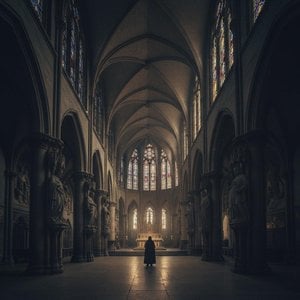
The Architect of Transition: The Life and Legacy of Gil de Siloé
In the vibrant tapestry of the Spanish Renaissance, few figures loom as large or as transformatively as Gil de Siloé. Born in Burgos around 1495, Siloé emerged during a period of profound cultural metamorphosis, acting as the vital bridge between the intricate, spiritual intensity of the Gothic tradition and the burgeoning humanism of the Italian Renaissance. As the son of the renowned Gothic sculptor Gil de Urliones, his early life was steeped in the mastery of stone and the symbolic language of medieval Castile. This lineage provided him with a foundational command over the Isabelline Gothic style—a period characterized by an almost obsessive level of detail, where every surface seemed to pulse with religious devotion and ornamental complexity.
Siloé’s early career was defined by his ability to breathe life into monumental structures, most notably through his work on the Burgos Cathedral. His creation of the cathedral's magnificent staircase in 1519 remains one of the most breathtaking achievements of the era. In this masterpiece, one can witness the artist’s burgeoning genius as he began to push against the rigid boundaries of Gothic construction. By integrating soaring arches with delicate vegetal motifs and heraldic imagery, he created an airy, light-filled space that felt both ancient and revolutionary. This work served as a precursor to his larger mission: the synthesis of disparate worlds into a singular, cohesive aesthetic.
A Journey of Discovery: From Castile to Naples
The trajectory of Siloé’s artistry underwent a seismic shift around 1517, following his pivotal pilgrimage to Naples. This encounter with the Italian Renaissance was nothing short of a revelation. Exposed to the classical proportions, anatomical precision, and balanced compositions flowing from the Mediterranean, Siloé returned to Spain with a transformed vision. He did not merely abandon his Gothic roots; instead, he performed a masterful alchemy, infusing the heavy, symbolic ornamentation of the North with the grace and clarity of Italian Classicism.
This stylistic evolution led to the birth of the Granadan school, a movement that would define much of the Spanish architectural landscape. His work began to reflect a unique tripartite influence:
- The Gothic Heritage: Retaining the intricate textures and emotional depth of his training in Burgos.
- Italian Classicism: Adopting the structural harmony and sculptural elegance found in the works of the Italian masters.
- Mudéjar Ornamentation: Incorporating the subtle, geometric beauty and delicate patterns characteristic of Spain's Moorish-influenced craftsmanship.
Masterpieces of Devotion and Stone
The breadth of Siloé’s output spans from the monumental to the intimately devotional. His sculptures, such as The Raising of Lazarus, serve as profound studies in human emotion and divine intervention. In these works, the transition from Late Gothic drama to Renaissance naturalism is palpable; the figures possess a weight and presence that suggest a new understanding of the physical world, even while they remain anchored in sacred narrative. Similarly, his contributions to altarpieces, such as the Main Altar (1496), showcase his ability to utilize gold leaf and complex iconography to create immersive religious experiences for the faithful.
Beyond the grand cathedrals, Siloé’s touch is felt in the delicate details of funerary art, where he captured the piety and prestige of the Spanish nobility. His work on tombs, such as the Tomb of Juan de Padilla, demonstrates a meticulous attention to the textures of limestone and the dignity of the deceased, ensuring that the transition from life to eternity was marked by both artistic splendor and historical permanence. Through his ability to harmonize the old with the new, Gil de Siloé did more than just decorate churches; he sculpted the very identity of a nation in transition, leaving behind a legacy that remains a cornerstone of Spanish art history.



 プレビュー
プレビュー
 手描きの絵画を購入
 シェアする
シェアする シェアする
シェアする
 詳細を見る
詳細を見る

 ダウンロード
 似ている作品
 X線調査
X線調査 スライドショー


 詳細を見る
詳細を見る






































 ガラスオプションは、110cm未満のサイズでのみご利用いただけます。