

 51.0 x 61.0 cm
 MAGA - Museo Arte Gallarate
このページに掲載されている作品は著作権法によって保護されており、当社の許可なく同一の複製物を制作または販売することは法律で禁じられています。この保護は、以下のような国際条約に基づき執行されます。 ベルヌ条約 および、以下の条項に定められたものを含む各国の法律により、 米国著作権法 第17編。
敬意を払った法的な代替手段として、私たちはオリジナルにインスピレーションを与えられた、カスタムの手描きアートワークを提供しています。私たちの熟練したプロのアーティストは、元の作品が持つスタイル、情緒、そして芸術的なエッセンスを注意深く研究し、独自の創作物でありながら、同じ感性を呼び起こすような、新しくユニークな作品を作り上げます。
この手法は、著作権で保護された作品の複製や複写を伴わないため、著作権法に完全に準拠しています。これは単なる模倣ではなく、創造的な再解釈です。元の作品からインスピレーションを受けつつも、それとは異なる、全く新しい絵画を生み出すものです。
当社のアーティストが、お客様のご希望のサイズと額縁に合わせて、キャンバスに手描きで制作する油彩画です。 ( プリント版に切り替え デジタル画像販売へ切り替え)
作品のオリジナル比率に合わせた、当店の規定サイズからお選びください。

フレームや壁のスペースに合わせて、ご希望の幅と高さを入力してください。本作品は手描きのため、異なる比率のサイズをご希望の場合、絵画の周囲を少し広げて描くか、あるいは端を少しカットして調整することが可能です。お客様のご要望に合わせます。制作を開始する前に、仕上がりを確認するためのデジタルモックアップをお送りいたします。このページに表示されている画像は完成品の実物ではなく、あくまでモックアップによるイメージです。
Burning Icaro
複製画サイズ一覧

Gianni Bertini (1922–2010) was far more than a mere painter; he was a restless architect of the visual imagination, a man who navigated the turbulent currents of the postwar era with an unyielding curiosity. Born in Pisa, Italy, Bertini’s early intellectual formation was rooted in the precision of mathematics—a discipline that would later manifest in his meticulous manipulation of textures and layers. This scientific rigor did not stifle his creativity but rather provided the structural foundation upon which he built a complex, multi-layered aesthetic. His journey took him from the historical echoes of the Italian Renaissance to the vibrant, experimental heart of Paris in 1951, a transition that allowed him to bridge the gap between classical grandeur and the burgeoning anxieties of modern consumer culture.
His artistic evolution was marked by a profound refusal to remain tethered to any single movement. While his early years saw him exploring figurative and geometric abstraction, he soon found himself drawn to the visceral energy of Arte Nucleare and the gestural freedom of informal painting. In works such as La Toile de Penelope, created alongside his wife Licia Monesi, Bertini demonstrated a remarkable ability to weave together disparate elements—using textile collage and irregular stitching to evoke both the ancient myth of the weaver and the raw, expressionist textures of the mid-century avant-garde. This period of his life was characterized by a deep engagement with mythology, using figures like Oedipus and Artemis not merely as subjects, but as vessels for exploring a reconstructed humanism in a world recovering from the scars of war.
What truly set Bertini apart from his contemporaries was his audacious embrace of the machine. At a time when many artists sought refuge in the purity of the brushstroke, Bertini looked toward the burgeoning technologies of mass media. He became a pioneer of material transfer and photomechanical screen printing, techniques that allowed him to imprint images directly onto canvas using specialized adhesives. This process created a visual language that was strikingly contemporary—reminiscent of the Pop Art movement seen in the works of Warhol, yet imbued with a much sharper, more critical edge regarding the impact of mass production on the human psyche.
This fascination with the mechanical led to his development of Mec-Art, a concept that merged graphic experimentation with industrial processes. His work often featured:
Through these methods, Bertini achieved a style that was both tactile and ephemeral, capturing the frantic energy of the 20th century through a lens of controlled experimentation.
Beyond the canvas, Bertini was a central figure in the interdisciplinary dialogues of the postwar avant-garde. He moved fluidly between the worlds of visual art, poetry, and performance, collaborating closely with experimental poets like Henri Chopin and participating in the radical actions of Nouveau Réalisme. His "bertinizations" represented an attempt to infuse everyday reality with a heightened, often surrealist, iconography, challenging the boundaries between high art and the mundane objects of consumer life.
His historical significance lies in his role as a bridge-builder—between science and art, between ancient myth and modern technology, and between the Italian tradition and the French experimental scene. Even as he explored the mechanical, he never lost sight of the human element; his work remained a profound investigation into the soul's struggle within an increasingly mechanized world. Today, the retrospective exhibitions of his work, such as those held in Lecce, continue to reveal the complexity of a man who refused to be categorized, celebrating a legacy defined by tireless research, aesthetic courage, and an eternal quest for the new.
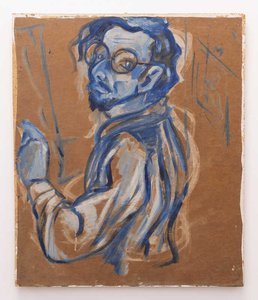
1922 - 2010 , Italy

 設置イメージを確認
 送る
送る シェア
シェア
 詳細情報
詳細情報 ガイドを表示

 画像をダウンロード
 似ている作品
 X線調査
X線調査 スライドショー
 統計情報
統計情報 続きを読む
続きを読む






































 ガラスオプションは、110cm未満のサイズでのみご利用いただけます。


