
 Acrylic On CanvasWallArtDutch Golden Age
 1655
1655 73.0 x 71.0 cm
 国立美術館 (Rijksmuseum)
当社のアーティストが、お客様のご希望のサイズと額縁に合わせて、キャンバスに手描きで制作する油彩画です。 ( プリント版に切り替え デジタル画像販売へ切り替え)





























作品のオリジナル比率に合わせた、当店の規定サイズからお選びください。

特定のフレームやスペースに合わせて、ご希望のサイズをご入力いただけます。選択されたサイズが元の画像の比率と異なる場合、アートワークをトリミングするか、手描きで要素を追加して絵画を拡張いたします。デジタルモックアップ を制作し、制作開始前にご確認(承認)をいただきます。
画面上のプレビューは、実際のトリミングや拡張を正確に反映しているものではありません。最終的な構図は、モックアップによってのみ正確にご確認いただけます。
カスタムサイズもご利用いただけますが、元の比率を維持するためには、あらかじめ用意されたリストからサイズを選択することをお勧めいたします。

Gallant Conversation, known as
複製画のサイズ
Gerard ter Borch's *Gallant Conversation*, painted in 1655, is not merely a portrait; it’s an exquisitely rendered tableau of veiled secrets and subtle anxieties. Initially known as “The paternal admonition,” the painting quickly revealed a far more complex narrative – one that challenged viewers at the time and continues to intrigue today. It's a masterful example of Dutch Golden Age genre painting, showcasing ter Borch’s unparalleled ability to capture not just appearances but the very essence of human interaction, particularly within the confines of a private, almost clandestine setting.
The scene unfolds within a modestly furnished room, bathed in a muted red light that casts long shadows and adds an air of mystery. A young soldier, strikingly handsome yet undeniably youthful, occupies a central position, engaged in conversation with a woman of considerable elegance – likely a courtesan or prostitute. A third figure, a woman holding a glass, observes the interaction from a distance, her expression hinting at both amusement and perhaps a degree of control. The inclusion of a dog, casually observing the scene, further contributes to the feeling that this is a carefully constructed tableau, a staged moment rather than an impromptu gathering. The deliberate ambiguity surrounding the relationships – who is admonishing whom? – is precisely what makes this painting so compelling.
Ter Borch's genius lies in his painstaking attention to detail and his revolutionary approach to light. Unlike many of his contemporaries, he eschewed the dramatic chiaroscuro favored by Rembrandt, opting instead for a subtle, almost photographic realism. He meticulously built up layers of translucent glazes, creating an astonishingly delicate surface texture that captures the sheen of silk, the gleam of metal, and the softness of skin with remarkable precision. Notice how the light catches the folds of the woman’s dress, revealing the intricate weave, or how it subtly illuminates the soldier's face, highlighting his youthful features and a hint of vulnerability. This technique wasn’t simply about realism; it was about capturing the *atmosphere* of the scene – a sense of quiet contemplation punctuated by unspoken tensions.
The painting’s true subject matter – a clandestine meeting within a brothel – was initially met with considerable debate. The original title, “The paternal admonition,” suggested a familial setting, leading to confusion about the nature of the scene. However, clues abound that point towards a more illicit reality: the bed in the background, the table with a mirror (a common feature in such establishments), and the overall atmosphere of intimacy and veiled intent. This ambiguity reflects the social realities of 17th-century Amsterdam – a city rife with wealth, commerce, and a thriving underworld. Ter Borch’s willingness to depict this darker side of society was remarkably bold for his time.
The soldier's youth is particularly significant. He isn’t a father dispensing wisdom; he’s a young man indulging in the pleasures of the flesh, suggesting themes of youthful folly and the corrupting influence of wealth. The woman observing from afar embodies a certain power – perhaps ownership or control – while the courtesan herself represents allure and danger.
*Gallant Conversation* is not a painting that shouts; it whispers. It’s a study in restraint, conveying a complex web of emotions through subtle gestures and averted glances. The figures are caught in a moment of quiet contemplation, their faces betraying a mixture of curiosity, amusement, and perhaps even apprehension. The overall effect is profoundly unsettling – a reminder that appearances can be deceiving and that beneath the surface of polite conversation often lie hidden desires and unspoken truths. This painting’s enduring power lies in its ability to evoke a sense of unease and intrigue, prompting viewers to question what they are seeing and, more importantly, what they *aren't* being told.


1617 - 1681 , オランダ
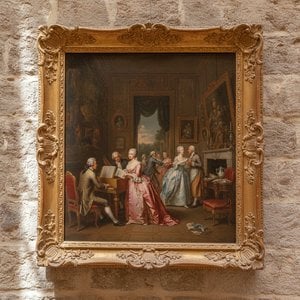
Explore the profound beauty of genre painting. From Dutch Golden Age masters to global traditions, discover how artists capture the essence of everyday life through masterful realism and timeless storytelling.


 プレビュー
プレビュー
 シェアする
シェアする シェアする
シェアする
 詳細を見る
詳細を見る

 ダウンロード
 似ている作品
 X線調査
X線調査 スライドショー
 統計情報
統計情報 詳細を見る
詳細を見る









 ガラスオプションは、110cm未満のサイズでのみご利用いただけます。


