
迅速な制作と多彩な仕上げオプションを備えた、ミュージアムクオリティのジークレーまたはキャンバスプリント。 ( 手描きの絵画を購入 デジタル画像販売へ切り替え)





























作品のオリジナル比率に合わせた、当店の規定サイズからお選びください。

特定のフレームやスペースに合わせて、ご自身でサイズを指定することも可能です。選択されたサイズが元の画像の比率と一致しない場合、作品をトリミングするか、鏡面反射または単色での塗りつぶしによって画像を拡張いたします。制作を開始する前に、ご確認用のデジタルモックアップをお送りいたします。
画面上のプレビューには、実際のトリミングや拡張は反映されませんのでご注意ください。最終的な構図を正確に確認できるのは、モックアップのみとなります。
カスタムサイズも承っておりますが、元の比率を維持するためには、あらかじめ用意されたリストからサイズを選択することをお勧めいたします。

untitled (4615)
複製画のサイズ
Georges Pierre Seurat's *A Sunday Afternoon on the Island of La Grande Jatte*, completed between 1884 and 1886, stands as a monumental achievement not just within Impressionism, but as a foundational work of modern art. More than simply a depiction of a Parisian leisure scene, it’s a meticulously constructed meditation on time, modernity, and the evolving relationship between humanity and its environment – a theme that continues to resonate powerfully today. The painting's scale alone—a colossal 17 feet by 25 feet—immediately commands attention, drawing the viewer into a world of carefully orchestrated observation and scientific precision.
Painted during a period of rapid industrialization and social change in Paris, *A Sunday Afternoon* offers a complex commentary on the burgeoning modern world. The island itself was a popular leisure spot for Parisians escaping the city’s bustle, but Seurat presents a scene that feels strangely detached from everyday life. The figures are posed awkwardly, seemingly unaware of each other, and their activities – boating, sunbathing, picnicking – feel almost ritualistic. This detachment reflects the growing alienation and anonymity experienced by individuals in an increasingly urbanized society.
Symbolism: Some scholars interpret the painting as a critique of bourgeois leisure, suggesting that the figures’ detached behavior represents a superficial enjoyment of wealth and status. The industrial backdrop – the factory chimneys and the boats powered by steam – subtly underscores the impact of technology on human life. The painting's stillness is also significant; it captures a moment frozen in time, reflecting the anxieties surrounding the relentless march of progress.Seurat was deeply influenced by scientific advancements of the late 19th century, particularly those related to optics and color theory. He studied the work of Eugène Delacroix, but rejected his expressive brushwork in favor of a more objective approach. His ambition was not simply to paint what he saw, but to capture the *impression* of light and atmosphere with scientific rigor. This pursuit led him to develop Pointillism as a revolutionary technique that would transform the course of modern art.
Neo-Impressionism: Seurat’s work is considered a cornerstone of Neo-Impressionism, an artistic movement that emerged in response to Impressionism. While Impressionists focused on capturing fleeting moments of light and color, Neo-Impressionists, led by Seurat and Paul Signac, employed scientific principles to create works with a more structured and systematic approach. *A Sunday Afternoon* is arguably the most significant example of this movement.Despite its intellectual rigor, *A Sunday Afternoon on the Island of La Grande Jatte* possesses a profound emotional impact. The painting’s scale, combined with Seurat's masterful use of color and light, creates a sense of immersive beauty that draws the viewer into the scene. It is a work that invites contemplation – about time, modernity, human connection, and the enduring power of art to capture the essence of our experience.


1859 - 1891 , フランス

Explore the scientific brilliance of Seurat and Signac. Discover how Pointillism revolutionized color through optical mixing and light, offering a profound look into the Neo-Impressionist movement for true art connoisseurs and collectors.
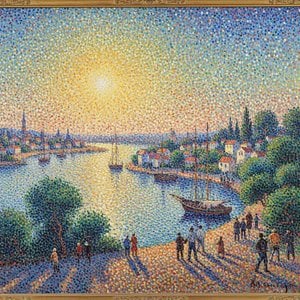
Embark on a sophisticated journey into the luminous world of Neo-Impressionism. Uncover the scientific brilliance of Pointillism, from Georges Seurat’s revolutionary color theory to the mesmerizing magic of the dot. An expert exploration for true art history enthusiasts.

Explore the vibrant evolution of Post-Impressionism. From Seurat's revolutionary Pointillism to the emotional depth of masters, discover how this movement redefined modern art history through color, structure, and unparalleled creative expression.
Discover the mesmerizing world of Pointillism. Explore the revolutionary techniques of Georges Seurat, the science of optical color mixing, and the enduring legacy of Neo-Impressionism in this expert guide for classical art enthusiasts.


 プレビュー
プレビュー
 シェアする
シェアする シェアする
シェアする
 詳細を見る
詳細を見る

 ダウンロード
 似ている作品
 X線調査
X線調査 スライドショー
 統計情報
統計情報

 詳細を見る
詳細を見る









 ガラスオプションは、110cm未満のサイズでのみご利用いただけます。


