スピーディーな制作と多彩な仕上げオプションが魅力の、ミュージアムクオリティなジークレー・キャンバスプリント。 ( 手描き複製画を注文する デジタル画像販売へ切り替え)





























作品のオリジナル比率に合わせた、当店の規定サイズからお選びください。

額縁や壁のスペースに合わせて、ご希望の幅と高さを入力してください。プリントはカットすることは可能ですが、元の画像より大きくすることはできないため、異なる比率のサイズを選択された場合は、画像の一部が欠けることになります。印刷を開始する前に、内容を確認していただくためのデジタルモックアップをお送りいたします。このページに表示されている画像は、実際のカット後の状態を示すものではありません。実際の仕上がりはモックアップにてご確認ください。
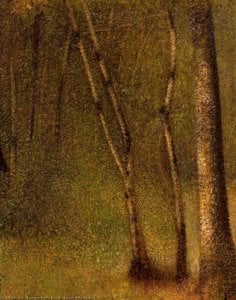
Man Dining
複製画サイズ一覧
Georges Pierre Seurat (1859-1891) stands as a monumental figure in the artistic landscape of late 19th century France, irrevocably altering perceptions of painting through his pioneering exploration of Pointillism. More than just a technique—though undeniably revolutionary—Pointillism represented a profound intellectual commitment to scientific principles and an unwavering dedication to capturing optical reality. Seurat’s brief but impactful career wasn't merely about applying pigment; it was about fundamentally reshaping how artists understood the relationship between perception and representation.
Seurat’s intellectual framework was inseparable from his artistic practice. He meticulously studied the work of Henri Poincaré, a mathematician who championed the idea that color perception is not simply how objects appear but rather how they are interpreted by the eye—a concept central to Pointillism's theoretical underpinning. This dedication to scientific rigor distinguishes Seurat’s approach from many of his contemporaries and underscores his conviction that art could benefit from incorporating insights into sensory experience.
“Man Dining” exemplifies Seurat’s early experiments with Pointillism, demonstrating a willingness to challenge established artistic conventions. While he would later refine the technique—particularly in monumental canvases like ‘A Sunday on La Grande Jatte’—this smaller study remains a testament to his foundational understanding of optical mixing and his unwavering commitment to capturing the essence of visual perception. It stands as an enduring symbol of Seurat's transformative contribution to modern art.
The artwork’s subdued palette and textured surface lend themselves beautifully to interior design projects seeking a calming, contemplative aesthetic. Consider incorporating reproductions in spaces where tranquility is valued—perhaps alongside complementary shades of grey or earthy tones—to evoke the same sense of quiet observation that characterizes Seurat's masterpiece.
ジョルジュ・スーラ作「Man Dining」のプレビューは、作品の設置イメージページでご確認いただけます。
「Man Dining」のプリントのおすすめの使い方は、Accentです。
ジョルジュ・スーラは、スーラ, ジョルジュ・ピエール・セーラ, ジョルジュ・ピエール・スーラという別名でも表記されます。

近代絵画が辿った軌跡を理解するためには、ジョルジュ・スーラという、短くも強烈な光を放った存在を見つめなければなりません。1859年12月2日、フランスのパリに生を受けた彼は、エルネスティン・フェーヴルと、シャンパーニュ地方で法務官から不動産投機家へと転身したアントワーヌ・クリュストーム・セーラの間に生まれました。この家庭環境がもたらした経済的な安定は、彼がパリのアートシーンにおいて、規律正しく、かつ急速に頭角を現すための不可欠な礎となりました。しかし、彼は単に絵を描く画家ではありませんでした。彼は、先人たちが頼りとしていた即興的な衝動に挑むような、全く新しい「視覚の在り方」を設計したエンジニアでもあったのです。
彼のキャリアは、マラソンではなく、全力の短距離走でした。1891年3月29日、わずか31歳という若さで、彼はパリの地でその生涯を閉じました。このあまりにも早すぎる終焉は、同時代の画家たちに見られるような、緩やかで広がりを持った芸術的進化とは対照的な、極めて凝縮され、意図的な密度を持った作品群を後世に残すこととなりました。未完の遺作である『サーカス』でさえも、光の構造的なメカニズムと社会秩序に対して、彼の精神がいかに深く向き合っていたかを物語っています。彼は、一瞬の儚い視線を、計算し尽くされた永遠の精密さへと置き換えたのです。
その短い生涯が遺した衝撃は、技術的な革新がいかに濃密であったかによって測ることができます。彼は芸術を、その瞬間の感情的な自発性から引き離し、体系的で、あたかも数学的とも言える色彩の応用へと導きました。19世紀の美術史における彼の存在感は、直感だけに頼ることを拒絶したその姿勢によって、今なお鮮烈に定義されています。彼がキャンバスに刻みつけた一粒一粒の顔料の点には、彼が追い求めた論理が、今もなお息づいているのです。
ジョルジュ・スーラの芸術的軌跡は、パリという街から始まりました。彼の家族は、彼が誕生して間もなくブールヴァール・ド・マジェンタへと居を構えます。かつて法務官であった父アントワーヌ・クリュストーム・セーラが不動産投機によって築いた経済的な安定は、若きスーラに、19世紀後半の確立された芸術的規範に挑むために不可欠な、質の高い正規教育を受ける機会を与えました。彼の才能は、単なる直感や感覚に身を任せたものではありませんでした。その芸術的発展は、極めて厳格かつ体系的な訓練という強固な土台の上に築かれていたのです。
彼の正式な学びは、彫刻家ジャスティン・レキュアンのもとで学ぶエコール・ミュニシパル・ド・スクルプチュール・エ・デッサン(市立彫刻・デッサン学校)から始まりました。この時期に触れた彫刻という表現形式は、後の彼の作品に見られる、まるで浮き彫りのような構造的で静謐な構図の美学に、多大な影響を与えたことは間違いありません。1878年、彼はフランス芸術教育の最高峰である名門エコール・デ・ボザールへと進みます。そこで アンリ・レマン の指導を受けた経験は、彼に伝統的な技法と構成の規律を叩き込みました。しかし、彼が後に科学的な分析を通じて解体し、再構築することになる独自のスタイルは、まさにこの伝統的な規律との対話の中から生まれてきたのです。
ジョルジュ・スーラは、先人たちが用いた即興的で直感的な筆致を排し、光に対する計算し尽くされた体系的なアプローチへと昇華させました。彼が編み出した「点描画法(ポアンティリスム)」は、純粋な色彩の小さく明確な点をキャンバスに置いていく手法によって定義されます。これは単なる装飾的な選択ではなく、極めて機能的な探求でした。彼は「分割主義(ディヴィジョニズム)」を用いることで、本来の色彩を個々の点へと分解し、鑑賞者の眼の中で色彩が混ざり合う「視覚混合」にその役割を委ねたのです。彼が「クロモルミネイシズム(色彩光輝主義)」と名付けたこのプロセスにおいて、色彩は単なる感情の表出ではなく、一つの科学として扱われました。彼は顔料を精密に配置することで、視覚の物理学を再構築しようと試みたのです。
その緻密さは、準備段階の習作においても遺憾なく発揮されました。彼はしばしば、粗い質感の紙にコンテを使用して構図を練り上げました。この規律ある手法によって、完成された壮大な作品における一つひとつの点は、数学的に構築された巨大な構造の一部として確固たる地位を占めることとなったのです。こうして生み出された画面は、個々の色彩の点と、網膜上で形作られる統合されたイメージとの間に生じる緊張感から、リズムを伴って振動するような独特の質感さえ湛えています。ジョルジュ・スーラの作品は、技術的な厳密さがどのようにして視覚的な知覚を支配し得るかを示す、永遠の探求の記録といえるでしょう。
ジョルジュ・スーラの芸術的ビジョンは、光に対する厳格かつ数学的なアプローチに支えられていました。彼は、先人たちが用いた即興的で感情的な筆致を拒絶し、視覚を体系的に再構築する道を選んだのです。この手法によって、キャンバスは単なる観察の場ではなく、光学的な計算が行われる実験場へと変貌を遂げました。彼の作品は、色彩理論の精密な応用を通じて、情景の持つ本質的で不変的な構造を捉えようと試みたものでした。彼は単に風景を描いたのではありません。人間の目が光と顔料をどのように処理するかという原理に基づき、視覚体験そのものを設計したのです。
その秩序への献身は、彼の壮大な構図に鮮明に表れています。『グランド・ジャット島での日曜日』(1884-1886年)は、記念碑的なスケールを用い、密集した点のモザイクを通じてパリの人々の余暇を描き出しました。この作品は、流動的な動きを、彫刻のような永続的な静寂へと置き換えた、新印象派の宣言とも言える傑作です。同様に、『アシニエールの浴女』(1884年)では、古典的なフリーズ(浮彫)のような人物像と、セーヌ川の近代的な工業的現実とを調和させる、初期の卓越した手腕が見て取れます。これらの絵画は、彼の関心が科学的な精密さと現代生活の交差点に存在していたことを証明しています。
晩年の未完の作品群にさえ、動きと構造の間に生じる緊張感への執着が漂っています。『サーカス』(1890–91年)は、新印象派のスタイルを用いて大衆的な見世物のエネルギーを描写しながらも、彼特有の形態への制御によって、作品の根幹をしっかりと支えています。また、『化粧をする若い女』(1889-1890年)では、その技法を単一の主題へと応用し、高度に構築された設定を通じて人間の虚栄心という虚構性を探求しました。彼の創作活動は、印象派の刹那的な視点では到達し得なかった、光の中に潜む論理を追い求め続ける、終わりのない探求のプロセスだったのです。
ジョルジュ・スーラが現代美術の軌跡に刻んだ足跡は、彼の手法が後続の芸術運動に強いた劇的な変革によって、その大きさを計ることができます。先人たちの直感的な筆致を、色彩と光に対する体系的かつ科学的なアプローチへと置き換えたことで、彼は絵画が到達しうる境界を押し広げました。この知的な厳密さは、芸術を単なる対象の再現から、知覚の構造的な分析へとへと導いたのです。顔料の光学的な混合を追求した彼の執念は、鑑賞者がキャンバスと対話する際の根本的なメカニズムさえも変えてしまいました。
彼の技術革新が投げかけた波紋は、新印象派の枠組みを遥かに越えて広がっていきました。フォーヴィスムは、彼が示した大胆で非自然主義的な色彩への強調を取り入れ、キュビスムは、形態を幾何学的な構成要素へと解体する彼の能力から着想を得ました。さらには、身振りの生々しいエネルギーに焦点を当てた抽象表現主義でさえも、伝統的な絵具の混色という制約から色彩を解放した彼の功績に恩義を感じています。ジョルジュ・スーラは、芸術が厳格な知的探求であると同時に、現代生活の本質を捉えるための手法にもなり得ることを証明したのです。
彼の代表的な傑作には、以下のようなものがあります。

1859 - 1891 , フランス

Explore the scientific brilliance of Seurat and Signac. Discover how Pointillism revolutionized color through optical mixing and light, offering a profound look into the Neo-Impressionist movement for true art connoisseurs and collectors.

Explore the vibrant evolution of Post-Impressionism. From Seurat's revolutionary Pointillism to the emotional depth of masters, discover how this movement redefined modern art history through color, structure, and unparalleled creative expression.
 設置イメージを表示
 シェアする
シェアする シェアする
シェアする
 詳細を見る
詳細を見る ガイドを表示

 ダウンロード
 似ている作品
 X線調査
X線調査 スライドショーを表示
 Q&A
Q&A
 統計情報
統計情報
 詳細を表示
詳細を表示









 ガラスオプションは、110cm未満のサイズでのみご利用いただけます。