

当社のアーティストが、お客様のご希望のサイズと額縁に合わせて、キャンバスに手描きで制作する油彩画です。 ( プリント版に切り替え デジタル画像販売へ切り替え)





























作品のオリジナル比率に合わせた、当店の規定サイズからお選びください。

特定のフレームやスペースに合わせて、ご希望のサイズをご入力いただけます。選択されたサイズが元の画像の比率と異なる場合、アートワークをトリミングするか、手描きで要素を追加して絵画を拡張いたします。デジタルモックアップ を制作し、制作開始前にご確認(承認)をいただきます。
画面上のプレビューは、実際のトリミングや拡張を正確に反映しているものではありません。最終的な構図は、モックアップによってのみ正確にご確認いただけます。
カスタムサイズもご利用いただけますが、元の比率を維持するためには、あらかじめ用意されたリストからサイズを選択することをお勧めいたします。

Leg
複製画サイズ一覧
In the vibrant, bustling atmosphere of late nineteenth-century Paris, a quiet revolution was unfolding, one not of loud proclamations, but of microscopic precision. While the Impressionists were busy capturing the fleeting, ephemeral dance of light with rapid and emotional brushstrokes, Georges Pierre Seurat sought a deeper, more permanent truth. His masterpiece, "Leg," stands as a profound testament to this pursuit. This intimate study, currently preserved in the hallowed halls of the Musée d’Orsay, invites the viewer into a world where science and art converge. The painting depicts a nude male leg resting upon a surface, yet through Seurat's visionary lens, it becomes much more than a mere anatomical study; it is an exploration of how light itself inhabits form.
To gaze upon "Leg" is to witness the birth of Pointillism, a technique that demands a different kind of looking. Rather than blending pigments on a palette to create smooth transitions, Seurat applied tiny, rhythmic pulses of pure color side-by-side. This method, often referred to as Chromoluminarism, relies on the viewer's own retina to perform the final act of creation. As your eyes move across the canvas, these individual dots of pigment undergo a magical synthesis, merging in the mind to create an illusion of shimmering luminosity and soft, tactile texture. The result is an ethereal quality that traditional blending simply cannot achieve—a sense that the subject is not merely painted, but is actually vibrating with light.
Seurat’s approach was far from accidental; it was a disciplined, almost mathematical endeavor. Influenced by contemporary optical theories, he meticulously mapped out the contours of the leg and torso using a precise grid system. This structural rigor allowed him to capture the subtle weight of the limb and the delicate interplay of shadow and highlight with unprecedented accuracy. In "Leg," the way the light catches the curve of the knee and fades into the soft shadows of the foot demonstrates a masterful command over tonal variation. For the collector or the interior designer, this piece offers a unique aesthetic tension: it possesses the structural stability of classical art while maintaining the modern, atmospheric energy of the avant-garde.
Beyond its technical brilliance, the painting carries an emotional resonance that is both tranquil and profound. There is a stillness in the composition, a moment of suspended animation that allows for deep contemplation. The absence of a complex background focuses all attention on the interplay of light upon skin, evoking a sense of vulnerability and grace. For those seeking to bring a piece of art history into a contemporary living space, a high-quality reproduction of "Leg" serves as a sophisticated focal point. It does not merely decorate a wall; it introduces a conversation about perception, inviting guests to slow down and rediscover the beauty in the smallest, most meticulously placed details.


1859 - 1891 , フランス

Explore the scientific brilliance of Seurat and Signac. Discover how Pointillism revolutionized color through optical mixing and light, offering a profound look into the Neo-Impressionist movement for true art connoisseurs and collectors.

Explore the vibrant evolution of Post-Impressionism. From Seurat's revolutionary Pointillism to the emotional depth of masters, discover how this movement redefined modern art history through color, structure, and unparalleled creative expression.
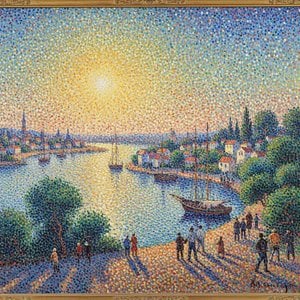
Embark on a sophisticated journey into the luminous world of Neo-Impressionism. Uncover the scientific brilliance of Pointillism, from Georges Seurat’s revolutionary color theory to the mesmerizing magic of the dot. An expert exploration for true art history enthusiasts.

Discover the mesmerizing world of Pointillism. Explore the revolutionary techniques of Georges Seurat, the science of optical color mixing, and the enduring legacy of Neo-Impressionism in this expert guide for classical art enthusiasts.

 設置イメージを確認
 送る
送る シェア
シェア
 詳細情報
詳細情報 ガイドを表示

 画像をダウンロード
 似ている作品
 X線調査
X線調査 スライドショー
 統計情報
統計情報

 続きを読む
続きを読む









 ガラスオプションは、110cm未満のサイズでのみご利用いただけます。


