
 OilWallArtNeo-Impressionism
 188219th Century
 15.0 x 24.0 cm
迅速な制作と多彩な仕上げオプションを備えた、ミュージアムクオリティのジークレーまたはキャンバスプリント。 ( 手描きの絵画を購入 デジタル画像販売へ切り替え)





























作品のオリジナル比率に合わせた、当店の規定サイズからお選びください。

特定のフレームやスペースに合わせて、ご自身でサイズを指定することも可能です。選択されたサイズが元の画像の比率と一致しない場合、作品をトリミングするか、鏡面反射または単色での塗りつぶしによって画像を拡張いたします。制作を開始する前に、ご確認用のデジタルモックアップをお送りいたします。
画面上のプレビューには、実際のトリミングや拡張は反映されませんのでご注意ください。最終的な構図を正確に確認できるのは、モックアップのみとなります。
カスタムサイズも承っておりますが、元の比率を維持するためには、あらかじめ用意されたリストからサイズを選択することをお勧めいたします。

Gardener
複製画のサイズ
In the quietude of a sun-drenched landscape, Georges Seurat’s “The Gardener” invites the viewer into a realm where time seems to suspend itself. Painted in 1882, this evocative work captures more than just a moment in a rural field; it captures the very essence of a soul in repose. The scene presents a solitary figure, a man standing amidst a lush expanse of grass, his gaze meeting ours with a profound, quiet intensity. Holding a large walking cane or stick, he stands as a sentinel of the earth, embodying a sense of diligent contemplation. There is an undeniable magnetism in his presence, a stillness that commands attention and draws the observer into the rhythmic, peaceful atmosphere of the French countryside.
The composition is masterfully anchored by a vibrant, luminous yellow background that bathes the entire scene in a warm, eternal afternoon glow. This choice of palette does not merely depict sunlight; it creates an emotional temperature, evoking feelings of warmth, nostalgia, and the gentle vitality of nature. For the discerning collector or interior designer, this piece offers a unique ability to infuse a space with light and tranquility, acting as a window into a serene, pastoral dreamscape that remains untouched by the frantic pace of modern life.
To gaze upon “The Gardener” is to witness the revolutionary intersection of art and optical science. Seurat, a pioneer of the Neo-Impressionist movement, moved away from the spontaneous, often blurred brushstrokes of his Impressionist predecessors. Instead, he embraced Pointillism—a meticulous technique where tiny, distinct dots of pure pigment are applied to the canvas. This method was not merely an aesthetic choice but a calculated experiment in chromoluminarism. By placing complementary colors side by side, Seurat relied on the viewer’s eye to perform the work of blending, creating a shimmering, vibrating effect that traditional mixing could never achieve.
When viewed from a distance, these individual points of color coalesce into a seamless, luminous whole, where the air itself seems to pulse with light. This scientific rigor lends the painting a structural permanence and a crystalline clarity. The texture of the work, even in a high-quality reproduction, retains this rhythmic pulse, offering a tactile depth that engages the eye far more deeply than a flatly painted surface. It is a masterpiece of precision, where every dot serves the greater purpose of recreating the physics of light and the magic of perception.
Beyond its technical brilliance, “The Gardener” carries a profound symbolic weight. The solitary figure can be interpreted as a meditation on the dignity of labor and the beauty found in quiet, individual existence. He represents a connection to the land, a symbol of stability and groundedness in an ever-changing world. This sense of peaceful isolation makes the artwork particularly resonant for contemporary living spaces, where it can serve as a focal point of calm and reflection.
For those seeking to curate an environment of sophistication and intellectual depth, this piece provides an unparalleled opportunity. Whether placed in a sunlit study, a minimalist gallery-style living room, or a boutique hotel suite, the painting’s golden hues and structured composition harmonize beautifully with both classical and modern decor. Owning a reproduction of such a monumental figure in art history is not merely about decoration; it is about bringing a piece of the scientific and emotional revolution of the late nineteenth century into the heart of the home.


1859 - 1891 , フランス

ジョルジュ・ブラックの傑作25選。キュビスムを代表する画家、その革新的な色彩と技法に迫ります。名画から知られざる逸品まで、美術史に残る作品群をWahooArt.comで鑑賞。お部屋を彩るアートプリントも多数ご用意。今すぐオンラインでコレクションをご覧ください。

Explore the revolutionary art of Georges Seurat and the science behind Pointillism. Discover chromoluminarism, optical mixing, and the lasting impact of Neo-Impressionism on modern art history.

Explore the rich history of gardens in painting! Discover masterpieces from Renaissance to Impressionism & beyond. Learn about symbolism, artists like Monet & Klimt, and find your perfect artwork at WahooArt.
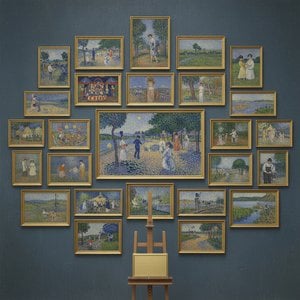
ジョルジュ・スーラの傑作25選。点描画の光と色彩、印象派から新印象派へ—WahooArtで美術史を紐解き、リビングやダイニングを彩る高品質なアートプリントを見つけましょう。セーラ作品集をオンラインで鑑賞ください。

Explore the scientific revolution of Pointillism. Discover how Georges Seurat and Paul Signac utilized optical color mixing and light theory to transform modern art through Neo-Impressionist precision and luminous technique.


 プレビュー
プレビュー
 シェアする
シェアする シェアする
シェアする
 詳細を見る
詳細を見る ガイド
ガイド

 ダウンロード
 似ている作品
 X線調査
X線調査 スライドショー
 統計情報
統計情報 詳細を見る
詳細を見る









 ガラスオプションは、110cm未満のサイズでのみご利用いただけます。


