

このページに掲載されている作品は著作権法によって保護されており、当社の許可なく同一の複製物を制作または販売することは法律で禁じられています。この保護は、以下のような国際条約に基づき執行されます。 ベルヌ条約 および、以下の条項に定められたものを含む各国の法律により、 米国著作権法 第17編。
この手法は、著作権で保護された作品の複製や複写を伴わないため、著作権法に完全に準拠しています。これは単なる模倣ではなく、創造的な再解釈です。元の作品からインスピレーションを受けつつも、それとは異なる、全く新しい絵画を生み出すものです。
スピーディーな制作と多彩な仕上げオプションが魅力の、ミュージアムクオリティなジークレー・キャンバスプリント。 ( 手描きの複製画を注文する デジタル画像販売へ切り替え)





























作品のオリジナル比率に合わせた、当店の規定サイズからお選びください。

額縁や壁のスペースに合わせて、ご希望の幅と高さを入力してください。プリントはカットすることは可能ですが、元の画像より大きくすることはできないため、異なる比率のサイズを選択された場合は、画像の一部が欠けることになります。印刷を開始する前に、内容を確認していただくためのデジタルモックアップをお送りいたします。このページに表示されている画像は、実際のカット後の状態を示すものではありません。実際の仕上がりはモックアップにてご確認ください。
Three Birds and Landscape
複製画サイズ一覧
Georges Braque's “Three Birds and Landscape” offers a compelling glimpse into the nascent stages of Cubism, a movement that would fundamentally alter the course of modern art. Painted around the early 20th century – a period of intense experimentation and intellectual ferment – this work exemplifies Braque’s meticulous approach to dissecting and reassembling visual reality. The painting isn't merely a depiction of birds in flight; it’s an exploration of perception itself, a challenge to traditional notions of representation. Notice the deliberate fragmentation of form, particularly evident in the angular rendering of the birds and the landscape elements. This technique, born from Braque’s collaboration with Pablo Picasso, sought to represent objects from multiple viewpoints simultaneously, creating a dynamic and multi-dimensional image.
Braque's mastery of technique is immediately apparent in “Three Birds and Landscape.” He employed a predominantly monochromatic palette – likely browns, ochres, and grays – characteristic of the period, allowing him to concentrate on formal concerns rather than coloristic effects. The painting was executed with oil paints, applied with meticulous brushwork that reveals both precision and a willingness to embrace textural irregularities. Crucially, Braque’s process involved building up layers of paint, creating a palpable sense of depth and volume despite the fragmented forms. This layering technique, combined with his use of *alla prima* (wet-on-wet) painting, allowed him to capture the fleeting effects of light and shadow within the complex geometric structure.
"Three Birds and Landscape" was created during a pivotal moment in art history – the birth of Cubism. Emerging in Paris around 1907, Cubism rejected traditional perspective and representation, instead seeking to depict objects from multiple viewpoints simultaneously. Braque’s work is considered one of the earliest examples of this revolutionary style, alongside Picasso's “Les Demoiselles d’Avignon.” The movement was influenced by Paul Cézanne’s emphasis on geometric forms in nature and a growing dissatisfaction with the limitations of academic realism. Braque’s exploration of these ideas paved the way for subsequent developments in abstract art, profoundly impacting artists across various disciplines.
Beyond its formal innovations, “Three Birds and Landscape” possesses a subtle emotional resonance. The birds, soaring freely against the fragmented landscape, evoke a sense of aspiration and liberation – themes frequently explored by modern artists seeking to redefine human experience. The painting’s deliberate ambiguity invites contemplation about our relationship with nature, perception, and the very act of seeing. It's a work that rewards close observation, revealing layers of meaning within its seemingly simple composition. This reproduction offers an opportunity to bring this seminal piece into your space, allowing you to appreciate Braque’s groundbreaking vision firsthand.
「Three Birds and Landscape」にはbirds flying, landscape scene, georges braque, cubist composition, boat imagery, art deco era, dynamic artworkが描かれており、その情緒はSereneと表現されています。
「Three Birds and Landscape」は、リネンキャンバスに手描きされた油彩複製画としてご購入いただけます。ご注文は手描き油彩複製画のページから、お好みのサイズをお選びいただけます。
「Three Birds and Landscape」のスライドショーは、作品のスライドショーページでご覧いただけます。


1882 - 1963 , フランス
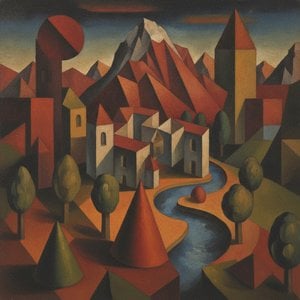
Explore the profound evolution of Cubist landscapes. Discover how masters like Braque and Picasso redefined perspective through geometric mastery, transforming nature into an intellectual mosaic of form and light for the discerning modern art collector.

 設置イメージを確認
 送る
送る シェア
シェア
 詳細情報
詳細情報 ガイドを表示

 画像をダウンロード
 似ている作品
 X線調査
X線調査 スライドショー
 統計情報
統計情報

 続きを読む
続きを読む









 ガラスオプションは、110cm未満のサイズでのみご利用いただけます。


