

このページに掲載されている作品は著作権法によって保護されており、当社の許可なく同一の複製物を制作または販売することは法律で禁じられています。この保護は、以下のような国際条約に基づき執行されます。 ベルヌ条約 および、以下の条項に定められたものを含む各国の法律により、 米国著作権法 第17編。
この手法は、著作権で保護された作品の複製や複写を伴わないため、著作権法に完全に準拠しています。これは単なる模倣ではなく、創造的な再解釈です。元の作品からインスピレーションを受けつつも、それとは異なる、全く新しい絵画を生み出すものです。
スピーディーな制作と多彩な仕上げオプションが魅力の、ミュージアムクオリティなジークレー・キャンバスプリント。 ( 手描き複製画を注文する デジタル画像販売へ切り替え)





























作品のオリジナル比率に合わせた、当店の規定サイズからお選びください。

額縁や壁のスペースに合わせて、ご希望の幅と高さを入力してください。プリントはカットすることは可能ですが、元の画像より大きくすることはできないため、異なる比率のサイズを選択された場合は、画像の一部が欠けることになります。印刷を開始する前に、内容を確認していただくためのデジタルモックアップをお送りいたします。このページに表示されている画像は、実際のカット後の状態を示すものではありません。実際の仕上がりはモックアップにてご確認ください。
the Dresser
複製画サイズ一覧
Georges Braque’s “The Dresser” is more than just a depiction of a dining table; it’s a meticulously constructed puzzle, a cornerstone of early cubism, and a testament to the artist’s revolutionary approach to representing reality. Painted around 1910-1914, during the intensely formative years of this movement, the artwork captures a seemingly mundane scene – a table laden with fruit, a vase, and a spoon – yet transforms it into an intellectual exercise in fragmentation and reconstruction. The painting’s power lies not in its subject matter but in Braque's masterful manipulation of form, color, and space, reflecting a profound shift in the way artists perceived and depicted the world.
Braque’s technique in “The Dresser” exemplifies the core principles of Analytical Cubism, a style pioneered alongside Pablo Picasso. Instead of presenting a single, unified perspective, Braque shattered the objects into geometric fragments, analyzing them from multiple viewpoints simultaneously. The bowl of fruit isn't rendered as a cohesive whole; rather, it’s dissected into overlapping planes of color and shape – the curve of the banana, the angularity of the apple, all contributing to a sense of simultaneous observation. Notice how the oranges are presented separately, further emphasizing this fractured perspective. This deliberate distortion wasn't intended to be merely abstract but to represent the artist's understanding of an object’s essence, its underlying structure rather than its superficial appearance. The muted color palette – predominantly browns, ochres, and grays – reinforces this sense of intellectual investigation, prioritizing form over vibrant representation.
“The Dresser” emerged from a period of intense artistic experimentation in Paris at the turn of the 20th century. Braque’s work was profoundly influenced by Paul Cézanne's emphasis on geometric forms and his exploration of multiple viewpoints within a single composition. Cézanne’s influence is particularly evident in Braque’s careful rendering of planes and angles, contributing to the painting’s overall sense of spatial ambiguity. Furthermore, Braque’s exposure to African tribal art – particularly masks and sculptures – during this time undoubtedly played a role in his exploration of non-Western artistic traditions, influencing his approach to form and abstraction.
While ostensibly a still life, “The Dresser” possesses a subtle symbolic resonance. The arrangement of the objects—the fruit, the vase, the spoon – can be interpreted as representing aspects of daily life, domesticity, and perhaps even the transient nature of beauty. The fragmented presentation invites the viewer to actively participate in the act of reconstruction, engaging with the artwork on an intellectual level. The overall effect is one of quiet contemplation and a profound sense of visual complexity. This reproduction offers a unique opportunity to experience Braque’s groundbreaking vision firsthand, bringing this pivotal work of modern art into your space.
ジョルジュ・ブラクエ作「the Dresser」 は、Dining Room に飾るのがおすすめです。作品の主題、色彩、そして雰囲気に合わせたご提案です。
スライドショーはこちら:ジョルジュ・ブラクエ作「the Dresser」のスライドショーページ。
推奨プリントサイズ:Large、向き:Landscape(ジョルジュ・ブラクエ作「the Dresser」 に最適な設定です)

1882 - 1963 , フランス

Elevate your design projects with WahooArt's premium canvas prints and hand-painted reproductions. From Giclée excellence to bespoke oil commissions, we provide professional decorators with museum-quality, affordable art solutions delivered worldwide with a 100% satisfaction guarantee.

Explore the profound evolution of Cubist still life, from Cézanne's structural foundations to the fragmented brilliance of Braque and Léger. Discover how geometric abstraction redefined reality through a sophisticated lens of form, color, and modern artistic mastery.

Explore the profound beauty of fruit arrangement masterpieces. From Dutch Golden Age opulence to Baroque chiaroscuro, discover the art history, symbolism, and timeless elegance of classical still life paintings for the discerning collector.
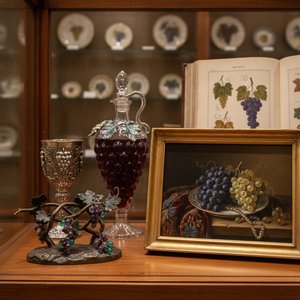
Embark on a visual journey through the world's most exquisite grape-themed masterpieces. Discover the technical brilliance of Baroque masters and learn how to curate timeless, hand-painted oil reproductions for your luxury collection with WahooArt.com.
 設置イメージを表示
 シェアする
シェアする シェアする
シェアする
 詳細を見る
詳細を見る ガイドを表示

 ダウンロード
 似ている作品
 X線調査
X線調査 スライドショーを表示
 Q&A
Q&A
 統計情報
統計情報

 詳細を表示
詳細を表示









 ガラスオプションは、110cm未満のサイズでのみご利用いただけます。


