x


 Oil On CanvasWallArtAnalytical Cubism
 1911Modern
 130.0 x 89.0 cm




























作品のオリジナル比率に合わせた、当店の規定サイズからお選びください。

特定のフレームやスペースに合わせて、ご希望のサイズをご入力いただけます。選択されたサイズが元の画像の比率と異なる場合、アートワークをトリミングするか、手描きで要素を追加して絵画を拡張いたします。デジタルモックアップ を制作し、制作開始前にご確認(承認)をいただきます。
画面上のプレビューは、実際のトリミングや拡張を正確に反映しているものではありません。最終的な構図は、モックアップによってのみ正確にご確認いただけます。
カスタムサイズもご利用いただけますが、元の比率を維持するためには、あらかじめ用意されたリストからサイズを選択することをお勧めいたします。

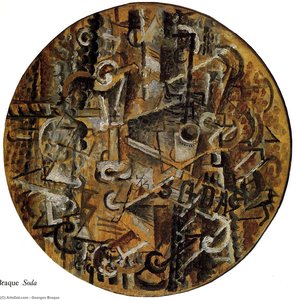
Still Life with a Violin
複製画のサイズ
To gaze upon Georges Braque’s “Still Life with a Violin,” painted in the transformative year of 1911, is to witness the very moment the mirror of traditional art was shattered and reassembled into something far more profound than mere imitation. This masterpiece stands as a cornerstone of Analytical Cubism, a movement that irrevocably altered the course of artistic expression by rejecting the illusionistic perspective that had dominated Western art since the Renaissance. Rather than presenting a window into a recognizable room, Braque invites us into a cerebral landscape where the boundaries between object and space dissolve into a complex interplay of light and shadow.
The subject matter—a violin resting upon a wooden bench—appears deceptively simple at first glance. Yet, beneath this quiet arrangement lies a radical deconstruction of reality. Braque employs a sophisticated geometric strategy, dissecting the violin into a series of intersecting planes, cubes, cylinders, and cones. This technique does not seek to deceive the eye with realistic depth; instead, it forces the viewer to confront the underlying structure of the instrument. By presenting multiple viewpoints simultaneously, Braque captures the essence of perception itself, reflecting the intellectual ferment of a world on the brink of modern upheaval.
The emotional weight of the painting is anchored by its subdued, monochromatic palette. Dominated by rich browns, ochres, and muted greens, the colors evoke a sense of profound stillness and domestic intimacy. These earthy tones do not distract from the structural complexity of the composition; rather, they provide a cohesive atmosphere that allows the viewer to focus on the rhythmic dance of fragmented shapes. There is a quiet, contemplative dignity in this palette, making the work feel both ancient in its gravity and avant-garde in its execution.
Braque’s mastery extends to the tactile quality of the canvas. Through the skillful use of impasto—the thick, deliberate application of paint—he imbues the surface with a physical presence that invites touch. The texture creates a subtle topography, where light catches the ridges of the brushstrokes, adding a layer of organic vitality to the rigid geometric forms. For the collector or interior designer, this textural depth offers a sophisticated sensory experience, providing a focal point that commands attention through its nuanced complexity rather than through loud or garish colors.
Beyond its historical significance, “Still Life with a Violin” possesses an enduring aesthetic power that transcends the era of its creation. It is a work of intellectual rigor and poetic beauty, making it an ideal centerpiece for spaces that value sophistication, depth, and conversation. Whether placed in a minimalist contemporary gallery or a richly textured classical study, the painting’s ability to harmonize fragmented geometry with warm, organic tones allows it to integrate seamlessly into diverse design schemes.
Owning a high-quality reproduction of this Braque masterpiece is an opportunity to bring a piece of the Cubist revolution into one's personal environment. It serves as a constant reminder of the beauty found in looking closer—of finding the structural truth beneath the surface. For those seeking to inspire guests and contemplate the complexities of vision, this artwork offers an inexhaustible well of inspiration, bridging the gap between the historical avant-garde and the modern aesthetic.

1882 - 1963 , フランス
Journey through the revolutionary world of Georges Braque. Explore 25 iconic Cubist masterpieces, from geometric abstractions to timeless still lifes. Find inspiration for your collection with museum-quality art reproductions. Discover all masterpieces on WahooArt.com.

Step into the elegance of 18th-century Britain with our curated guide to George Romney's top 25 masterpieces. Explore iconic portraits and timeless techniques through museum-quality art reproductions and decor inspiration. Discover all masterpieces on WahooArt.com.

Discover the profound legacy of Georges Braque. Our expert guide explores the evolution of Cubism, from Analytic deconstruction to Synthetic innovation, offering deep insights for discerning art collectors and connoisseurs of modern masterpieces.
Master the complexities of Analytical Cubism with our expert guide. Explore how Picasso and Braque revolutionized art through fragmented perspective, geometric abstraction, and muted palettes—essential knowledge for every discerning art collector.


最新の美術ニュース、限定オファー、そしてインテリアのアイデアをいち早くお届けします。
お客様のプロジェクトについてお聞かせください。当社の美術専門家が、お客様に合わせた3つのパーソナライズされた芸術提案をご提供いたします。
あなたにぴったりの3作品を無料で厳選いたします


 プレビュー
プレビュー
 プリントを購入
 シェアする
シェアする シェアする
シェアする
 詳細を見る
詳細を見る

 ダウンロード
 似ている作品
 X線調査
X線調査 スライドショー
 詳細を見る
詳細を見る









 ガラスオプションは、110cm未満のサイズでのみご利用いただけます。