
 Oil On CanvasWallArtSynthetic Cubism
 1919Modern
 61.0 x 116.0 cm
迅速な制作と多彩な仕上げオプションを備えた、ミュージアムクオリティのジークレーまたはキャンバスプリント。 ( 手描きの絵画を購入 デジタル画像販売へ切り替え)





























作品のオリジナル比率に合わせた、当店の規定サイズからお選びください。

特定のフレームやスペースに合わせて、ご自身でサイズを指定することも可能です。選択されたサイズが元の画像の比率と一致しない場合、作品をトリミングするか、鏡面反射または単色での塗りつぶしによって画像を拡張いたします。制作を開始する前に、ご確認用のデジタルモックアップをお送りいたします。
画面上のプレビューには、実際のトリミングや拡張は反映されませんのでご注意ください。最終的な構図を正確に確認できるのは、モックアップのみとなります。
カスタムサイズも承っておりますが、元の比率を維持するためには、あらかじめ用意されたリストからサイズを選択することをお勧めいたします。

Still Life with a Guitar
複製画のサイズ
Georges Braque's "Still Life with a Guitar," painted in 1919, isn’t merely a depiction of objects; it’s a profound exploration of perception and the very nature of representation. Born in Argenteuil, France, in 1882, Braque’s artistic journey began not within the hallowed halls of formal academies but amidst the practical realities of his family's trade as house painters and decorators. This grounding in material and structure would prove invaluable as he later dismantled traditional artistic conventions, laying the groundwork for the revolutionary style that defines this work – Synthetic Cubism. The painting’s creation coincided with a period of intense experimentation within the art world, fueled by the influence of Paul Cézanne's geometric explorations and the burgeoning interest in non-Western art forms like African masks.
“Still Life with a Guitar” exemplifies Synthetic Cubism, a phase characterized by the incorporation of real-world materials—newspaper fragments, wallpaper scraps, sand—into the painted surface. This tactile element elevates the work beyond mere representation, inviting viewers to engage with its physical presence. Braque masterfully employs charcoal as his medium, creating a stark black and white composition that emphasizes the interplay of planes and angles. The guitar itself is fragmented into interlocking geometric shapes, simultaneously present and absent – a visual paradox that mirrors the Cubist exploration of multiple perspectives. Notice how the strings aren’t rendered as continuous lines but rather as intersecting planes, contributing to the overall sense of deconstruction. The bowl and books are treated with similar meticulous attention to detail, each element dissected and reassembled within the confines of the canvas.
Technique Note: Sand was often mixed into the oil paint to create a rougher texture, further enhancing the sense of materiality and adding depth to the composition.While seemingly straightforward in its subject matter—a guitar, books, and a bowl—the painting’s symbolism is far more layered. The guitar, a symbol of leisure and artistic expression, becomes an object of fragmented contemplation. The books suggest intellectual pursuits and knowledge, yet their disjointed arrangement hints at the instability of established ideas. The bowl, often associated with nourishment and domesticity, introduces an element of quiet stillness amidst the dynamic geometric forms. The monochromatic palette—a deliberate choice by Braque—amplifies the sense of detachment and encourages viewers to focus on the formal relationships between the objects rather than their literal identities. It’s a visual meditation on the process of seeing itself.
“Still Life with a Guitar” is more than just a still life; it's a window into the mind of an artist grappling with the shifting realities of the 20th century. The painting’s fragmented composition evokes a sense of unease and disorientation, mirroring the psychological impact of war and the breakdown of traditional values. Yet, within this apparent chaos lies a profound beauty—a testament to Braque's innovative approach to representation and his ability to transform everyday objects into powerful symbols. Reproductions of this work offer a unique opportunity to experience the intellectual rigor and emotional depth of one of modern art’s most influential figures. It remains a compelling study in form, texture, and the enduring power of visual abstraction.


1882 - 1963 , フランス

Discover the profound legacy of Georges Braque. Our expert guide explores the evolution of Cubism, from Analytic deconstruction to Synthetic innovation, offering deep insights for discerning art collectors and connoisseurs of modern masterpieces.

Elevate your artistry with this definitive expert guide to mastering charcoal. Designed for art students, learn professional techniques for capturing profound depth, intricate textures, and dramatic shadows through advanced blending and chiaroscuro methods.
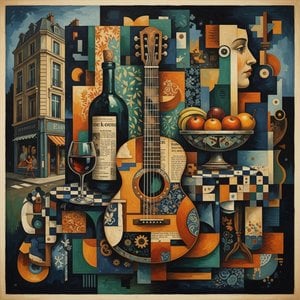
Master the vibrant world of Synthetic Cubism with our expert guide. Explore the revolutionary techniques of Picasso and Braque, from collage to color, and discover how this movement redefined modern art for collectors and connoisseurs alike.


 プレビュー
プレビュー
 シェアする
シェアする シェアする
シェアする
 詳細を見る
詳細を見る ガイド
ガイド

 ダウンロード
 似ている作品
 X線調査
X線調査 スライドショー
 統計情報
統計情報 詳細を見る
詳細を見る









 ガラスオプションは、110cm未満のサイズでのみご利用いただけます。


