

このページに掲載されている作品は著作権法によって保護されており、当社の許可なく同一の複製物を制作または販売することは法律で禁じられています。この保護は、以下のような国際条約に基づき執行されます。 ベルヌ条約 および、以下の条項に定められたものを含む各国の法律により、 米国著作権法 第17編。
敬意を払った法的な代替手段として、私たちはオリジナルにインスピレーションを与えられた、カスタムの手描きアートワークを提供しています。私たちの熟練したプロのアーティストは、元の作品が持つスタイル、情緒、そして芸術的なエッセンスを注意深く研究し、独自の創作物でありながら、同じ感性を呼び起こすような、新しくユニークな作品を作り上げます。
この手法は、著作権で保護された作品の複製や複写を伴わないため、著作権法に完全に準拠しています。これは単なる模倣ではなく、創造的な再解釈です。元の作品からインスピレーションを受けつつも、それとは異なる、全く新しい絵画を生み出すものです。
当社のアーティストが、お客様のご希望のサイズと額縁に合わせて、キャンバスに手描きで制作する油彩画です。 ( プリント版に切り替え デジタル画像販売へ切り替え)





























作品のオリジナル比率に合わせた、当店の規定サイズからお選びください。

特定のフレームやスペースに合わせて、ご希望のサイズをご入力いただけます。選択されたサイズが元の画像の比率と異なる場合、アートワークをトリミングするか、手描きで要素を追加して絵画を拡張いたします。デジタルモックアップ を制作し、制作開始前にご確認(承認)をいただきます。
画面上のプレビューは、実際のトリミングや拡張を正確に反映しているものではありません。最終的な構図は、モックアップによってのみ正確にご確認いただけます。
カスタムサイズもご利用いただけますが、元の比率を維持するためには、あらかじめ用意されたリストからサイズを選択することをお勧めいたします。
Plow
複製画サイズ一覧
Georges Braque's "The Plow," painted in 1961, offers a deceptively simple yet profoundly layered glimpse into the artist’s evolving artistic vision. This work, rendered in a restrained palette of blues and yellows – colors often associated with the vastness of the French countryside – immediately draws the eye to its central subject: a weathered plow resting within a field. However, to reduce “The Plow” to a mere depiction of agricultural labor would be a significant oversight. Braque, a pivotal figure in the development of Cubism, employs his signature techniques not just to represent form but to deconstruct and reimagine it, inviting the viewer into a complex interplay of perspective and abstraction.
The painting’s style firmly places it within the Expressionist movement, though with a distinctly Braquean twist. Unlike the vibrant hues often associated with Fauvism, which marked his earlier work, here we see a deliberate restraint, a muted quality that emphasizes texture and form over immediate visual impact. The two wheels of the plow are rendered with meticulous detail, their surfaces suggesting both solidity and vulnerability. The geometric shapes—the wheel’s curves, the plow’s frame—are subtly fractured and rearranged, echoing the Cubist principles of simultaneous viewpoints that Braque pioneered alongside Pablo Picasso. This fragmentation isn't chaotic; rather, it creates a sense of dynamic equilibrium, as if the plow is simultaneously present in multiple spatial dimensions.
Understanding “The Plow” requires acknowledging its crucial role within the broader context of Braque’s artistic journey. Following his early explorations with Fauvism and his intense collaboration with Picasso, Braque began to systematically dismantle traditional notions of representation. He moved away from single-point perspective, instead presenting multiple viewpoints within a single image – a technique directly inspired by Paul Cézanne's emphasis on geometric forms and the underlying structure of nature. This approach is brilliantly demonstrated in “The Plow,” where the plow itself appears to be simultaneously viewed from above, below, and at an oblique angle. The birds soaring overhead further contribute to this sense of spatial ambiguity, adding another layer of visual complexity.
Braque’s use of color also plays a significant role in conveying meaning. The blues evoke a sense of vastness and the open sky, while the yellows suggest the warmth of the earth and the sun. These colors aren't applied with smooth gradients; instead, they are built up through layers of broken brushstrokes, creating a textured surface that invites close examination. This tactile quality reinforces the painting’s connection to the physical world – the feel of the soil beneath the plow, the weight of the metal frame.
While “The Plow” is undeniably an exercise in formal experimentation, it also carries a subtle symbolic resonance. The plow itself represents labor, fertility, and the cyclical rhythms of rural life. It’s a potent image of human effort connected to the land – a theme that resonated deeply with Braque, who spent much of his life observing and depicting the landscapes of France. The birds, often interpreted as symbols of freedom and aspiration, suggest a potential for transcendence within this seemingly simple scene.
Furthermore, the painting’s quietude—the absence of figures or any other elements beyond the plow and the field—creates an atmosphere of contemplative stillness. It invites the viewer to pause and consider the relationship between humanity and nature, between tradition and progress. “The Plow” is not merely a representation of a rural object; it's a meditation on the essence of human experience.
WahooArt offers meticulously crafted hand-painted reproductions of Georges Braque’s "The Plow," allowing art lovers to bring this iconic work into their homes or offices. Our skilled artists faithfully recreate Braque's nuanced brushwork, color palette, and compositional techniques, ensuring that the essence of the original painting is preserved with exceptional detail. Whether you are a seasoned collector or simply seeking to add a touch of artistic sophistication to your space, our reproduction provides an authentic and accessible way to appreciate this pivotal work in modern art.
ジョルジュ・ブラクエ作「Plow」は、plow, field, birds, rural, landscape, blue, yellowとEarthyな雰囲気を融合させています。
著作権について、「Plow」は著作権により保護されていますです。
ジョルジュ・ブラクエ作「Plow」 は、Living Room に飾るのがおすすめです。作品の主題、色彩、そして雰囲気に合わせたご提案です。
「Plow」の主題はplow, field, birds, rural, landscape, blue, yellowです。
ジョルジュ・ブラクエ作「Plow」 の色彩分析は、Gentle なコントラストと Discordant Palette な調和を記録しています。
Cubist Landscapeの作品「Plow」は、フランス出身のアーティストによって制作されました。
「Plow」の著作権の状態について — 著作権により保護されています — は、作者の没年である1963に基づいています。
ジョルジュ・ブラクエ作「Plow」の色調は、Subtle Colorの彩度とBalancedの強さを備えています。


1882 - 1963 , フランス

Discover the profound legacy of Georges Braque. Our expert guide explores the evolution of Cubism, from Analytic deconstruction to Synthetic innovation, offering deep insights for discerning art collectors and connoisseurs of modern masterpieces.
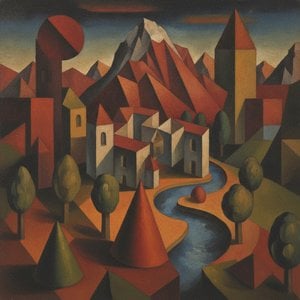
Explore the profound evolution of Cubist landscapes. Discover how masters like Braque and Picasso redefined perspective through geometric mastery, transforming nature into an intellectual mosaic of form and light for the discerning modern art collector.

 設置イメージを確認
 送る
送る シェア
シェア
 詳細情報
詳細情報 ガイドを表示

 画像をダウンロード
 似ている作品
 X線調査
X線調査 スライドショー
 統計情報
統計情報

 続きを読む
続きを読む









 ガラスオプションは、110cm未満のサイズでのみご利用いただけます。


