

このページに掲載されている作品は著作権法によって保護されており、当社の許可なく同一の複製物を制作または販売することは法律で禁じられています。この保護は、以下のような国際条約に基づき執行されます。 ベルヌ条約 および、以下の条項に定められたものを含む各国の法律により、 米国著作権法 第17編。
敬意を払った法的な代替手段として、私たちはオリジナルにインスピレーションを与えられた、カスタムの手描きアートワークを提供しています。私たちの熟練したプロのアーティストは、元の作品が持つスタイル、情緒、そして芸術的なエッセンスを注意深く研究し、独自の創作物でありながら、同じ感性を呼び起こすような、新しくユニークな作品を作り上げます。
この手法は、著作権で保護された作品の複製や複写を伴わないため、著作権法に完全に準拠しています。これは単なる模倣ではなく、創造的な再解釈です。元の作品からインスピレーションを受けつつも、それとは異なる、全く新しい絵画を生み出すものです。
当社のアーティストが、お客様のご希望のサイズと額縁に合わせて、キャンバスに手描きで制作する油彩画です。 ( プリント版に切り替え デジタル画像販売へ切り替え)





























作品のオリジナル比率に合わせた、当店の規定サイズからお選びください。

フレームや壁のスペースに合わせて、ご希望の幅と高さを入力してください。本作品は手描きのため、異なる比率のサイズをご希望の場合、絵画の周囲を少し広げて描くか、あるいは端を少しカットして調整することが可能です。お客様のご要望に合わせます。制作を開始する前に、仕上がりを確認するためのデジタルモックアップをお送りいたします。このページに表示されている画像は完成品の実物ではなく、あくまでモックアップによるイメージです。
Landscape from Estac 1
複製画サイズ一覧
Georges Braque’s Landscape from Estac 1, painted in 1907-1908, isn't merely a depiction of a Provençal hillside; it’s a foundational document in the birth of modern art. Emerging from the vibrant artistic crucible of early 20th-century Paris, this work represents a pivotal moment where Impressionism began to fracture and give way to something radically new – Cubism. Braque, alongside Pablo Picasso, embarked on an audacious experiment with representation, dismantling traditional perspective and embracing a fractured, multi-faceted view of the world. The painting’s genesis lies in Braque's sojourn to Estac, a small village near Marseille, where he sought inspiration from the landscapes and light of Provence – a region deeply resonant with Paul Cézanne, whose influence on both artists was profound.
The scene itself is deceptively simple: a rugged hillside receding into a hazy valley. However, within this apparent tranquility lies an intense intellectual process. Braque meticulously broke down the forms of trees and rocks into geometric shapes – cubes, cones, cylinders – and reassembled them in a way that defied conventional spatial relationships. This wasn’t about creating a realistic illusion; it was about capturing the essence of the subject through its constituent parts, presenting multiple viewpoints simultaneously on a single canvas. The deliberate ambiguity invites the viewer to actively participate in reconstructing the image, mirroring the artist's own analytical process.
Landscape from Estac 1 is considered a prime example of Analytical Cubism, the first phase of this revolutionary movement. Unlike later Synthetic Cubism which incorporated collage elements, Analytical Cubism focused on dissecting objects into their most basic geometric components. Braque’s technique here is remarkably precise and controlled. Notice the subtle shifts in color – muted blues, ochres, and browns – that create a sense of depth and volume despite the flattened perspective. The use of thin, layered brushstrokes adds to the painting's tactile quality, emphasizing the fragmented nature of the subject.
The inclusion of a solitary figure walking along the hillside is not merely decorative; it serves as a human scale marker within this abstract landscape. This figure anchors the composition and provides a point of reference for the viewer, subtly reminding us of our own presence in the world – a crucial element in Braque’s exploration of perception. The red-leaved trees, strategically placed, act as vibrant focal points, injecting bursts of color into the predominantly monochromatic palette and further disrupting any sense of traditional harmony.
Beyond its formal innovations, Landscape from Estac 1 possesses a quiet emotional resonance. The hazy atmosphere evokes a feeling of contemplation and solitude, inviting the viewer to lose themselves in the scene’s intricate details. There's a sense of exploration – both physical and intellectual – conveyed by the figure traversing the hillside. Braque wasn’t simply documenting a landscape; he was investigating the very nature of seeing, questioning how we perceive and represent reality. The painting speaks to the anxieties and uncertainties of a rapidly changing world, reflecting a shift away from traditional values and towards a more subjective, fragmented understanding of experience.
Reproductions of Landscape from Estac 1 offer an unparalleled opportunity to connect with this pivotal work of art history. WahooArt’s meticulous hand-painted reproductions faithfully capture the nuances of Braque's original technique and color palette, ensuring that every detail – from the subtle brushstrokes to the evocative atmosphere – is accurately reproduced. Own a piece of artistic history and bring the revolutionary vision of Georges Braque into your home or office.
「Landscape from Estac 1」の著作権の状態について — 著作権により保護されています — は、作者の没年である1963に基づいています。
「Landscape from Estac 1」は、Late Medieval時代に制作されたものです。
「Landscape from Estac 1」では、Boldな対比とSoftly Mixed Paletteな調和が共存しています。


1882 - 1963 , フランス

Discover the profound legacy of Georges Braque. Our expert guide explores the evolution of Cubism, from Analytic deconstruction to Synthetic innovation, offering deep insights for discerning art collectors and connoisseurs of modern masterpieces.
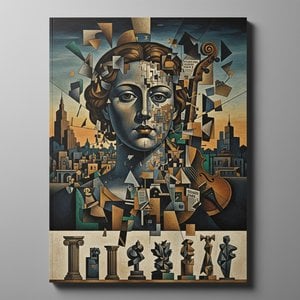
Master the complexities of Cubism with our expert guide. Explore the revolutionary fragmentation of Picasso and Braque, from Analytic to Synthetic styles, and learn how to evaluate these profound modernist masterpieces for your private collection.

Embark on a journey through the revolutionary world of Cubism. Discover how masters like Picasso redefined perspective through Analytical and Synthetic techniques in this expert-led guide for art enthusiasts and collectors.
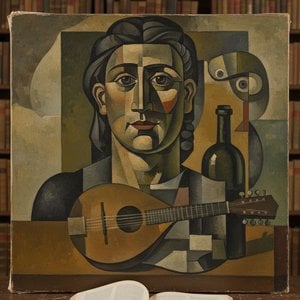
Master the complexities of Analytical Cubism with our expert guide. Explore how Picasso and Braque revolutionized art through fragmented perspective, geometric abstraction, and muted palettes—essential knowledge for every discerning art collector.

 設置イメージを確認
 送る
送る シェア
シェア
 詳細情報
詳細情報 ガイドを表示

 画像をダウンロード
 似ている作品
 X線調査
X線調査 スライドショー
 Q&A
Q&A 統計情報
統計情報

 続きを読む
続きを読む









 ガラスオプションは、110cm未満のサイズでのみご利用いただけます。


