
x


迅速な制作と多彩な仕上げオプションを備えた、ミュージアムクオリティのジークレーまたはキャンバスプリント。 ( 手描きの絵画を購入 画像を購入)
作品のオリジナル比率に合わせた、当店の規定サイズからお選びください。

特定のフレームやスペースに合わせて、ご自身でサイズを指定することも可能です。選択されたサイズが元の画像の比率と一致しない場合、作品をトリミングするか、鏡面反射または単色での塗りつぶしによって画像を拡張いたします。制作を開始する前に、ご確認用のデジタルモックアップをお送りいたします。
画面上のプレビューには、実際のトリミングや拡張は反映されませんのでご注意ください。最終的な構図を正確に確認できるのは、モックアップのみとなります。
カスタムサイズも承っておりますが、元の比率を維持するためには、あらかじめ用意されたリストからサイズを選択することをお勧めいたします。

Gloucester Scene
複製画のサイズ

Georges Ames Aldrich (1872–1941) occupied a unique space in the American artistic consciousness, acting as a bridge between the quietude of Tonalism and the vibrant energy of Impressionism. Born George Eugene Aldrich in Worcester, Massachusetts, his journey was one of profound movement—both geographical and stylistic. While his roots were firmly planted in New England, his artistic soul was shaped by the cobblestone streets of Europe and the burgeoning industrial landscapes of the American Midwest. His work does not merely depict scenes; it captures the very breath of the atmosphere, inviting viewers into worlds where light and shadow perform a delicate, eternal dance.
Aldrich’s formative years were marked by an itinerant spirit that would later define his aesthetic versatility. After initial studies at the Art Students League of New York in the early 1890s, he ventured to Paris, immersing himself in the epicenter of the modern art movement. It was during this period, between 1894 and 1900, that he absorbed the revolutionary techniques of the French masters. Influenced by the luminous touch of Claude Monet and the fluid, water-focused brilliance of Norwegian Impressionist Fritz Thaulow, Aldrich developed a signature ability to render flowing water, stone architecture, and the ephemeral quality of moonlight with remarkable precision.
The breadth of Aldrich’s oeuvre is nothing short of extraordinary, spanning from the romanticized charm of European villages to the gritty, transformative power of the American Industrial Revolution. His travels through France, Germany, and England left an indelible mark on his palette, resulting in evocative depictions of French villages bathed in the soft, nocturnal glow of lamplict. In works such as French Village at Night, one can feel the hush of a winter’s evening, where cool blues and whites are punctuated by the warmth of human habitation, creating a sense of profound peace.
However, Aldrich was far from a mere escapist. Upon relocating to Indiana around 1900, he turned his gaze toward the evolving American landscape. He became a significant figure within the Hoosier Salon circles, capturing the spirit of the Midwest with a nuanced eye for both its natural beauty and its industrial progress. This duality is perhaps most powerfully realized in his 1926 masterpiece, The Melting Pot. In this striking industrial nocturne, Aldrich moves away from pastoral tranquility to confront the imposing reality of the machine age. Through thick, expressive brushwork and a somber palette, he portrays smokestacks belching plumes into a bleak sky, offering a poignant commentary on the tension between technological advancement and the natural world.
Throughout his career, Aldrich maintained a steady presence in major exhibition circuits, earning recognition from prestigious institutions such as the Art Institute of Chicago. His ability to blend the subtle tonal shifts of Tonalism with the textured, light-driven approach of Impressionism allowed him to capture subjects that were simultaneously grounded in reality and elevated by emotion. Whether he was painting the maritime charm of a Gloucester Scene or the moonlit reflections of Le Soir, River Elaune, his focus remained on the evocative power of the moment.
The historical significance of Georges Ames Aldrich lies in his role as a chronicler of change. He documented a world in transition—a period where the quiet, rural traditions of the nineteenth century were being rapidly reshaped by the industrial fervor of the twentieth. His paintings serve as windows into this era, preserving the light of vanished villages and the smoke of rising cities. Today, his work remains a testament to the enduring power of atmospheric painting, reminding us that even in the midst of profound change, there is a lasting beauty to be found in the way light touches the earth.

1872 - 1941

Explore the ethereal beauty of Impressionist landscapes. Discover how masters like Monet captured fleeting light through color and texture, and learn to curate these timeless, luminous masterpieces for your home collection.

Discover the profound serenity of timeless pastoral landscapes. From Impressionist masterpieces to bespoke oil commissions, explore how curated fine art brings the enduring beauty and tranquility of nature into your luxury home interior.

Elevate your personal landscapes into breathtaking Impressionist oil masterpieces. WahooArt transforms your cherished photos into museum-quality, hand-painted treasures through academic artistry and premium craftsmanship. Invest in a timeless legacy for your home today.
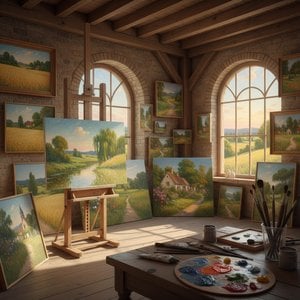
Discover the profound tranquility of rural art through an expert exploration of Impressionist landscapes. From pastoral scenes to textured oil masterpieces, learn how timeless nature-inspired artworks bring enduring elegance and serenity to sophisticated collectors.


最新の美術ニュース、限定オファー、そしてインテリアのアイデアをいち早くお届けします。
お客様のプロジェクトについてお聞かせください。当社の美術専門家が、お客様に合わせた3つのパーソナライズされた芸術提案をご提供いたします。
あなたにぴったりの3作品を無料で厳選いたします


 プレビュー
プレビュー
 シェアする
シェアする シェアする
シェアする
 詳細を見る
詳細を見る

 ダウンロード
 似ている作品
 X線調査
X線調査 スライドショー
 詳細を見る
詳細を見る






































 ガラスオプションは、110cm未満のサイズでのみご利用いただけます。


