
 TemperaInternational Gothic
 1423Renaissance
 32.0 x 75.0 cm
 ウフィツィ美術館
迅速な制作と多彩な仕上げオプションを備えた、ミュージアムクオリティのジークレーまたはキャンバスプリント。 ( 手描きの絵画を購入 デジタル画像販売へ切り替え)





























作品のオリジナル比率に合わせた、当店の規定サイズからお選びください。

特定のフレームやスペースに合わせて、ご自身でサイズを指定することも可能です。選択されたサイズが元の画像の比率と一致しない場合、作品をトリミングするか、鏡面反射または単色での塗りつぶしによって画像を拡張いたします。制作を開始する前に、ご確認用のデジタルモックアップをお送りいたします。
画面上のプレビューには、実際のトリミングや拡張は反映されませんのでご注意ください。最終的な構図を正確に確認できるのは、モックアップのみとなります。
カスタムサイズも承っておりますが、元の比率を維持するためには、あらかじめ用意されたリストからサイズを選択することをお勧めいたします。

Nativity
複製画のサイズ
To stand before a depiction like Gentile da Fabriano’s Nativity is to step across the threshold of six centuries and into the luminous heart of the early Renaissance. This masterpiece, painted in 1423, is far more than a mere recounting of a biblical event; it is an opulent meditation on humility, divinity, and the profound moment when the divine entered the mortal realm. The air around the canvas seems thick with the scent of incense and the quiet awe of shepherds gathered for the first time to witness such glory. Gentile da Fabriano, a master whose style epitomizes the grace of the International Gothic period, captures this sacred drama with an almost breathtaking delicacy.
The technical brilliance evident in this work is immediately apparent. Executed in tempera on wood, the medium itself speaks to the craftsmanship of its era, allowing Da Fabriano to achieve colors that remain startlingly vibrant even after so many decades. Observe the meticulous detail—the intricate patterns adorning the Virgin Mary’s blue cloak, or the soft, ethereal glow emanating from the stars scattered across the mountainous night sky. This attention to minute surface quality is a hallmark of his genius. The composition itself guides the eye with practiced elegance: the central focus remains on the kneeling Mary beside the swaddled infant Jesus, while the surrounding figures—the angels and shepherds—are rendered with lifelike grace, their traditional robes adding rich texture to the scene.
Every element within this painting seems imbued with symbolic weight. The humble bed of straw upon which the Christ Child rests serves as a powerful contrast to the surrounding grandeur, emphasizing the profound nature of his birth. Look beyond the central figures and notice the inclusion of the ox and the donkey; these animals are not mere props but potent symbols echoing the narrative of the Nativity itself. Furthermore, the distant castle nestled within the mountainous landscape grounds this heavenly event in a tangible, if idealized, setting. These carefully placed symbols invite the viewer into a deeper contemplation, transforming the painting from a portrait into a rich theological dialogue.
What truly endures about this Nativity is its emotional resonance. Despite the formality inherent in Renaissance religious art, Da Fabriano manages to infuse the scene with palpable warmth and wonder. The shepherds’ postures suggest awe mixed with reverence, while the angels radiate a celestial joy that seems almost audible. For the modern admirer, whether one cherishes historical artistry or seeks an object of profound beauty for their home, this piece offers a window into a time when art served as both devotion and supreme aesthetic pleasure. Owning a reproduction allows one to bring this enduring sense of sacred wonder and unparalleled artistic history into contemporary life.


1370 - 1427
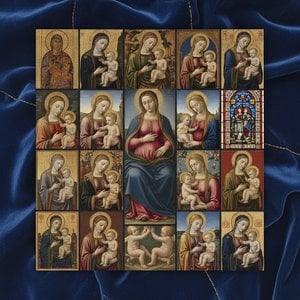
Embark on a sophisticated journey through art history with our curated guide to the most iconic Madonna and Child masterpieces. Discover the profound beauty, theological depth, and enduring legacy of these sacred Renaissance treasures.


 プレビュー
プレビュー
 シェアする
シェアする シェアする
シェアする
 詳細を見る
詳細を見る

 ダウンロード
 似ている作品
 X線調査
X線調査 スライドショー
 統計情報
統計情報 詳細を見る
詳細を見る









 ガラスオプションは、110cm未満のサイズでのみご利用いただけます。


