設置イメージを確認 ARで壁に飾るイメージを見る プリント版に切り替え デジタル画像販売へ切り替え 送る
詳細情報 ガイドを表示 お気に入りに追加 画像をダウンロード 似ている作品 X線調査 スライドショー 統計情報

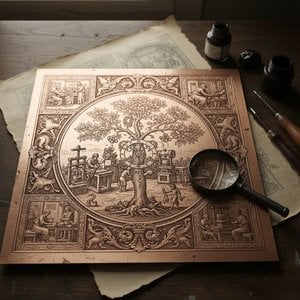
A Symphony, Nineteenth Century

Explore Frederick Stuart Church's evocative etching *A Symphony*, capturing a poignant moment of musical connection and moral allegory within a beautifully rendered nineteenth-century landscape.

Frederick Stuart Church (1842-1923) was an American illustrator renowned for allegorical animal depictions. Explore his charming works featured in Harper's, Century Magazine & more. Discover the art of a master of empathy and whimsical storytelling.

手描き油彩複製画

当社のアーティストが、お客様のご希望のサイズと額縁に合わせて、キャンバスに手描きで制作する油彩画です。 ( プリント版に切り替え デジタル画像販売へ切り替え)

P118B $10
P118H $10
P118W $10
P438Z $10
P508JH $12
P508YH $12
P805H $10
P805Z $10
P919BZ $10
P919G $10
P919XJ $10
P959ZH $10
P968JZ $12
W106C $8
W218G $10
W218JH $8
W218Y $10
W307PJ $10
W316G $10
W316PJ $8
W316Y $10
W398PJ $8
W4111J $10
W500HY $15
W500JH $15
W692G $12
W849H $8
W940BG $15
W953PJ $8

標準サイズ
カスタムサイズ
CM
INCH

作品のオリジナル比率に合わせた、当店の規定サイズからお選びください。

横幅
高さ

特定のフレームやスペースに合わせて、ご希望のサイズをご入力いただけます。選択されたサイズが元の画像の比率と異なる場合、アートワークをトリミングするか、手描きで要素を追加して絵画を拡張いたします。デジタルモックアップ を制作し、制作開始前にご確認(承認)をいただきます。
画面上のプレビューは、実際のトリミングや拡張を正確に反映しているものではありません。最終的な構図は、モックアップによってのみ正確にご確認いただけます。
カスタムサイズもご利用いただけますが、元の比率を維持するためには、あらかじめ用意されたリストからサイズを選択することをお勧めいたします。

カスタマイズの例:顔をお客様の写真に置き換える、ペットを追加する(例:猫を犬に変更)、背景に隠れたメッセージを入れる、背景の風景や要素を変更するなど。
ご注文後、WahooArt.com チームより詳細な指示をお送りするとともに、仕上がりイメージ(モックアップ)をご提供いたします。

世界中への配送()は、通常の5週間ではなく、3〜4週間でお届けいたします。(27 9月)。品質には一切妥協いたしません。

why_choose_icon
世界中へ無料エクスプレス配送
why_choose_icon
高品質なリネンキャンバス
why_choose_icon
配送時完全保険付
why_choose_icon
関税・輸入税の払い戻し保証
why_choose_icon
忠実な色彩再現の保証
why_choose_icon
100日間返品保証(製造上の欠陥がある場合のみ)
why_choose_icon
100% 全額返金保証
why_choose_icon
まとめ買い割引のご案内

合計金額

$ 272

reproduction

A Symphony, Nineteenth Century

再現技法

複製画サイズ一覧

-

合計金額

$ 272

作品情報

  • Influences: Walter Shirlaw
  • Artistic style: Symbolic illustration
  • Location: Smithsonian American Art Museum
  • Year: 1884
  • Subject or theme: Musical expression
  • Medium: Etching on parchment
  • Artist: Frederick Stuart Church

アート・クイズ

各質問の正解は1つだけです。

問題 1:
What artistic movement is Frederick Stuart Church primarily associated with?
問題 2:
The etching on parchment depicts a scene featuring:
問題 3:
What is the primary purpose of Church's depiction of animals in this artwork?
問題 4:
In what year was *A Symphony, Nineteenth Century* created?
問題 5:
Where is the artwork currently housed?

A Deep Dive Into Frederick Stuart Church’s “A Symphony”

Frederick Stuart Church's "A Symphony," created in 1884, isn't merely a depiction of a man playing guitar; it’s a meticulously crafted etching on parchment that embodies the spirit of Romanticism while subtly hinting at Symbolist influences. Produced during a period marked by burgeoning interest in natural history and moral allegory—a trend championed by luminaries like Darwin—the artwork reflects a broader cultural preoccupation with interpreting nature's grandeur through philosophical frameworks. Church, having begun his artistic journey as a draftsman for the American Express Company before serving valiantly during the Civil War, honed his skills under Walter Shirlaw at Chicago’s Academy of Design, establishing himself as one of America’s foremost illustrators.

The Technique and Material Choices

Church's masterful execution speaks volumes about his dedication to capturing nuanced detail. The etching process itself—utilizing acid to carve lines into a metal plate—allowed for exceptional precision, resulting in an image characterized by delicate tonal gradations and subtle textures. The parchment substrate—chosen for its archival qualities—further underscores Church’s commitment to preserving the artwork's integrity for generations to come. Examining the plate itself reveals intricate linework that meticulously renders the guitar player’s posture and facial expression, demonstrating a profound understanding of anatomy and gesture.

Historical Context: Darwinian Influence and Moral Allegory

“A Symphony” sits squarely within the intellectual landscape shaped by Charles Darwin's groundbreaking publication of *On the Origin of Species*. The theory challenged prevailing religious dogma regarding creation, prompting artists to grapple with questions about humanity’s place in the natural world. Church skillfully incorporates this influence through the artwork’s symbolic representation—the guitar player embodies a contemplative figure striving for harmony amidst perceived discordance. The seated companion represents wisdom and understanding, while the standing individual symbolizes active engagement with life's challenges.

Symbolism: Guitar Player as Harmony Seekers

The central figure—holding the guitar—is arguably the artwork’s most potent symbol. Music itself has long been associated with spiritual contemplation and emotional catharsis; Church elevates this association by portraying the guitarist as actively pursuing a state of equilibrium. The guitar, representing musical expression, serves as a conduit for conveying inner thoughts and feelings—a theme resonating deeply within the Symbolist movement's exploration of subconscious imagery and psychological states.

Emotional Impact: Tranquility Amidst Complexity

Despite the subtle tension conveyed by the positioning of the figures, “A Symphony” ultimately exudes an aura of tranquility. Church’s skillful shading creates a luminous effect that softens the contours of the scene, fostering a sense of serenity and contemplation. The artwork invites viewers to consider the profound beauty inherent in confronting life's complexities with grace and resilience—a timeless message conveyed through masterful artistic technique and imbued with enduring symbolic significance.

Recommended Reproduction

A high-quality reproduction of “A Symphony” would beautifully complement any interior space, bringing forth the artwork’s delicate tonal palette and capturing its evocative atmosphere. Consider framing it in a neutral tone to maximize visual impact and preserve the piece's original aesthetic integrity.

アーティストについて

The Visionary Soul of an American Master

In the vibrant tapestry of late nineteenth-century American art, few threads are as intricately woven or as whimsically colored as those spun by Frederick Stuart Church. Born in Grand Rapids, Michigan, on December 1, 1842, Church was a man whose life trajectory defied the conventional paths laid out by his prominent lineage. The son of a distinguished lawyer and politician, his early years were marked by a departure from the structured world of commerce. At just thirteen, he abandoned formal schooling to join the American Express Company in Chicago—a move intended by his parents to steer him toward a stable business career. Yet, the call of destiny was far more profound than the lure of ledger books. The onset of the Civil War provided a transformative crucible; serving in the Union Army, Church experienced a depth of human experience that would later infuse his work with a unique sense of empathy and moral weight.

Upon his discharge, the artist’s true vocation emerged with undeniable clarity. Returning to Chicago, he sought the mentorship of Walter Shirlaw at the Academy of Design, beginning a rigorous journey into the heart of visual storytelling. By 1870, Church had migrated to New York City, a metropolis that would serve as his lifelong sanctuary and creative laboratory. Unlike many of his contemporaries who sought validation through European ateliers, Church maintained a fiercely independent spirit. He famously rejected the necessity of studying abroad, asserting a bold, nativist conviction that American art possessed its own inherent strength and did not need to mimic "foreign" styles. This commitment to an authentic American aesthetic allowed him to develop a voice that was uniquely his own—a blend of Romanticism and Symbolism that felt both modern and timeless.

A Symphony of Allegory and Animal Grace

Church’s artistic legacy is most profoundly felt in his mastery of the allegorical depiction. He possessed a rare, almost supernatural ability to imbue the animal kingdom with human emotion and moral complexity. His illustrations, which graced the pages of prestigious publications such as Harper's and Century Magazine, were never merely decorative; they were narratives of the soul. Through his delicate use of line and color, a tiger was rarely just a predator, and a bird was never just a creature of flight. Instead, they became vessels for exploring themes of innocence, power, and the delicate balance of nature. In works like Maiden with Flamingos or his evocative etchings such as A Symphony, one finds a serene yet tension-filled world where every tilt of a head or outstretched paw tells a story of profound significance.

His technique often danced between the realms of Impressionism and fine line illustration, creating a dreamlike atmosphere that captivated the Gilded Age audience. His fascination with certain motifs—such as the majestic tiger or the delicate songbird—allowed him to explore the duality of existence: the predator and the prey, the powerful and the vulnerable. This era of his work reflected the broader cultural shifts of the time, capturing a sense of lightness and whimsy while simultaneously touching upon deeper, often more somber, social allegories. To look upon a Church original is to enter a realm where the boundaries between the natural world and the human psyche dissolve into a beautiful, symbolic haze.

Legacy of an American Illustrator

The historical significance of Frederick Stuart Church lies in his ability to bridge the gap between commercial illustration and fine art. He elevated the medium of the periodical illustration to a level of high symbolism, proving that even within the constraints of mass media, an artist could achieve profound depth. His life, spanning from the mid-nineteenth century through the dawn of the twentieth, mirrored the evolution of the American identity itself—moving from the ruggedness of the Civil War era to the sophisticated, ornamental elegance of the Gilded Age.

Today, his work remains a testament to the power of empathy in art. His ability to find the "human" within the animal and the "divine" within the mundane continues to resonate with collectors and historians alike. As we revisit his catalog, we see more than just beautiful images; we encounter the enduring spirit of an artist who believed that through the lens of nature, we might most clearly see ourselves.
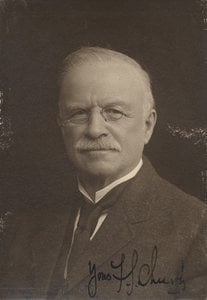
  • Key Artistic Milestones:
  • Enrolled at the National Academy of Design under Lemuel Wilmarth.
  • Became a prominent contributor to Harper's Weekly and Century Magazine.
  • Developed a signature style blending Romanticism with animal allegory.
  • Championed an independent, American-centric approach to artistic training.

アーティスト情報

  • Artistic Movement Or Style: Illustrator; Victorian Animal Art
  • Artists Or Movements Influenced By This Artist: Aesops Fables
  • Artists Who Influenced This Artist: Walter Shirlaw
  • Date Of Birth: December 1, 1842
  • Date Of Death: February 18, 1923
  • Full Name: Frederick Stuart Church
  • Nationality: American
  • Notable Artworks:
    • Supremacy
    • Dreamers
    • Two Birds
  • Place Of Birth: Grand Rapids, Michigan