BronzeSculpture
 1905
1905 28.0 x 60.0 cm
 Amon Carter Museum of American Art
迅速な制作と多彩な仕上げオプションを備えた、ミュージアムクオリティのジークレーまたはキャンバスプリント。 ( 手描きの絵画を購入 画像を購入)
作品のオリジナル比率に合わせた、当店の規定サイズからお選びください。

特定のフレームやスペースに合わせて、ご自身でサイズを指定することも可能です。選択されたサイズが元の画像の比率と一致しない場合、作品をトリミングするか、鏡面反射または単色での塗りつぶしによって画像を拡張いたします。制作を開始する前に、ご確認用のデジタルモックアップをお送りいたします。
画面上のプレビューには、実際のトリミングや拡張は反映されませんのでご注意ください。最終的な構図を正確に確認できるのは、モックアップのみとなります。
カスタムサイズも承っておりますが、元の比率を維持するためには、あらかじめ用意されたリストからサイズを選択することをお勧めいたします。

The Rattlesnake
複製画のサイズ
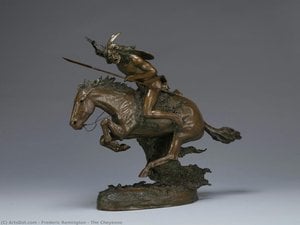
Frederic Remington’s “The Rattlesnake,” completed in 1905, isn't merely a sculpture; it’s a visceral embodiment of the American West as it was fading into legend. Born in Canton, New York, Remington wasn’t a native son of the frontier—his lineage traced back to French Basque roots and a family deeply intertwined with the Remington Arms dynasty – yet he possessed an almost obsessive fascination with its rugged spirit. This piece, rendered in rich, dark bronze, captures a pivotal moment of tension and skill, a fleeting glimpse into the life of a cowboy confronting a formidable adversary: nature itself.
Remington’s work during this period was profoundly shaped by his experiences as a war correspondent for Hearst's newspaper. He witnessed firsthand the realities of frontier life – the cattle drives, the Native American conflicts, and the evolving relationship between man and land. “The Rattlesnake” reflects this engagement, moving beyond romanticized depictions to present a scene of raw, immediate action. It’s a testament to Remington’s ability to translate observation into powerful visual storytelling.
At first glance, the sculpture presents a seemingly simple tableau: a cowboy, mid-action, attempting to trick a horse. However, closer inspection reveals a meticulously crafted composition brimming with dynamic energy. The rider, clad in a dusty chaps coat and a wide-brimmed hat, leans forward with an intense focus, his hand gripping the horse’s mane as if desperately holding on for dear life. The horse itself is caught in a moment of startled panic, its legs splayed out in a rearing posture, its head thrown back to reveal a flash of teeth and a coiled rattlesnake poised to strike.
“The Rattlesnake” exemplifies Remington's mastery of bronze casting, utilizing the lost-wax method – a technique that allows for intricate detail and remarkable realism. The sculpture’s rich, dark patina is not simply a surface treatment; it’s the result of carefully controlled oxidation during the casting process, enhancing the material’s depth and texture. The base of the sculpture, constructed from wood, provides a grounding element, subtly suggesting the rugged terrain of the American West.
Lost-Wax Casting Process:Beyond its technical brilliance, “The Rattlesnake” resonates with profound symbolism. It speaks to the enduring spirit of the American West – a land of both opportunity and peril, where courage, skill, and a deep connection to nature were essential for survival. The sculpture captures a fleeting moment of intense action, but it also evokes a sense of timelessness, reminding us of the challenges faced by those who shaped this nation’s identity.
Remington's work continues to captivate audiences with its raw energy and evocative storytelling. “The Rattlesnake” stands as a powerful testament to his artistic vision and a lasting symbol of the American West.


1861 - 1909 , アメリカ合衆国

Discover the enduring allure of bronze sculptures at WahooArt.com. From classical lost-wax casting to modern metal masterpieces, explore museum-quality artworks designed to elevate luxury interiors. Expert curation, authenticity guaranteed, and worldwide shipping for discerning collectors.

Discover the enduring elegance of bronze sculpture. From ancient Roman strength to Art Deco sophistication, explore our expert guide on collecting, casting techniques, and integrating timeless metal masterpieces into your fine art collection.

Discover the enduring allure of bronze sculpture. From the intricate lost-wax process to Neoclassical masterpieces, our expert guide offers connoisseurs deep insights into evaluating patina, historical significance, and integrating metal fine art into sophisticated collections.


 シェアする
シェアする シェアする
シェアする
 詳細を見る
詳細を見る

 ダウンロード
 似ている作品
 スライドショー
 詳細を見る
詳細を見る






































 ガラスオプションは、110cm未満のサイズでのみご利用いただけます。