

当社のアーティストが、お客様のご希望のサイズと額縁に合わせて、キャンバスに手描きで制作する油彩画です。 ( プリント版に切り替え デジタル画像販売へ切り替え)





























作品のオリジナル比率に合わせた、当店の規定サイズからお選びください。

特定のフレームやスペースに合わせて、ご希望のサイズをご入力いただけます。選択されたサイズが元の画像の比率と異なる場合、アートワークをトリミングするか、手描きで要素を追加して絵画を拡張いたします。デジタルモックアップ を制作し、制作開始前にご確認(承認)をいただきます。
画面上のプレビューは、実際のトリミングや拡張を正確に反映しているものではありません。最終的な構図は、モックアップによってのみ正確にご確認いただけます。
カスタムサイズもご利用いただけますが、元の比率を維持するためには、あらかじめ用意されたリストからサイズを選択することをお勧めいたします。
Ridden Down
複製画サイズ一覧
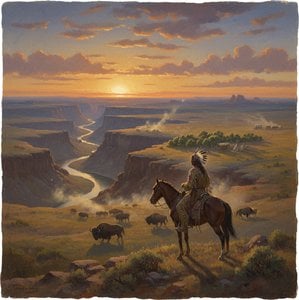
Frederic Remington's "Ridden Down," painted in 1905, isn’t merely a depiction of cowboys and horses; it’s a profound meditation on solitude, resilience, and the enduring spirit of the American West. This oil-on-canvas masterpiece, currently residing within the Amon Carter Museum of American Art in Fort Worth, Texas, captures a pivotal moment – a lone Native American rider silhouetted against an expansive, undulating sand dune landscape under a brilliant, cloudless sky. Remington, a master of portraying the frontier, expertly blends realism with an impressionistic sensibility, creating an image that simultaneously feels immediate and deeply symbolic.
The painting’s composition immediately draws the eye to the central figures: a man, clad in a simple green shirt, riding a powerful mustang. The horse is positioned behind him, its head lowered as if acknowledging the immensity of the terrain. Remington skillfully employs horizontal lines created by the towering sand dunes, which dominate the scene and establish a sense of overwhelming scale. These sweeping forms contrast sharply with the verticality of the rider and horse, emphasizing their vulnerability against the backdrop of nature’s grandeur. Two birds soar high above, adding a touch of fleeting beauty to this otherwise stark landscape – perhaps representing freedom or a distant hope.
Remington’s technique is immediately recognizable—bold, expressive brushstrokes that convey both the physicality of the scene and an underlying sense of movement. He doesn’t shy away from visible texture; the sand dunes are rendered with a rough, grainy quality, while the horse’s coat appears almost sculpted by the artist's hand. The color palette is dominated by warm yellows and ochres, reflecting the sun-baked earth and creating a feeling of intense heat. Cool blues in the sky provide a striking contrast, highlighting the vastness of the space and adding depth to the composition. Remington masterfully uses light and shadow to sculpt the forms, lending them a remarkable three-dimensionality.
The painting’s dynamic energy is further enhanced by his use of color—a vibrant, almost feverish application that captures the intensity of the desert environment. Notice how he subtly shifts tones within the sand dunes, suggesting variations in texture and depth. This attention to detail, combined with his confident brushwork, elevates “Ridden Down” beyond a simple landscape painting; it becomes a visceral experience for the viewer.
"Ridden Down" is more than just a visual record of the American West; it’s imbued with layers of symbolic meaning. The lone rider, often interpreted as a Native American figure, embodies themes of survival, adaptation, and resilience in the face of an increasingly encroaching civilization. The posture of the horse—lowered head, steady gait—suggests both respect for the land and a quiet determination to endure. Considering Remington’s own career, which coincided with a period of significant change and displacement for Native American communities, the painting can be viewed as a poignant commentary on this historical context.
Painted in 1905, “Ridden Down” reflects the waning days of the frontier era. Remington’s work often depicted scenes of cowboys, Indians, and the wild west—a romanticized vision that captured the imagination of a nation eager to define its identity. However, it's important to note that Remington’s portrayal was not without its complexities; he sometimes perpetuated stereotypes while simultaneously capturing the raw beauty and inherent drama of the West. The painting stands as a testament to his skill as an artist and a valuable window into a transformative period in American history.
To delve deeper into Frederic Remington’s artistic legacy, consider examining "The Wounded Buffalo," another iconic work showcasing his mastery of capturing the spirit of the West. You can explore more of his paintings and writings at WahooArt.com, where you'll find a curated selection of his most celebrated works. For further insights into Remington’s life and career, visit the Amon Carter Museum of American Art (here) or explore his biography on Wikipedia (here). And for a visual journey through the world of Frederic Remington, be sure to visit this page.
フレデリック・レミントンの記録されたテーマであるwestern expansion influence, native american culture", frontier life depiction, military & exploration, remington's iconic style, american identity theme, landscapes & human scale, key work in artist corpusの中でも、「Ridden Down」はamerican west, native american, horseback riding, desert landscape, remington art, western theme, lone figure, dynamic scene”に独自の焦点を当てています。
「Ridden Down」は、アメリカ合衆国に生まれたフレデリック・レミントンによって、American Regionalism”のムーブメントの中で制作されました。アーティストの出自は、この作品をアメリカ合衆国のアーティストたちが実践したAmerican Regionalism”へと結びつけています。
「Ridden Down」は、1905年にフレデリック・レミントンによって制作されました。
フレデリック・レミントン作「Ridden Down」 は、Living Room に飾るのがおすすめです。作品の主題、色彩、そして雰囲気に合わせたご提案です。
「Ridden Down」の色調は、Luminousの輝度を示しています。
「Ridden Down」の背景には、フレデリック・レミントンとAmerican Regionalism”運動があります。
「Ridden Down」は、American Regionalism”の作品として1905年に制作されました。制作年と様式は、美術史におけるこの作品の位置付けを明確にするものです。
フレデリック・レミントン作「Ridden Down」 の著作権について:本作品はパブリックドメイン(著作権消滅)です。これにより、画像の複製が自由に行えるかどうかが決まります。


1861 - 1909 , アメリカ合衆国

Explore the life & legacy of Benjamin West, pioneering American artist and Royal Academy president. Discover his Neoclassical masterpieces, transatlantic influence, and lasting impact on art history. Learn more at WahooArt.
Explore the evocative paintings of Henry Farny, renowned for his romantic realism & depictions of Native American life in the 19th-century West. Discover his legacy and key artworks at WahooArt.

Explore the world of Grant Wood & American Regionalism with WahooArt. Discover the symbolism behind 'American Gothic', recurring themes, and the movement's lasting impact on art history. High-quality reproductions available.

Explore the captivating world of Charles Marion Russell, 'the cowboy artist.' Discover his life, iconic paintings, advocacy for Native Americans, and investment potential. A guide for discerning art collectors.

Explore the captivating art of Alfred Jacob Miller, chronicler of the American West. Discover his iconic paintings, techniques & lasting legacy – a valuable addition to any serious collection. Learn more at WahooArt.

 設置イメージを確認
 送る
送る シェア
シェア
 詳細情報
詳細情報 ガイドを表示

 画像をダウンロード
 似ている作品
 X線調査
X線調査 スライドショー
 統計情報
統計情報


 続きを読む
続きを読む









 ガラスオプションは、110cm未満のサイズでのみご利用いただけます。


