スピーディーな制作と多彩な仕上げオプションが魅力の、ミュージアムクオリティなジークレー・キャンバスプリント。 ( 手描き複製画を注文する デジタル画像販売へ切り替え)
作品のオリジナル比率に合わせた、当店の規定サイズからお選びください。

額縁や壁のスペースに合わせて、ご希望の幅と高さを入力してください。プリントはカットすることは可能ですが、元の画像より大きくすることはできないため、異なる比率のサイズを選択された場合は、画像の一部が欠けることになります。印刷を開始する前に、内容を確認していただくためのデジタルモックアップをお送りいたします。このページに表示されている画像は、実際のカット後の状態を示すものではありません。実際の仕上がりはモックアップにてご確認ください。
Bronco Buster
複製画サイズ一覧
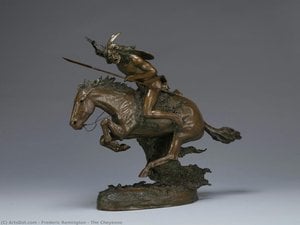
Frederic Remington's "The Bronco Buster," sculpted in 1895 and cast in bronze, isn’t merely a depiction of a cowboy wrestling with a bucking bronco; it’s a potent distillation of the American West itself – a landscape forged by rugged individualism, relentless challenge, and an enduring spirit of frontier life. Remington, born in Canton, New York, initially distanced from the dusty trails he so vividly captured, found his artistic voice through a deep fascination with military themes and a keen eye for storytelling. His early exposure to the narratives surrounding the Civil War and subsequent westward expansion ignited a passion that would define his career, transforming him into arguably the most recognizable artist of this pivotal era.
The sculpture’s genesis lies in Remington's own sketches, notably “Pitching Broncho,” published in Harper’s Weekly in 1892. This drawing served as the foundational inspiration for "The Bronco Buster," a piece that transcends simple illustration and embodies the raw energy of the Western experience. Remington masterfully captured not just the physical struggle but also the psychological tension between man and beast, conveying a sense of both danger and controlled dominance. The dynamic pose—the cowboy’s outstretched arm grappling with the horse's mane, the stirrup swinging free—immediately draws the viewer into the heart of the action, creating an immersive experience that speaks to the fundamental human desire for mastery over nature.
Technically, “The Bronco Buster” represents a significant leap forward for Remington. Moving beyond the limitations of flat paper, he embraced the three-dimensional possibilities of bronze casting – a technique that allowed him to imbue his subject with unprecedented realism and dynamism. The sculpture’s creation involved both sand-casting and later, lost-wax methods, resulting in a remarkably detailed surface texture. The rough, uneven quality of the bronze reflects the inherent materiality of the medium, while subtle variations in tone create depth and highlight the musculature of both man and horse. Close examination reveals sharp edges where details like clothing folds or the horse’s mane are sculpted, further enhancing the sense of tactile realism.
The choice of bronze itself is crucial to the sculpture's impact. Bronze possesses a remarkable durability, ensuring that “The Bronco Buster” has endured as a powerful symbol of the American West for over a century. Furthermore, the patina – the natural oxidation process that develops on copper and bronze surfaces – adds layers of history and character, subtly altering the color and texture of the metal over time. This aging process not only enhances the sculpture’s aesthetic appeal but also serves as a visual reminder of its enduring legacy.
Beyond its technical brilliance, “The Bronco Buster” is rich in symbolic meaning. It embodies themes of courage, skill, and the eternal struggle between man and nature – core values that defined the American frontier experience. The cowboy’s determined stance, his outstretched hand grasping for control, speaks to a relentless pursuit of mastery over an untamed environment. The rearing horse represents the unpredictable forces of nature, demanding respect and unwavering resolve. The sculpture isn't simply about conquering a wild animal; it’s about asserting one’s place within a vast and challenging landscape.
Furthermore, “The Bronco Buster” reflects Remington’s broader artistic vision – a desire to document and celebrate the vanishing West. As the frontier gradually succumbed to settlement and industrialization, Remington sought to preserve its spirit through his art, capturing the essence of a bygone era before it was lost forever. The sculpture stands as a poignant reminder of a time when individuals faced immense challenges with grit, determination, and an unwavering belief in their own capabilities.
Today, “The Bronco Buster” continues to captivate audiences worldwide, thanks in part to the availability of high-quality reproductions. These meticulously crafted prints allow art lovers to experience the sculpture’s power and beauty without the expense or logistical challenges of owning the original. Whether displayed in a private collection or incorporated into interior design schemes, these reproductions serve as a lasting tribute to Frederic Remington's artistic genius and his enduring portrayal of the American West.
American Realismの作品「Bronco Buster」は、アメリカ合衆国出身のアーティストによって制作されました。
「Bronco Buster」の著作権の状態について — パブリックドメイン(著作権消滅) — は、作者の没年である1909に基づいています。
「Bronco Buster」の形式はPortraitです。複製画を飾る場所を検討する際にお役立てください。


1861 - 1909 , アメリカ合衆国

Discover the enduring elegance of bronze sculpture. From ancient Roman strength to Art Deco sophistication, explore our expert guide on collecting, casting techniques, and integrating timeless metal masterpieces into your fine art collection.

Discover the enduring allure of bronze sculptures at WahooArt.com. From classical lost-wax casting to modern metal masterpieces, explore museum-quality artworks designed to elevate luxury interiors. Expert curation, authenticity guaranteed, and worldwide shipping for discerning collectors.

Discover the enduring allure of bronze sculpture. From the intricate lost-wax process to Neoclassical masterpieces, our expert guide offers connoisseurs deep insights into evaluating patina, historical significance, and integrating metal fine art into sophisticated collections.
 シェアする
シェアする シェアする
シェアする
 詳細を見る
詳細を見る ガイドを表示

 ダウンロード
 似ている作品
 スライドショーを表示
 Q&A
Q&A
 統計情報
統計情報

 詳細を表示
詳細を表示






































 ガラスオプションは、110cm未満のサイズでのみご利用いただけます。