設置イメージを確認 ARで壁に飾るイメージを見る 手描きの複製画を注文する デジタル画像販売へ切り替え 送る
詳細情報 ガイドを表示 お気に入りに追加 画像をダウンロード 似ている作品 X線調査 スライドショー 統計情報

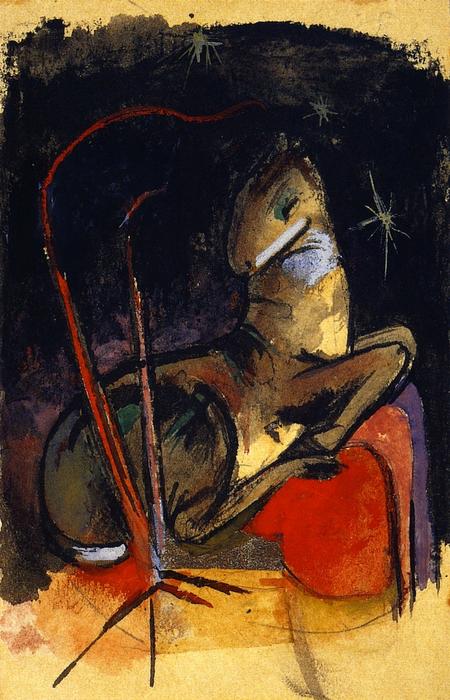
Resting Animal

Franz Marc’s 'Resting Animal' (1913) is a poignant Expressionist watercolor capturing introspective sadness through loose brushstrokes & muted tones. Explore this evocative piece, reflecting vulnerability and a timeless mood.

マルクはドイツ表現主義を代表する画家。動物を象徴的に描いた「青い馬の塔」など、鮮やかな色彩と精神性を融合させた作品が特徴。 ブルーライダーグループの創設者として、近現代美術に大きな影響を与えました。

ジークレー/アートプリント

スピーディーな制作と多彩な仕上げオプションが魅力の、ミュージアムクオリティなジークレー・キャンバスプリント。 ( 手描きの複製画を注文する デジタル画像販売へ切り替え)

Corner sample of the P118B picture frame: 成型ポリスチレン, 5 cm wide and 3 cm thick
P118B ¥10
Corner sample of the P118H picture frame: 成型ポリスチレン, 5 cm wide and 3 cm thick
P118H ¥10
Corner sample of the P118W picture frame: 成型ポリスチレン, 5 cm wide and 3 cm thick
P118W ¥10
Corner sample of the P438Z picture frame: 成型ポリスチレン, 5.5 cm wide and 3.5 cm thick
P438Z ¥10
Corner sample of the P508JH picture frame: 成型ポリスチレン, 7 cm wide and 3.5 cm thick
P508JH ¥12
Corner sample of the P508YH picture frame: 成型ポリスチレン, 7 cm wide and 3.5 cm thick
P508YH ¥12
Corner sample of the P805H picture frame: 成型ポリスチレン, 5 cm wide and 3.5 cm thick
P805H ¥10
Corner sample of the P805Z picture frame: 成型ポリスチレン, 5 cm wide and 3.5 cm thick
P805Z ¥10
Corner sample of the P919BZ picture frame: 成型ポリスチレン, 7 cm wide and 3.5 cm thick
P919BZ ¥10
Corner sample of the P919G picture frame: 成型ポリスチレン, 7 cm wide and 3.5 cm thick
P919G ¥10
Corner sample of the P919XJ picture frame: 成型ポリスチレン, 7 cm wide and 3.5 cm thick
P919XJ ¥10
Corner sample of the P959ZH picture frame: 成型ポリスチレン, 5 cm wide and 3 cm thick
P959ZH ¥10
Corner sample of the P968JZ picture frame: 成型ポリスチレン, 6 cm wide and 4 cm thick
P968JZ ¥12
Corner sample of the W106C picture frame: 天然木, 5 cm wide and 3 cm thick
W106C ¥8
Corner sample of the W218G picture frame: 天然木, 5 cm wide and 3 cm thick
W218G ¥10
Corner sample of the W218JH picture frame: 天然木, 5 cm wide and 3 cm thick
W218JH ¥8
Corner sample of the W218Y picture frame: 天然木, 5 cm wide and 3 cm thick
W218Y ¥10
Corner sample of the W307PJ picture frame: 天然木, 6 cm wide and 3 cm thick
W307PJ ¥10
Corner sample of the W316G picture frame: 天然木, 6 cm wide and 3 cm thick
W316G ¥10
Corner sample of the W316PJ picture frame: 天然木, 6 cm wide and 3 cm thick
W316PJ ¥8
Corner sample of the W316Y picture frame: 天然木, 6 cm wide and 3 cm thick
W316Y ¥10
Corner sample of the W398PJ picture frame: 天然木, 5 cm wide and 3 cm thick
W398PJ ¥8
Corner sample of the W4111J picture frame: 天然木, 6.5 cm wide and 3.5 cm thick
W4111J ¥10
Corner sample of the W500HY picture frame: 天然木, 7 cm wide and 5 cm thick
W500HY ¥15
Corner sample of the W500JH picture frame: 天然木, 7 cm wide and 5 cm thick
W500JH ¥15
Corner sample of the W692G picture frame: 天然木, 8 cm wide and 4 cm thick
W692G ¥12
Corner sample of the W849H picture frame: 天然木, 5 cm wide and 3 cm thick
W849H ¥8
Corner sample of the W940BG picture frame: 天然木, 7.5 cm wide and 4.5 cm thick
W940BG ¥15
Corner sample of the W953PJ picture frame: 天然木, 6 cm wide and 3.5 cm thick
W953PJ ¥8

標準サイズ
カスタムサイズ
CM
INCH

作品のオリジナル比率に合わせた、当店の規定サイズからお選びください。

横幅
高さ

額縁や壁のスペースに合わせて、ご希望の幅と高さを入力してください。プリントはカットすることは可能ですが、元の画像より大きくすることはできないため、異なる比率のサイズを選択された場合は、画像の一部が欠けることになります。印刷を開始する前に、内容を確認していただくためのデジタルモックアップをお送りいたします。このページに表示されている画像は、実際のカット後の状態を示すものではありません。実際の仕上がりはモックアップにてご確認ください。

世界中への配送()は、標準の4〜5週間ではなく、2週間でお届けいたします。(25 10月)

世界中へ無料エクスプレス配送
高品質なリネンキャンバス
配送時完全保険付
関税・輸入税の払い戻し保証
忠実な色彩再現の保証
100日間返品保証(製造上の欠陥がある場合のみ)
100% 全額返金保証
まとめ買い割引のご案内

合計金額

¥ 10707

Resting Animal

ジークレー/アートプリント

複製画サイズ一覧

-

合計金額

¥ 10707

作品情報

  • influences: Vincent van Gogh
  • medium: Watercolor on paper
  • movement: Expressionism
  • style: Expressionism

アート・クイズ

各質問の正解は1つだけです。

問題 1:
To which art movement does Franz Marc's 'Resting Animal' (1913) most closely belong?
問題 2:
What is a prominent characteristic of the technique used in 'Resting Animal'?
問題 3:
The description notes the composition is dominated by what type of lines?
問題 4:
What overall mood or feeling does the artwork evoke, according to the description?

A Moment of Quietude: Exploring Franz Marc’s ‘Resting Animal’ (1913)

Franz Marc's *Resting Animal*, painted in 1913, is a captivating watercolor that embodies the core tenets of early Expressionism. More than just a depiction of an animal at rest, it’s a poignant exploration of inner life, vulnerability, and the search for spiritual connection with nature – themes central to Marc's artistic vision.

Subject & Style: Beyond Realistic Representation

The artwork presents a somewhat abstracted figure, likely a deer or similar ungulate, enveloped in a mood of quiet contemplation. While not explicitly detailed, the form is recognizable enough to evoke empathy and invite projection. Marc deliberately moves away from strict realism, favoring instead an expressive style characterized by loose brushstrokes and simplified forms. This isn’t about *what* is depicted, but *how* it feels. The diagonal composition contributes to a sense of unease or inward focus, mirroring the animal's introspective state. Marc wasn’t interested in portraying animals as simply biological creatures; he saw them as possessing an inherent spirituality and purity lacking in human society.

Technique & Materials: Watercolor’s Emotional Range

Executed in watercolor on paper, *Resting Animal* showcases Marc's masterful handling of the medium. The wet-on-wet technique creates soft edges and blended colors, enhancing the dreamlike quality of the scene. The layering of washes builds texture and depth despite the flattened perspective. This approach allows for a fluidity that perfectly complements the subject’s relaxed posture and the overall melancholic mood. The muted tones – grays, browns, and subtle blues – further contribute to this somber atmosphere, while still allowing light to subtly permeate the composition.

Historical Context: Der Blaue Reiter & A World on the Brink

1913 was a pivotal year for Marc, deeply involved with the *Der Blaue Reiter* (The Blue Rider) group alongside Wassily Kandinsky and other avant-garde artists. This collective sought to move beyond purely representational art, exploring spirituality, symbolism, and emotional expression through abstraction and bold color. The looming shadow of World War I also casts a subtle weight over this work; a sense of premonition and fragility permeates many artworks created in the years leading up to the conflict. Marc’s focus on the natural world can be interpreted as a yearning for peace and harmony amidst growing societal tensions.

Symbolism & Emotional Impact: A Universal Language

The symbolism within *Resting Animal* is deliberately understated, allowing for multiple interpretations. The animal's posture – leaning forward, head lowered – suggests vulnerability, introspection, and perhaps even a sense of weariness. It’s an image that resonates with the human condition, inviting viewers to contemplate their own moments of solitude and reflection. The painting isn’t about sadness itself, but about acknowledging and accepting it as part of life's spectrum. The dark background emphasizes this feeling of isolation, while also serving to highlight the animal’s form. Marc believed animals were closer to a primal spiritual truth than humans, and this work invites us to reconnect with that innate sense of peace and belonging.

For Collectors & Designers: Bringing Expressionism into Your Space

*Resting Animal* is an exceptional example of Franz Marc’s unique artistic voice. Its subdued palette and evocative imagery make it a versatile piece for interior design, lending itself well to both modern and traditional settings. A high-quality reproduction would serve as a striking focal point in a study, living room, or bedroom – offering a touch of contemplative beauty and intellectual depth. Its enduring appeal lies in its ability to transcend time and culture, speaking directly to the universal human experience.

よくあるご質問

制作時期から見て、"Resting Animal"はフランツ・マルクのキャリアにおけるどの時期にあたりますか?

1913年に制作された「Resting Animal」は、フランツ・マルクの画業におけるEarly Periodに属する作品です。

「Resting Animal」の推奨されるプリント方法について教えてください。サイズや向きはどうするのが良いでしょうか?

フランツ・マルク作「Resting Animal」のプリントは、Portraitの向きでLargeのサイズに印刷することをお勧めします。

フランツ・マルク作「Resting Animal」にはどのような技法が用いられていますか?

フランツ・マルク作「Resting Animal」の技法はAcrylic On Canvasです。複製画は、この技法の質感や風合いを再現することを目指しています。


アーティストについて

Franz Marc (1880-1916): Pioneer of German Expressionism and the Soulful Vision of Color

Franz Moritz Wilhelm Marc, geboren 1880 in München, war ein Maler dessen kurze und intensiv fokussierte künstlerische Karriere den Verlauf des deutschen Expressionismus nachhaltig veränderte. Seine Geschichte ist eine tiefgreifende Suche nach spiritueller Erkenntnis übersetzt in eine lebendige visuelle Sprache – eine Anfrage nach dem Verständnis der Essenz des Lebens durch die Reinheit, die er in der Natur fand, insbesondere im Tierreich. Ursprünglich beeinflusst von seinem Vater Wilhelm Marc, einem Landschaftsmaler, verfolgte Franzs künstlerischer Weg nicht sofort einen bestimmten Kurs. Er erwog kurz Theologie und kämpfte mit Fragen des Glaubens und der Existenz, bevor er sich schließlich dem Kunststudium am Münchner Akademie der Schönen Künste widmete. Diese frühen Erkundigungen in religiöse Gedanken würden tief in seinem Werk verwurzelt bleiben und ihn davon überzeugen, dass Kunst ein Kanal für spirituelle Erfahrung sein könne. Seine akademische Ausbildung verschaffte ihm technische Grundlagen, aber Begegnungen mit den Werken Vincent van Goghs während Besuchen von Paris entzündeten tatsächlich seine künstlerische Vision. Van Goghs emotionale Verwendung von Farbe und rohe Ausdruckskraft berührten Marc tief und befreiten ihn von konventionellen Techniken und führten ihn auf einen subjektiveren und emotional aufgeladenen Stil zurück.

Die Blaue Reiter und eine Neue Künstlerische Sichtweise

Marcs künstlerische Entwicklung war nicht einsam; sie blühte im dynamischen Kontext des frühen 20. Jahrhunderts in München auf. Er experimentierte mit verschiedenen Künstlergruppen, darunter die Neue Künstlervereinigung München, bevor er 1911 gemeinsam mit Wassily Kandinsky *Der Blaue Reiter* (Die Blaue Reiter) gründete. Dies war nicht nur eine Gruppe oder eine Ausstellungsserie; es war eine philosophische und künstlerische Revolution. *Der Blaue Reiter* suchte über reine Darstellung hinaus und strebte danach, innere spirituelle Wahrheiten durch Abstraktion und symbolische Farbe auszudrücken. Das gleichnamige Magazin wurde zu einer Plattform für die Verbreitung dieser Ideen und präsentierte nicht nur seine eigene Arbeit sondern auch die anderer aufgeschlossener Künstler und erforschte vielfältige kulturelle Einflüsse von Volkskunst bis hin zur primitiven Skulptur. Marcs Beiträge zu diesem Zeitraum waren entscheidend. Er ließ sich von der Darstellung von Landschaften als statische Szenen abweichen und konzentrierte sich stattdessen auf Tiere – Pferde, Hirsche, Füchse – als Gefäß für spirituelle Energie. Diese waren nicht einfach Tierporträts; sie waren symbolische Darstellungen von Unschuld, Harmonie und einer Verbindung zur Natur, die er glaubte, dass die Menschheit durch gesellschaftliche Beschränkungen und intellektualisierung verloren hatte. Die Einflüsse Robert Delaunay’s Erforschung abstrakter Formen und lebhafter Farben förderten Marc zusätzlich zu einer Vereinfachung und verstärkten emotionalen Ausdruck in seinem Werk. Gemälde wie *Der Tiger* (1912) und *Rothirsch* (1912) verkörpern diese Verschiebung und zeigen eine kraftvolle Verwendung von Farbe und einen zunehmenden Fokus auf die inhärenten Eigenschaften seiner dargestellten Objekte statt einer realistischen Darstellung.

Symbolismus, Farbe und Die Essenz Des Seins

Marcs künstlerischer Stil ist sofort erkennbar für seine besondere Verwendung von Farbe und Form. Er verwendete Farbe nicht deskriptiv; stattdessen erfüllte er sie mit symbolischem Inhalt. Blau repräsentierte Spiritualität und Männlichkeit, Gelb bedeutete Freude und Weiblichkeit und Rot verkörperte Gewalt und Materie. Diese waren keine zufälligen Entscheidungen sondern eine sorgfältig konstruierte Methode, um spezifische emotionale und philosophische Ideen auszudrücken. Seine Tiere sind nicht einfach Objekte; sie sind Verkörperungen dieser Konzepte. Die Vereinfachung von Formen – Figuren auf ihre wesentliche Gestalt reduzierend – verstärkte zusätzlich die zugrunde liegende spirituelle Essenz, die er einfangen wollte. *Der Tiger* (1912) und *Rothirsch* (1912) sind Beispiele für diesen Ansatz und zeigen eine beeindruckende Verwendung von Farbe und einen zunehmenden Fokus auf die inhärenten Eigenschaften seiner dargestellten Objekte statt einer realistischen Darstellung. Er glaubte, dass Tiere eine inhärente Reinheit und Verbindung zur Natur besaßen, die Menschen durch gesellschaftliche Beschränkungen und intellektualisierung verloren hatten. Durch ihre Darstellung mit großer Ehrfurcht und symbolischer Gewichtung suchte Marc darauf hinzuweisen, dass die Menschheit diese Harmonie wiedergefunden hatte und eine tiefere Wertschätzung für die natürliche Welt inspiriert. Sein Werk war nicht darauf ausgelegt, *was* er sah sondern *wie* er fühlte – eine tief persönliche und spirituelle Reaktion auf seine Umgebung.

Ein Tragischer Tod Und Ein Dauerhaftes Erbe

Der Ausbruch des Ersten Weltkriegs im Jahr 1914 veränderte Marcs Leben und künstlerische Entwicklung dramatisch. Trotz seines Versuchs, aufgrund seines Status als Künstler von der Wehrpflicht auszusteigen, wurde er eingezogen und diente als Kavallerieoffizier. Die Schrecken des Krieges trafen ihn tief ein, doch auch inmitten des Chaos setzte er sich weiterhin dem Malen zu und fand Trost und Bedeutung in seiner Kunst. Tragisch starb Franz Marc am 4. März 1916 im Zuge eines Gefechts bei Verdun unerwartet und wurde damit für die Kunstwelt zu einem Verlust von großer Tragweite. Sein früheres Leben wurde plötzlich unterbrochen, doch auch inmitten des Chaos setzte er sich weiterhin dem Malen zu und fand Trost und Bedeutung in seiner Kunst. Er starb am 4. März 1916 im Zuge eines Gefechts bei Verdun unerwartet und wurde damit für die Kunstwelt zu einem Verlust von großer Tragweite. Sein Werk wird bis heute gefeiert und inspiriert Generationen von Künstlern und begeistert Publikum mit seiner tiefen Emotion und seinem spirituellen Nachhall. Marcs Gemälde werden in wichtigen Museen auf der ganzen Welt ausgestellt, darunter das Lenbachhaus in München, das eine umfangreiche Sammlung seiner Werke beherbergt. Er wird nicht nur als Pionier des deutschen Expressionismus sondern auch als visionärer Künstler erinnert, der sich wagte, die tiefgreifende Verbindung zwischen Kunst, Spiritualität und der Natur zu erforschen – ein Erbe, das weiterhin Ehrfurcht und Kontemplation hervorruft.
フランツ・マルク

フランツ・マルク

1880 - 1916 , ドイツ

アーティスト情報

  • Artistic Movement Or Style: ドイツ表現主義
  • Artists Or Movements Influenced By This Artist: ['抽象芸術」「ブルーライダー']
  • Artists Who Influenced This Artist: ['ゴッホ」「デラウイネ']
  • Date Of Birth: 2月8日
  • Date Of Death: 3月4日
  • Full Name: Franz Moritz Wilhelm Marc
  • Nationality: ドイツ人
  • Notable Artworks: ['タイガー」「赤鹿」「青馬の塔']
  • Place Of Birth: ミュンヘン、ドイツ
テーマ、スタイル、特徴別に分類された作品を探索しましょう。