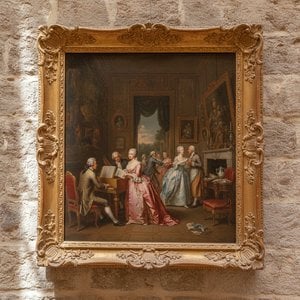
Franz Ludwig Catel作、First Steps ( (1820))、熟練の絵師による手描きの油彩画複製画
設置イメージを表示 ARで試着 プリント版に切り替え デジタル画像販売へ切り替え シェアする
詳細を見る ガイドを表示 お気に入りに追加 ダウンロード 似ている作品 X線調査 スライドショーを表示 Q&A Presentation 統計情報

First Steps 手描きの油彩画複製画

寸法
48.0 x 37.0 cm

Discover 'First Steps' by Franz Ludwig Catel (1820). A charming genre painting depicting a family in rural Italy. Explore this neoclassical masterpiece & its connection to Gérard’s ‘Ages of Man.’

A master of Romantic landscape and genre painting, Franz Ludwig Catel captured the serene beauty of Italy in iconic works like First Steps and View from Ariccia, inviting you to discover his luminous world of light and shadow.

手描き油彩複製画

当社のアーティストが、ご希望のサイズと額縁に合わせてキャンバスに手描きで制作する、オーダーメイドの油彩画です。 ( プリント版に切り替え デジタル画像販売へ切り替え)

Corner sample of the P118B picture frame: 成型ポリスチレン, 5 cm wide and 3 cm thick
P118B ¥10
Corner sample of the P118H picture frame: 成型ポリスチレン, 5 cm wide and 3 cm thick
P118H ¥10
Corner sample of the P118W picture frame: 成型ポリスチレン, 5 cm wide and 3 cm thick
P118W ¥10
Corner sample of the P438Z picture frame: 成型ポリスチレン, 5.5 cm wide and 3.5 cm thick
P438Z ¥10
Corner sample of the P508JH picture frame: 成型ポリスチレン, 7 cm wide and 3.5 cm thick
P508JH ¥12
Corner sample of the P508YH picture frame: 成型ポリスチレン, 7 cm wide and 3.5 cm thick
P508YH ¥12
Corner sample of the P805H picture frame: 成型ポリスチレン, 5 cm wide and 3.5 cm thick
P805H ¥10
Corner sample of the P805Z picture frame: 成型ポリスチレン, 5 cm wide and 3.5 cm thick
P805Z ¥10
Corner sample of the P919BZ picture frame: 成型ポリスチレン, 7 cm wide and 3.5 cm thick
P919BZ ¥10
Corner sample of the P919G picture frame: 成型ポリスチレン, 7 cm wide and 3.5 cm thick
P919G ¥10
Corner sample of the P919XJ picture frame: 成型ポリスチレン, 7 cm wide and 3.5 cm thick
P919XJ ¥10
Corner sample of the P959ZH picture frame: 成型ポリスチレン, 5 cm wide and 3 cm thick
P959ZH ¥10
Corner sample of the P968JZ picture frame: 成型ポリスチレン, 6 cm wide and 4 cm thick
P968JZ ¥12
Corner sample of the W106C picture frame: 無垢材, 5 cm wide and 3 cm thick
W106C ¥8
Corner sample of the W218G picture frame: 無垢材, 5 cm wide and 3 cm thick
W218G ¥10
Corner sample of the W218JH picture frame: 無垢材, 5 cm wide and 3 cm thick
W218JH ¥8
Corner sample of the W218Y picture frame: 無垢材, 5 cm wide and 3 cm thick
W218Y ¥10
Corner sample of the W307PJ picture frame: 無垢材, 6 cm wide and 3 cm thick
W307PJ ¥10
Corner sample of the W316G picture frame: 無垢材, 6 cm wide and 3 cm thick
W316G ¥10
Corner sample of the W316PJ picture frame: 無垢材, 6 cm wide and 3 cm thick
W316PJ ¥8
Corner sample of the W316Y picture frame: 無垢材, 6 cm wide and 3 cm thick
W316Y ¥10
Corner sample of the W398PJ picture frame: 無垢材, 5 cm wide and 3 cm thick
W398PJ ¥8
Corner sample of the W4111J picture frame: 無垢材, 6.5 cm wide and 3.5 cm thick
W4111J ¥10
Corner sample of the W500HY picture frame: 無垢材, 7 cm wide and 5 cm thick
W500HY ¥15
Corner sample of the W500JH picture frame: 無垢材, 7 cm wide and 5 cm thick
W500JH ¥15
Corner sample of the W692G picture frame: 無垢材, 8 cm wide and 4 cm thick
W692G ¥12
Corner sample of the W849H picture frame: 無垢材, 5 cm wide and 3 cm thick
W849H ¥8
Corner sample of the W940BG picture frame: 無垢材, 7.5 cm wide and 4.5 cm thick
W940BG ¥15
Corner sample of the W953PJ picture frame: 無垢材, 6 cm wide and 3.5 cm thick
W953PJ ¥8

標準サイズ
オーダーメイド
CM
INCH

作品のオリジナル比率に合わせた、当店の規定サイズからお選びください。

横幅
高さ

フレームや壁のスペースに合わせて、ご希望の幅と高さを入力してください。本作品は手描きのため、異なる比率のサイズをご希望の場合、絵画の周囲を少し広げて描くか、あるいは端を少しカットして調整することが可能です。お客様のご要望に合わせます。制作を開始する前に、仕上がりを確認するためのデジタルモックアップをお送りいたします。このページに表示されている画像は完成品の実物ではなく、あくまでモックアップによるイメージです。

カスタマイズの例:顔をお客様の写真に置き換える、ペットを追加する(例:猫を犬に変更)、背景に隠れたメッセージを入れる、背景の風景や要素を変更するなど。
ご注文後、WahooArt.com チームより詳細な指示をお送りするとともに、仕上がりイメージ(モックアップ)をご提供いたします。

世界中への配送()は、通常の5週間ではなく、3〜4週間でお届けいたします。(6 11月)。品質には一切妥協いたしません。

世界中へ無料エクスプレス配送
高品質なリネンキャンバス
配送時完全保険付
関税・輸入税の払い戻し保証
真の色彩再現に関する保証
100日間返品保証(製造上の欠陥がある場合のみ)
100% 全額返金保証
まとめ買い割引のご案内

合計金額

¥ 42985

First Steps

再現技法

複製画サイズ一覧

-

合計金額

¥ 42985

作品詳細

  • Dimensions: 47.6 x 37.4 cm
  • Style: Neoclassical
  • Notable elements: Italian setting, family
  • Subject: Child's first steps
  • Artist: Franz Catel

アート・クイズ

各質問の正解は1つのみです。

設問 1:
What is the primary theme depicted in Franz Ludwig Catel’s ‘First Steps’?
設問 2:
In what historical context was ‘First Steps’ likely created?
設問 3:
The painting’s setting is primarily located in:
設問 4:
What architectural element is prominently featured in ‘First Steps’ to reinforce its thematic message?
設問 5:
Franz Ludwig Catel’s style in ‘First Steps’ is best described as:

A Moment of Domestic Harmony: Franz Ludwig Catel’s “First Steps”

Franz Ludwig Catel's "First Steps," painted around 1820-25, is more than just a charming depiction of a young child taking its first tentative steps; it’s a poignant meditation on continuity and the enduring promise of family within the evolving landscape of post-revolutionary Europe. This idyllic scene, rendered in rich oil paints, transports us to a sun-drenched courtyard in rural Italy – a setting deliberately chosen by Catel to evoke the classical ideals of harmony and balance, subtly contrasting with the turbulent social shifts occurring across the continent.

The painting’s subject matter—a young girl supported by her mother as she embarks on this momentous occasion—resonates deeply with a popular genre theme of the early 19th century. Following the upheaval of the French Revolution, there was a widespread desire for stability and a return to traditional values. Families, representing the bedrock of society, became potent symbols of reassurance and continuity. Catel masterfully captures this sentiment, presenting a scene that feels both timeless and remarkably contemporary. The peasant family depicted isn’t idealized in an overly romanticized way; rather, they are presented with a quiet dignity and warmth, embodying a sense of groundedness and connection to the land.

A Neoclassical Composition: Light, Space, and Detail

Catel's technical skill is immediately apparent in his masterful use of light and shadow. The scene is bathed in a warm, golden glow, suggesting an idyllic afternoon. He employs a carefully orchestrated interplay of light to highlight the central figures – the mother and child – while subtly receding into the background, creating a sense of depth and spatial awareness. The architectural details—the simple yet sturdy walls of the courtyard, the arched doorway hinting at a larger space beyond—are rendered with meticulous precision, reflecting Catel’s training in the École des Beaux-Arts in Paris.

Notice also the attention to detail in the depiction of everyday objects: the two chairs positioned invitingly, the bowl containing fruit or vegetables – these elements ground the scene in a tangible reality. The artist's brushwork is smooth and refined, contributing to the overall sense of serenity and order. The color palette is restrained yet vibrant, dominated by earthy tones—ochres, browns, and greens—that evoke the warmth of the Italian countryside.

Symbolism and Historical Context

The choice of an Italian setting is significant. Italy, with its ancient ruins and enduring traditions, represented a romanticized vision of antiquity for many European artists and intellectuals during this period. Catel’s work subtly references this fascination with the classical past, suggesting a connection between the present family and the timeless values embodied by the ancients. The inclusion of a contemporary peasant family within this idyllic setting serves as a deliberate contrast to the aristocratic ideals that had been challenged by the revolution. It suggests a belief in the inherent goodness and stability of the common people.

Furthermore, Catel’s work aligns with François Gérard's “Ages of Man,” a monumental Salon painting from 1808 at the Louvre Museum. While sharing the Italian setting, "First Steps" updates Gérard’s antique dress by depicting a contemporary peasant family, offering a more immediate and relatable portrayal of human experience. This subtle shift in perspective reflects a broader trend in art during this period—a move away from purely mythological subjects towards scenes of everyday life.

A Legacy of Italian Influence

"First Steps" is a testament to Franz Ludwig Catel’s artistic journey, beginning with his training in Berlin and culminating in his embrace of the Neoclassical style while living in Rome. The painting embodies the spirit of the era—a desire for stability, harmony, and connection to both tradition and nature. It's a beautiful reminder that even the smallest moments – a child’s first steps – can hold profound significance, representing not only personal growth but also the enduring promise of family and continuity within a changing world. Reproductions of this evocative work capture its warmth and timeless appeal, making it a cherished addition to any collection or interior space.

Q&A

Franz Ludwig Catel作「First Steps」に似た作品はどこで見つけることができますか?

「First Steps」に似た作品は、こちらの関連作品ページでご覧いただけます。

「First Steps」の色味は、どの程度鮮やかですか?

Franz Ludwig Catel作「First Steps」の色調は、Subtle Colorの彩度とMonochromaticの強さを備えています。

Franz Ludwig Catel作「First Steps」の雰囲気はどのように表現されていますか?

Franz Ludwig Catel作「First Steps」は、その情緒においてCalmと表現されます。この分類は、作品を空間やシーンに合わせる際の手助けとなります。


作家プロフィール

The Artistic Journey of Franz Ludwig Catel

Born in Berlin, Franz Ludwig Catel embarked on a creative odyssey that would eventually lead him to the heart of the Italian art scene. His early artistic endeavors were remarkably diverse, beginning not with a brush, but with the tactile precision of wood carving. This foundational skill in shaping form likely informed his later mastery of composition and structure. As his talents evolved, he transitioned into the delicate realm of book illustration, notably contributing ten plates for Goethe's Heredia and Dorothea in 1799. His progression through various media—from Indian ink to the fluid grace of watercolours—culminated in a significant achievement in 1806, when his large-scale watercolour piece, The Death of Nicholas of Bernau, earned him prestigious admission into the Berlin Academy.

The trajectory of Catel's life was profoundly shaped by his movements through Europe's great cultural capitals. Following his success in Berlin, he traveled to Paris in 1807 to immerse himself in the study of oil painting at the École des Beaux-Arts. This period of formal training provided him with the technical vocabulary necessary to navigate the complexities of light and shadow. However, it was his arrival in Rome in 1812 that would define his career. In the vibrant atmosphere of Italy, Catel became part of a distinguished circle of artists, drawing inspiration and advanced instruction from figures such as Koch, Overbeck, Schadow, and Cornelius. This connection to the new classic school of landscape painting allowed him to refine a style that blended architectural precision with atmospheric depth.

Mastery of Landscape and Genre

Catel’s artistic vision was characterized by an exquisite ability to marry the grandeur of nature with the intimacy of human experience. He found his true calling in landscapes that featured prominent architectural details or figures positioned in the foreground, a technique that often drifted into the realm of genre painting. His works are celebrated for their masterful use of perspective and a profound command over light and shade, creating immersive environments that invite the viewer to step into the scene. Whether capturing the sun-drenched courtyards of rural Italy in First Steps or the sweeping vistas of the Italian countryside, his paintings evoke a sense of harmony and classical balance.

His explorations were not limited to the Roman landscape; a visit to Sicily in 1818 significantly broadened the scope and breadth of his artistic ideas. This exposure to new terrains and light conditions enriched his palette and composition. His ability to capture the essence of a place—be it the nostalgic charm of a Sicilian life in Walk in Palermo or the dramatic, historical allure of Virgil's Tomb, Naples—demonstrates a versatility that resonated with the Romantic spirit of his era. Through his meticulous attention to detail and his ability to evoke emotion through scenery, Catel established himself as a significant voice in the nineteenth-century landscape tradition.

Franz Ludwig Catel

Franz Ludwig Catel

1778 - 1856 , Germany

プロフィール概要

  • Artistic Movement Or Style: Romanticism, New Classic School
  • Artists Who Influenced This Artist:
    • Koch
    • Overbeck
    • Schadow
    • Cornelius
  • Full Name: Franz Ludwig Catel
  • Nationality: German
  • Notable Artworks:
    • First Steps
    • View From Ariccia With The Sea
    • Walk in Palermo
    • Virgil's Tomb, Naples
  • Place Of Birth: Berlin, Germany
  • Date Of Birth: 1778
  • Date Of Death: 1856