


 Oil On CanvasWallArtDutch Golden Age
 1623Early Modern
 70.0 x 62.0 cm
 ルーブル美術館




























作品のオリジナル比率に合わせた、当店の規定サイズからお選びください。

特定のフレームやスペースに合わせて、ご希望のサイズをご入力いただけます。選択されたサイズが元の画像の比率と異なる場合、アートワークをトリミングするか、手描きで要素を追加して絵画を拡張いたします。デジタルモックアップ を制作し、制作開始前にご確認(承認)をいただきます。
画面上のプレビューは、実際のトリミングや拡張を正確に反映しているものではありません。最終的な構図は、モックアップによってのみ正確にご確認いただけます。
カスタムサイズもご利用いただけますが、元の比率を維持するためには、あらかじめ用意されたリストからサイズを選択することをお勧めいたします。

Buffoon Playing a Lute
複製画のサイズ
In the heart of the seventeenth century, amidst the bustling prosperity of the Dutch Republic, there emerged a style of painting that breathed life into the mundane. Frans Hals I, a master of movement and emotion, achieved this feat most vibrantly in his 1623 masterpiece, Buffoon Playing a Lute. This work is far more than a mere portrait; it is a window into a fleeting moment of musical ecstasy. As you gaze upon the central figure, draped in a striking red and blue striped outfit, you are immediately drawn into his infectious smile. The musician is not simply performing; he is lost in the rhythm, his long hair cascading over his shoulders as he cradles his lute. This sense of spontaneous joy is mirrored by the subtle presence of onlookers in the background, whose attentive gazes complete a scene of shared human connection and communal delight.
For the discerning collector or interior designer, this painting offers a profound emotional resonance that transcends time. It captures the very essence of joie de vivre, making it an ideal centerpiece for spaces designed to inspire warmth, conversation, and vitality. Whether placed in a grand salon or a curated study, the piece serves as a reminder of the beauty found in life's unscripted, joyful interludes.
What sets this work apart from the more rigid, meticulous portraiture of its era is Hals’s revolutionary approach to technique. Moving away from the polished, almost porcelain-like finishes favored by many contemporaries, Hals embraced a loose, expressive brushstroke that would later influence the Impressionist movement. Upon closer inspection of a high-quality reproduction, one can truly appreciate the thick impasto and the energetic application of paint. This tactile quality allows light to dance across the canvas, creating a sense of atmospheric depth and shimmering realism.
Hals’s genius lies in his ability to use visible, bravura strokes to suggest texture and motion rather than defining every single thread of fabric or string of the lute. He skillfully blends colors to create soft shadows that recede into the background, ensuring that the luminous face of the buffoon remains the undisputed protagonist. This technique creates an incredible sense of immediacy; it feels as though the music is still vibrating through the air and the performer might break into song at any second. For those seeking art that possesses a "living" quality, Hals’s mastery of light and motion provides an unparalleled sensory experience.
To understand the Buffoon Playing a Lute is to understand the flourishing cultural landscape of Haarlem during the Dutch Golden Age. During this period, the Netherlands was experiencing unprecedented economic growth driven by maritime trade, which in turn fueled a massive demand for art that celebrated everyday life and middle-class values. Hals emerged from this environment as a pioneer of genre painting, elevating scenes of common folk to the level of high art through his psychological depth and technical innovation.
The painting serves as a testament to the era's shift toward realism and the celebration of the human condition. There is no heavy-handed symbolism here; instead, the symbolism lies in the music itself—a metaphor for harmony, vitality, and the fleeting nature of pleasure. Owning or displaying a reproduction of this work allows one to bring a piece of this historical brilliance into a modern setting, bridging the gap between the seventeenth-century Dutch Republic and the contemporary aesthetic. It is an investment in a legacy of creativity, capturing a timeless fragment of human happiness that continues to captivate audiences at the Musée du Louvre and beyond.

フランツ・ハルス1世は、1580年頃にベルギーのアントワープで生まれたオランダの画家です。彼の生い立ちは謎に包まれていますが、オランダ黄金時代の最も重要な人物の一人として台頭し、革新的な肖像画と風俗画で称賛されました。宗教的・政治的な混乱の中で家族はハーレムに移住し、1610年にハーレムの聖ルカ組合に加入し、プロとしてのキャリアを正式に開始しました。
ハルスが幼少期にどのような教育を受けていたのか詳細は不明ですが、当時の絵画の中心地であったアントワープで初期の芸術的訓練を受けたと考えられています。ハーレムに移住後も、彼は独自のスタイルを確立するために努力しました。彼の作品には、当時のオランダ社会の活気と個性が反映されています。ハルスは、単なる技巧的な表現にとどまらず、人間の内面や感情を描き出すことに情熱を注ぎました。
ハルスは、驚くほど新鮮で自発的なスタイルによって際立っていました。同時代の多くの画家が綿密な描写を好んだのに対し、ハルスは緩やかで表現力豊かな筆致を用いました。この技法は彼の絵画に即時性と生命力を与え、被写体の個性とキャラクターを革命的に捉えました。特に肖像画においては、単なる容姿を描くのではなく、心理的な側面や感情までも描き出すことに成功しました。
ハルスは幅広い作品を生み出しましたが、最もよく知られているのは肖像画です。彼の最も有名な絵画には次のようなものがあります。
彼はまた、オランダ社会の一端を垣間見ることができる魅力的な風俗画も制作しました。
ハルスの直接的な影響を特定することは困難です。なぜなら彼は非常に個性的なスタイルを発展させたからです。しかし、初期のフランドルの画家たち、例えばピーテル・ブリューゲルの作品を知っていた可能性はあります。彼の革新的な肖像画のアプローチは、後世の多くの世代の芸術家に大きな影響を与えました。
フランツ・ハルス1世は、オランダ黄金時代における絵画の形成において重要な役割を果たしました。彼の作品は、当時のオランダ社会の繁栄と個人主義を反映しています。彼は厳格な形式から離れ、より自然で表現力豊かなスタイルへと移行し、芸術の世界に永続的な遺産を残しました。
今日、彼の絵画は高く評価されており、ハーレムにあるフランツ・ハルス美術館を含む世界中の主要な美術館で見ることができます。彼の貢献は今もなお芸術家たちを刺激し、何世紀にもわたって観客を魅了しています。

1580 - 1585 , ベルギー

Embark on a sophisticated journey through the Dutch Golden Age. Unveil the dramatic brilliance of Rembrandt’s chiaroscuro and the expressive landscapes of 17th-century masters in this authoritative exploration of light, shadow, and enduring artistic legacy.

Explore the breathtaking mastery of Dutch Golden Age landscapes. From Italianate light to atmospheric realism, discover the techniques of 17th-century masters and learn how to bring these timeless, museum-quality masterpieces into your home through expert oil reproductions.
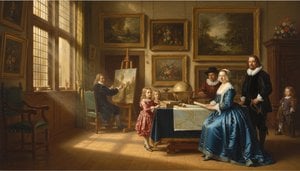
Embark on a journey through the Dutch Golden Age. Discover how masters like Rembrandt and Vermeer used chiaroscuro to manipulate light and shadow, creating timeless depth and spiritual resonance in art history's most captivating masterpieces.


 プレビュー
プレビュー
 プリントを購入
 シェアする
シェアする シェアする
シェアする
 詳細を見る
詳細を見る

 ダウンロード
 似ている作品
 X線調査
X線調査 スライドショー
 詳細を見る
詳細を見る









 ガラスオプションは、110cm未満のサイズでのみご利用いただけます。


