
迅速な制作と多彩な仕上げオプションを備えた、ミュージアムクオリティのジークレーまたはキャンバスプリント。 ( 手描きの絵画を購入 デジタル画像販売へ切り替え)





























作品のオリジナル比率に合わせた、当店の規定サイズからお選びください。

特定のフレームやスペースに合わせて、ご自身でサイズを指定することも可能です。選択されたサイズが元の画像の比率と一致しない場合、作品をトリミングするか、鏡面反射または単色での塗りつぶしによって画像を拡張いたします。制作を開始する前に、ご確認用のデジタルモックアップをお送りいたします。
画面上のプレビューには、実際のトリミングや拡張は反映されませんのでご注意ください。最終的な構図を正確に確認できるのは、モックアップのみとなります。
カスタムサイズも承っておりますが、元の比率を維持するためには、あらかじめ用意されたリストからサイズを選択することをお勧めいたします。

Henrietta Moraes 1
複製画のサイズ
Francis Bacon's *Henrietta Moraes 1*, painted in 1964, is not merely a portrait; it’s an excavation of raw emotion, a visceral response to the anxieties and uncertainties of the post-war era. This arresting image, dominated by searing yellows and oranges, immediately confronts the viewer with a figure – a woman obscured by a grotesque mask – whose expression defies easy interpretation. It's a work that demands attention, unsettling yet undeniably captivating, reflecting Bacon’s profound exploration of human isolation and psychological distress.
Bacon’s artistic trajectory was forged in the crucible of 20th-century modernity. Born in Dublin in 1909, he rejected academic training, choosing instead to develop a fiercely independent style rooted in expressionism. Influenced by artists like Van Gogh and Picasso, Bacon sought to depict not external reality but the internal landscape of human experience – often distorted, fragmented, and profoundly unsettling. *Henrietta Moraes 1* exemplifies this approach perfectly. The figure’s elongated form, the contorted features, and the jarring color palette all contribute to a sense of unease and psychological tension. This wasn't about capturing a likeness; it was about conveying an emotional state – one of vulnerability, perhaps even terror.
Bacon’s technique is characterized by its almost violent application of paint. He employed a layering process, building up the image through multiple applications of oil paint, often scraping it back to reveal underlying layers – a deliberate act that adds to the work's sense of instability and decay. The brushstrokes are loose and gestural, contributing to the painting’s raw energy. The use of thick impasto creates a tactile surface, inviting the viewer to almost physically engage with the image. This technique wasn't about meticulous detail; it was about capturing the fleeting nature of emotion and memory.
*Henrietta Moraes 1* is one of several portraits Bacon painted of Henrietta Moraes, a pub singer he met in London’s Soho district. However, these portraits transcend simple representation. The mask itself – a recurring motif in Bacon's work – symbolizes concealment, anonymity, and the loss of identity. It suggests a barrier between the subject and the viewer, intensifying the sense of isolation. The vibrant colors, often associated with danger or heightened emotion, further amplify this effect. The painting speaks to themes of alienation, loneliness, and the struggle for self-definition—themes that resonated deeply within Bacon’s own life and the broader cultural anxieties of his time.


1909 - 1992 , アイルランド

Master the nuances of Giclée printing with our expert guide. Discover how pigment-based inks and museum-grade substrates create fade-resistant, high-fidelity art reproductions designed for discerning collectors seeking unparalleled quality and longevity.
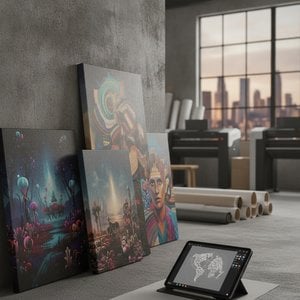
あなたのクリエイティビティを、世界中のファンへ届ける新しい形。在庫リスクなしで始められるオンデマンド・アートプリント販売をご紹介します。美術館品質のジークレー印刷技術を用い、デジタルな感性を一生のレガシーとなるファインアートへと昇華。WahooArtが提案する、洗練されたアーティスト・ビジネスの第一歩をここから。


 プレビュー
プレビュー
 シェアする
シェアする シェアする
シェアする
 詳細を見る
詳細を見る ガイド
ガイド

 ダウンロード
 似ている作品
 X線調査
X線調査 スライドショー
 統計情報
統計情報

 詳細を見る
詳細を見る









 ガラスオプションは、110cm未満のサイズでのみご利用いただけます。


