当社のアーティストが、お客様のご希望のサイズと額縁に合わせて、キャンバスに手描きで制作する油彩画です。 ( プリント版に切り替え デジタル画像販売へ切り替え)





























作品のオリジナル比率に合わせた、当店の規定サイズからお選びください。

フレームや壁のスペースに合わせて、ご希望の幅と高さを入力してください。本作品は手描きのため、異なる比率のサイズをご希望の場合、絵画の周囲を少し広げて描くか、あるいは端を少しカットして調整することが可能です。お客様のご要望に合わせます。制作を開始する前に、仕上がりを確認するためのデジタルモックアップをお送りいたします。このページに表示されている画像は完成品の実物ではなく、あくまでモックアップによるイメージです。
untitled (7433)
複製画サイズ一覧
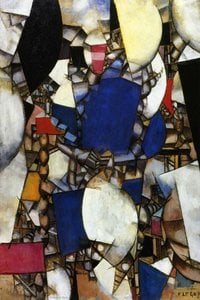
In the vibrant tapestry of twentieth-century avant-garde art, few threads are as bold and structurally sound as those woven by Fernand Léger. His untitled (743 3) composition serves as a breathtaking window into an abstracted reimagining of urban existence, where the chaotic pulse of the city is distilled into a rhythmic dance of geometry. Rather than offering a literal window onto a streetscape, Léger invites us into a dreamlike realm where buildings and organic forms merge into a singular, stylized vision. The canvas is dominated by striking, bold shapes that suggest the soaring heights of architecture and the skeletal grace of abstracted trees, all arranged in a deliberate asymmetry that compels the viewer’s eye to wander across the surface, discovering new intersections of color and form with every glance.
The emotional resonance of this piece lies in its unique ability to balance tension with harmony. There is a subtle, almost haunting sense of detachment within the flattened perspective; by minimizing depth, Léger distances the scene from the grit of everyday reality, elevating the cityscape to a plane of pure aesthetic contemplation. For the collector or interior designer, this work offers a sophisticated emotional anchor—a piece that conveys the controlled chaos of modern life while maintaining an air of serene, structured elegance. It is a visual symphony of modernity, capturing that fleeting moment where the industrial and the organic exist in a state of perfect, geometric equilibrium.
To understand this masterpiece, one must delve into Léger’s revolutionary "Tubism," a distinctive evolution of Cubism that replaced the fragmented planes of his contemporaries with cylindrical, tubular forms. This technique breathes a muscular, mechanical energy into the work, celebrating the strength and dynamism of the industrial age. The application of color is remarkably purposeful; using what appears to be the flat, decisive strokes of gouache or acrylic, Léger employs a palette that is both vibrant and carefully curated. There is no room for the ambiguity of soft brushwork here; instead, every edge is sharply defined, creating a sense of order and architectural permanence that mirrors the very structures it depicts.
This stylistic choice reflects Léger’s profound fascination with the aesthetics of progress. As a pioneer who found beauty in the metallic sheen and rhythmic precision of machinery, he utilized clean lines and streamlined patterns that whisper of the Art Deco movement. The artwork does not merely represent a city; it engineers an experience of one. For those seeking to infuse a contemporary space with intellectual depth and historical significance, this reproduction offers more than just decoration. It provides a profound connection to a period of radical transformation, bringing the high-voltage hum of the machine age into the quiet sanctuary of the modern home.
Beyond its striking visual impact, untitled (7433) stands as a testament to Léger’s enduring legacy as a bridge between the abstract experiments of the early 1900s and the populist energy of later movements like Pop Art. His ability to translate the complex, often alienating experience of urban industrialization into an accessible, figurative aesthetic is nothing short of masterful. The work avoids the coldness of pure abstraction by retaining a sense of recognizable life, even if that life is reimagined through a lens of geometric precision.
Integrating such a piece into a curated collection or a high-end interior design project allows for a dialogue between history and modernity. The verticality of the composition lends itself to creating a sense of height and grandeur in a room, while the bold, primary-adjacent tones can serve as a focal point that energizes neutral palettes. Owning a reproduction of this caliber is an invitation to inhabit Léger’s world—a world where every cylinder, every stripe, and every shape vibrates with the eternal heartbeat of human progress and the unyielding beauty of form.
フェルナンド・レジェ作「untitled (7433)」の主色(メインカラー)はClay (#d36646)です。
フェルナンド・レジェは、「untitled (7433)」においてGouacheの技法を用いています。この技法が、原画の素材としての性質を決定づけています。
「untitled (7433)」の作者であるフェルナンド・レジェには、他にFernand Léger (フルネーム), ジョセフ・フェルナン・アンリ・レジェ (Joseph Fernand Henri Léger, フルネーム)といった名称でも記録されています。


1881 - 1955 , フランス

Explore the profound spiritual depth of geometric abstraction. From Malevich's Suprematism to modern masters, our expert guide reveals how pure form and color command presence in fine art collections.

Explore the profound evolution of Cubist still life, from Cézanne's structural foundations to the fragmented brilliance of Braque and Léger. Discover how geometric abstraction redefined reality through a sophisticated lens of form, color, and modern artistic mastery.

Explore the vibrant world of Fernand Léger. Discover how his 'Tubism' and Machine Age aesthetics redefined modern art, offering profound inspiration for discerning collectors seeking geometric beauty and industrial dynamism.

 設置イメージを確認
 送る
送る シェア
シェア
 詳細情報
詳細情報 ガイドを表示

 画像をダウンロード
 似ている作品
 X線調査
X線調査 スライドショー
 統計情報
統計情報

 続きを読む
続きを読む









 ガラスオプションは、110cm未満のサイズでのみご利用いただけます。