Acrylic On CanvasWallArtCubist
 1920Modern
 65.0 x 92.0 cm
当社のアーティストが、お客様のご希望のサイズと額縁に合わせて、キャンバスに手描きで制作する油彩画です。 ( プリント版に切り替え デジタル画像販売へ切り替え)





























作品のオリジナル比率に合わせた、当店の規定サイズからお選びください。

フレームや壁のスペースに合わせて、ご希望の幅と高さを入力してください。本作品は手描きのため、異なる比率のサイズをご希望の場合、絵画の周囲を少し広げて描くか、あるいは端を少しカットして調整することが可能です。お客様のご要望に合わせます。制作を開始する前に、仕上がりを確認するためのデジタルモックアップをお送りいたします。このページに表示されている画像は完成品の実物ではなく、あくまでモックアップによるイメージです。
The Builders
複製画サイズ一覧
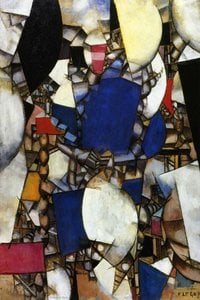
Fernand Léger’s “The Builders,” completed in 1920, stands as a cornerstone of Cubist aesthetics and embodies the fervent optimism surrounding technological advancement during the tumultuous years of World War I. More than just a depiction of laborers engaged in manual labor—though undeniably present—the painting transcends mere observation to become an impassioned manifesto for Léger’s belief that art could actively engage with the transformative forces reshaping human existence.
Born Joseph Fernand Henri Léger in Argentan, Normandy, 1881, Léger’s artistic trajectory began with a fascination for architecture but swiftly pivoted toward painting after relocating to Paris around 1900. Unlike many of his contemporaries who sought refuge in abstraction as an escape from representational concerns, Léger deliberately confronted the burgeoning machine age head-on. He wasn't interested in simply mirroring reality; he aimed to distill its essence—its geometric precision and rhythmic dynamism—into a new visual language.
Léger’s stylistic breakthrough arrived with Cubism, spearheaded by Picasso and Braque. Rejecting traditional perspective and illusionistic depth, Cubists shattered objects into interlocking planes, presenting multiple viewpoints simultaneously. Léger brilliantly adapted this technique to portray figures—specifically three workers—whose bodies are rendered as fragmented assemblages of industrial parts: cylinders, spheres, and cubes. This deliberate simplification wasn’t merely stylistic; it served a profound conceptual purpose.
"The Builders" isn't simply illustrating physical activity; it’s conveying an intellectual understanding of how the machine is reshaping human anatomy and environment. Léger famously articulated this concern in 1922, stating that “the contemporary environment is clearly the manufactured and ‘mechanical’ object; this is slowly subjugating the breasts and curves of women, fruit, the soft landscape.” This quote encapsulates Léger's conviction that art should actively engage with the anxieties and aspirations inherent in modernity.
Beyond its formal innovation, “The Builders” resonates with symbolic significance. The tennis rackets held by the figures represent leisure and recreation—a deliberate contrast to the grueling realities of wartime labor. However, Léger’s meticulous attention to detail—the carefully positioned sports balls, the clock on the wall—suggests a broader commentary on time and progress. These elements underscore Léger's belief that art could capture not only the present moment but also its trajectory toward an uncertain future.
Fernand Léger’s “The Builders” remains a testament to his unwavering artistic conviction—a bold declaration that art could embrace complexity while simultaneously distilling it into powerful geometric forms. It foreshadowed the stylistic developments of Pop Art and cemented Léger's place as one of the most influential artists of the 20th century, continuing to inspire collectors and interior designers alike with its striking visual language and enduring message about humanity’s relationship with technology.
「The Builders」は、フェルナンド・レジェの他の作品と同様に、Cubist様式と、描き続けられてきたテーマであるcubist vision, industrial spirit, sport celebration, geometric abstraction, modern aestheticを共有しています。
フェルナンド・レジェ作「The Builders」の制作年代はModernです。この分類により、美術史における本作の位置付けが明確になります。
フェルナンド・レジェ作「The Builders」の記録されている人気度はIconicです。

1881 - 1955 , フランス

Explore the vibrant world of Fernand Léger. Discover how his 'Tubism' and Machine Age aesthetics redefined modern art, offering profound inspiration for discerning collectors seeking geometric beauty and industrial dynamism.

Explore the profound intersection of industry and artistry. Discover museum-quality reproductions of Machine Age masterpieces by Léger and Rivera, curated for elite collectors seeking to infuse luxury interiors with the powerful, geometric soul of industrial progress.

 設置イメージを確認
 送る
送る シェア
シェア
 詳細情報
詳細情報 ガイドを表示

 画像をダウンロード
 似ている作品
 X線調査
X線調査 スライドショー
 統計情報
統計情報 続きを読む
続きを読む









 ガラスオプションは、110cm未満のサイズでのみご利用いただけます。