スピーディーな制作と多彩な仕上げオプションが魅力の、ミュージアムクオリティなジークレー・キャンバスプリント。 ( 手描き複製画を注文する デジタル画像販売へ切り替え)





























作品のオリジナル比率に合わせた、当店の規定サイズからお選びください。

額縁や壁のスペースに合わせて、ご希望の幅と高さを入力してください。プリントはカットすることは可能ですが、元の画像より大きくすることはできないため、異なる比率のサイズを選択された場合は、画像の一部が欠けることになります。印刷を開始する前に、内容を確認していただくためのデジタルモックアップをお送りいたします。このページに表示されている画像は、実際のカット後の状態を示すものではありません。実際の仕上がりはモックアップにてご確認ください。
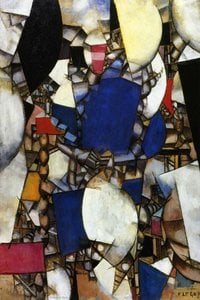
Study for the card game
複製画サイズ一覧
In the quiet tension of Fernand Léger’s 1919 masterpiece, Study for the Card Game, one finds a profound paradox that defines the very essence of early twentieth-century modernism. The canvas presents an arresting stillness, yet beneath its surface, there is a rhythmic, almost mechanical vitality that refuses to be ignored. At first glance, the composition appears deceptively simple, presenting three figures—a man and two women—standing in a shared moment against a muted backdrop of ochre and grey. However, to look closer is to witness a revolution of form. Léger does not merely depict people; he deconstructs them into an intricate orchestration of interlocking cubes, cylinders, and planes. This is the birth of a visual language where the human silhouette begins to merge with the structural precision of the machine age.
The technique employed in this study reveals Léger’s obsessive dedication to volume and light. Utilizing a meticulous process he termed multiplication, the artist layered thin washes of color to establish a foundational tonal structure before applying heavy, opaque pigments. This method allowed him to build up forms with a sculptural weight, capturing the internal volume of each figure without relying on traditional, soft-focus shading. Instead, Léger embraced bold contrasts and sharp outlines, creating a sense of depth through geometric intersection rather than atmospheric perspective. For the discerning collector or interior designer, this technique offers a striking visual texture that commands attention, providing a sophisticated focal point that feels both structurally grounded and vibrantly alive.
To understand the emotional resonance of Study for the Card Game, one must look to the era from which it emerged. Painted in the immediate aftermath of World War I, the work is steeped in the burgeoning anxieties and technological triumphs of a changing Europe. As industrialization accelerated, Léger found inspiration in the rhythmic, metallic hum of the modern city. The card game itself serves as a poignant symbol; much like the deterministic forces of the machine age, the game suggests a world governed by patterns, chance, and structural logic. There is a certain muscular energy in his use of primary colors and bold shapes that mirrors the strength and resilience of a society rebuilding itself through innovation.
For those seeking to infuse a contemporary space with historical depth, this piece offers an unparalleled opportunity. It bridges the gap between the organic human experience and the disciplined beauty of Constructivism. The painting does not merely decorate a wall; it invites a dialogue about how we perceive reality in an increasingly mechanized world. Whether placed in a minimalist gallery setting or as a bold statement in a curated residential collection, Léger’s work brings a sense of intellectual rigor and aesthetic dynamism. It is an invitation to embrace the beauty of the essential form—a timeless tribute to the era when art first learned to speak the language of the future.
Elegantな雰囲気を持つ「Study for the card game」は、Living Roomに飾るのがおすすめです。
フェルナンド・レジェ作「Study for the card game」には、Cubismの潮流と近代美術の時代が融合しています。
フェルナンド・レジェ作「Study for the card game」に関連する芸術運動はCubismです。この分類により、本作は関連する他の芸術家や作品群の中に位置づけられます。

1881 - 1955 , フランス

Explore the profound spiritual depth of geometric abstraction. From Malevich's Suprematism to modern masters, our expert guide reveals how pure form and color command presence in fine art collections.

Explore the vibrant world of Fernand Léger. Discover how his 'Tubism' and Machine Age aesthetics redefined modern art, offering profound inspiration for discerning collectors seeking geometric beauty and industrial dynamism.
 設置イメージを表示
 シェアする
シェアする シェアする
シェアする
 詳細を見る
詳細を見る ガイドを表示

 ダウンロード
 似ている作品
 X線調査
X線調査 スライドショーを表示
 Q&A
Q&A
 統計情報
統計情報

 詳細を表示
詳細を表示









 ガラスオプションは、110cm未満のサイズでのみご利用いただけます。