スピーディーな制作と多彩な仕上げオプションが魅力の、ミュージアムクオリティなジークレー・キャンバスプリント。 ( 手描きの複製画を注文する デジタル画像販売へ切り替え)





























作品のオリジナル比率に合わせた、当店の規定サイズからお選びください。

額縁や壁のスペースに合わせて、ご希望の幅と高さを入力してください。プリントはカットすることは可能ですが、元の画像より大きくすることはできないため、異なる比率のサイズを選択された場合は、画像の一部が欠けることになります。印刷を開始する前に、内容を確認していただくためのデジタルモックアップをお送りいたします。このページに表示されている画像は、実際のカット後の状態を示すものではありません。実際の仕上がりはモックアップにてご確認ください。
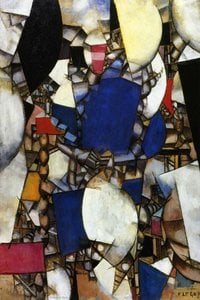
Composition of the medallion (final)
複製画サイズ一覧
In the vibrant landscape of early twentieth-century modernism, few works capture the rhythmic pulse of progress quite like Fernand Léger’s “Composition of the Medallion (final).” This striking masterpiece serves as a window into a world where the organic human form meets the precision of the machine age. At first glance, the viewer is met with a fragmented yet deeply compelling depiction of a female figure, abstracted into a series of simplified planes and sweeping curves. Rather than a traditional portrait, Léger presents us with an icon—a mask-like presence that feels both ancient and startlingly futuristic. The central subject is enveloped by a dynamic arrangement of bold, curving lines and geometric shards that seem to vibrate with an inherent energy, pulling the eye into a continuous dance of movement across the canvas.
The aesthetic language of this piece is a profound expression of what many scholars call Tubism, Léger’s unique evolution of Cubism. While he retains the Cubist fascination with deconstructing reality into geometric components, he rejects the somber, monochromatic palettes of his predecessors. Instead, he embraces a celebratory use of color and form. The composition utilizes thick, cylindrical shapes and flat applications of pigment that emphasize the two-dimensional nature of the work, creating a graphic intensity that is as much about structural balance as it is about visual impact. There is a dreamlike, almost Surrealist quality to the arrangement; the way the limbs and features are rearranged suggests a subconscious landscape where the boundaries between the biological and the mechanical begin to blur.
To understand this artwork is to understand the era in which it was conceived. Fernand Léger, born amidst the pastoral landscapes of Normandy, became one of the most vital voices of the industrial revolution's impact on the human psyche. As cities expanded and machinery became the new heartbeat of civilization, Léger sought to integrate this newfound dynamism into his visual vocabulary. In “Composition of the Medallion (final),” we see the artist’s mastery in translating the strength and rigidity of steel and pistons into the soft contours of the human silhouette. The technique—suggestive of gouache or acrylic on paper—relies on strong, definitive outlines and a deliberate lack of traditional shading. This flatness prevents the eye from getting lost in illusionistic depth, forcing the collector to confront the raw power of color and shape.
For the discerning art lover or interior designer, this piece offers an unparalleled emotional resonance. It is a work of profound introspection that simultaneously radiates outward with a sense of optimism and strength. The muted, earthy background provides a neutral stage that allows the vibrant, primary-adjacent tones of the figure to pop, making it a versatile centerpiece for a sophisticated modern interior. Whether placed in a minimalist gallery setting or a richly textured living space, the artwork commands attention through its balanced tension. It does not merely decorate a wall; it introduces a conversation about the intersection of humanity and technology, inviting anyone who gazes upon it to find beauty in the fragmented, the bold, and the beautifully engineered.
「Composition of the medallion (final)」は、Cubismのムーブメントにおいて、Tenseな情緒を湛えています。
「Composition of the medallion (final)」は、リネンキャンバスに手描きされた油彩複製画としてご購入いただけます。ご注文は手描き油彩複製画のページから、お好みのサイズをお選びいただけます。
フェルナンド・レジェ作「Composition of the medallion (final)」の明るさはbrilliant、輝度はBright Balanceと記録されています。


1881 - 1955 , フランス

Explore the profound evolution of Cubist still life, from Cézanne's structural foundations to the fragmented brilliance of Braque and Léger. Discover how geometric abstraction redefined reality through a sophisticated lens of form, color, and modern artistic mastery.

Explore the profound evolution of Neo-Abstract art. Discover how bold geometric forms, vibrant chromatic depth, and tactile textures redefine modern expression for the discerning collector seeking sophisticated, high-impact masterpieces for contemporary interiors.

Explore the vibrant world of Fernand Léger. Discover how his 'Tubism' and Machine Age aesthetics redefined modern art, offering profound inspiration for discerning collectors seeking geometric beauty and industrial dynamism.

Explore the profound spiritual depth of geometric abstraction. From Malevich's Suprematism to modern masters, our expert guide reveals how pure form and color command presence in fine art collections.
 設置イメージを確認
 送る
送る シェア
シェア
 詳細情報
詳細情報 ガイドを表示

 画像をダウンロード
 似ている作品
 X線調査
X線調査 スライドショー
 Q&A
Q&A 統計情報
統計情報

 続きを読む
続きを読む









 ガラスオプションは、110cm未満のサイズでのみご利用いただけます。