

 Oil On CanvasWallArtRococo
 1755
1755 36.0 x 35.0 cm
 ロイヤル・コレクション
スピーディーな制作と多彩な仕上げオプションが魅力の、ミュージアムクオリティなジークレー・キャンバスプリント。 ( 手描きの複製画を注文する デジタル画像販売へ切り替え)





























作品のオリジナル比率に合わせた、当店の規定サイズからお選びください。

額縁や壁のスペースに合わせて、ご希望の幅と高さを入力してください。プリントはカットすることは可能ですが、元の画像より大きくすることはできないため、異なる比率のサイズを選択された場合は、画像の一部が欠けることになります。印刷を開始する前に、内容を確認していただくためのデジタルモックアップをお送りいたします。このページに表示されている画像は、実際のカット後の状態を示すものではありません。実際の仕上がりはモックアップにてご確認ください。
Longcase equation clock
複製画サイズ一覧
The French longcase equation clock presented here is more than a mere timekeeper; it’s a miniature universe, a testament to 18th-century scientific ambition and exquisite craftsmanship. Crafted in 1755 by Ferdinand Berthoud, a name synonymous with precision and innovation in horology, this remarkable piece transcends the functional, becoming a captivating work of art that speaks volumes about the intellectual currents of its time.
Berthoud’s genius lay not just in assembling gears and springs, but in understanding the complex relationship between time and the cosmos. He sought to reconcile the imperfect measurements of local sundials with the steady march of the solar year, creating a clock that displayed both the standard hours and the true, astronomical time – a feat considered revolutionary for its day. This ambition is immediately apparent in the clock’s dual faces: one meticulously marking the familiar twelve-hour cycle, the other presenting a more sophisticated representation of the solar day, complete with indications of leap years and the solstices and equinoxes.
The clock’s case is a masterpiece in itself, a lavish display of marquetry and gilded ornamentation executed by Charles Cressent, a renowned cabinet-maker and sculptor. The intricate inlay work depicts a vibrant scene – cherubs playfully scattering fruit amongst lions’ heads, all set against a backdrop of stylized foliage and floral motifs. This opulent design reflects the prevailing Rococo style, characterized by its exuberance, asymmetry, and playful use of ornamentation. The claw feet, rising gracefully upwards, add to the piece's aristocratic charm.
Beyond the decorative elements, the case’s construction reveals a remarkable level of skill. The shaped upright form is not merely aesthetic; it was designed to maximize space for the intricate movement within. Cressent’s mastery is evident in the seamless integration of the marquetry with the surrounding wood, creating a harmonious and visually stunning whole.
At the heart of this clock lies Berthoud’s groundbreaking equation movement. This ingenious mechanism, meticulously crafted by B.L. Vulliamy in 1821, calculates the true solar time and displays it alongside the standard hours. The complexity is astounding – a network of gears, wheels, and levers working in perfect synchronicity to achieve this feat of engineering. The clock’s dial itself is a testament to Berthoud's scientific mind, incorporating astronomical indicators that reveal the positions of the sun and moon at any given time.
It’s important to note that Berthoud’s work extended far beyond this single clock. He was instrumental in developing marine chronometers – essential instruments for navigation at sea – and authored numerous scientific treatises on horology, solidifying his reputation as a leading figure in the field. His contributions were recognized by the Royal Society of London, where he was elected a Fellow in 1764.
The Longcase Equation Clock is more than just an antique; it’s a tangible link to a pivotal moment in scientific history. It embodies the Enlightenment spirit of inquiry, combining artistic beauty with intellectual rigor. Its intricate design, masterful craftsmanship, and revolutionary mechanics make it a truly exceptional piece – a captivating reminder of the ingenuity and artistry that flourished during the 18th century. Reproductions capture some of this magic, offering a way to bring this remarkable clock into any home or collection.
Ferdinand Berthoud作「Longcase equation clock」のプリントは、こちらのファインアートプリントページから直接ご注文いただけます:コットンキャンバスまたはアーカイブ品質のキャンバスペーパーに施されたファインアートプリント
原画のFerdinand Berthoud作「Longcase equation clock」は、サイズ36 x 35 cmのOil On Canvasによる作品です。技法およびサイズは原画の仕様を表しています。
Ferdinand Berthoud作「Longcase equation clock」 の輝度は Gentle Luminance です。輝度とは、色がどれほど光を反射しているかを表す指標です。


1727 - 1807 , Switzerland
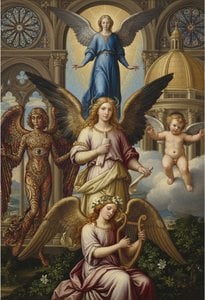
Explore the profound beauty of angelic figures in art history. From Renaissance masterpieces to celestial symbolism, our expert guide offers a sophisticated journey through the divine imagery of the Old Masters for discerning collectors and art enthusiasts.

 設置イメージを確認
 送る
送る シェア
シェア
 詳細情報
詳細情報 ガイドを表示

 画像をダウンロード
 似ている作品
 X線調査
X線調査 スライドショー
 統計情報
統計情報 続きを読む
続きを読む









 ガラスオプションは、110cm未満のサイズでのみご利用いただけます。


