
迅速な制作と多彩な仕上げオプションを備えた、ミュージアムクオリティのジークレーまたはキャンバスプリント。 ( 手描きの絵画を購入 デジタル画像販売へ切り替え)





























作品のオリジナル比率に合わせた、当店の規定サイズからお選びください。

特定のフレームやスペースに合わせて、ご自身でサイズを指定することも可能です。選択されたサイズが元の画像の比率と一致しない場合、作品をトリミングするか、鏡面反射または単色での塗りつぶしによって画像を拡張いたします。制作を開始する前に、ご確認用のデジタルモックアップをお送りいたします。
画面上のプレビューには、実際のトリミングや拡張は反映されませんのでご注意ください。最終的な構図を正確に確認できるのは、モックアップのみとなります。
カスタムサイズも承っておりますが、元の比率を維持するためには、あらかじめ用意されたリストからサイズを選択することをお勧めいたします。

Self-Portrait
複製画のサイズ

Federico Zuccaro stands as a pivotal figure in the Italian Renaissance, specifically within the burgeoning Roman Mannerist movement. He was far more than a mere painter; he was an architect, a historian, and a champion of artistic innovation—a rare combination of talents that cemented his legacy as one of the era's most influential creators. Born around 1539, Zuccaro’s early life was deeply rooted in the traditions of the masters. He received a robust artistic education from his father, Giovanni Zuccaro, a celebrated sculptor and painter. This familial connection instilled within Federico a profound appreciation for classical ideals, establishing him firmly on a path toward mastering the delicate balance between painting, sculpture, and structural design.
His formative years were spent honing his skills in Florence, where he studied under the legendary Andrea Palladio. From Palladio, Zuccaro absorbed a meticulous attention to proportion and architectural harmony, principles that would later define his grander compositions. He quickly gained recognition for his breathtaking frescoes, particularly those adorning the Palazzo Vecchio, which demonstrated an exceptional ability to convey deep emotion and narrative complexity within a restrained, sophisticated stylistic framework. As his reputation grew, so did his reach, with commissions flowing from wealthy Florentine families and eventually extending into the heart of Rome.
One cannot discuss the brilliance of Federico Zuccaro without acknowledging the profound influence of his brother, Taddeo Zuccaro. Together, the brothers formed an unparalleled creative partnership that pushed the boundaries of Mannerist aesthetics. While Taddeo’s mastery of sculpture provided a structural strength to their shared visions, Federico’s painting prowess brought them to life with ethereal light and movement. Their collaborative spirit yielded masterpieces such as “The Holy Family” in Palazzo Vecchio, a work that serves as a testament to their unified artistic language.
Zuccaro's versatility allowed him to transcend the canvas. As an architect, he undertook ambitious projects throughout Rome and Italy, designing palaces, churches, and villas that reflected his deep understanding of classical space. His architectural achievements were not merely functional but were intended to elevate the very status of the artist. This ambition is perhaps most tangibly felt in Casa Zuccari in Florence, a residence built around 1578. Conceived as an emblem of lineage and creative emancipation, this architectural jewel was inspired by the pioneering spirit of Giorgio Vasari, transforming a private sanctuary into a stage for intellectual and aesthetic triumph.
The true essence of Zuccaro’s work lies in his ability to blend the physical with the divine. In works such as “Angels and Cherubim Among Clouds,” dating from 1566, one can witness a celestial vision painted with sublime transcendence. He masterfully orchestrated gatherings of heavenly beings amidst billowing clouds, creating scenes that were simultaneously grand and intimately peaceful. His technique involved building luminosity through delicate gradations of color and shadow, allowing for a dynamic tension between solid forms and weightless vapor.
Beyond the grandeur of his large-scale frescoes, Zuccaro possessed a remarkable ability to capture quiet, spiritual introspection. His drawings, such as the exquisite “St Mennas,” reveal a master of light and shadow, where figures appear suspended between the earthly realm and the divine. This intellectual rigor and technical versatility allowed him to leave an indelible mark on the history of art, influencing generations of artists across Italy, Spain, France, and England. Through his leadership in founding the Accademia di San Luca, he ensured that the principles of classical beauty and artistic discipline would endure long after his passing in 1609.

1539 - 1609
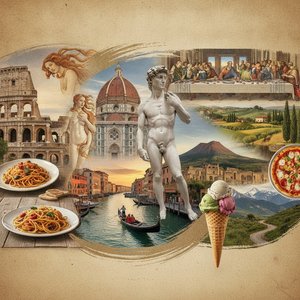
Embark on a visual journey through Italy's soul. From Renaissance masters to Impressionist landscapes, explore 10 iconic artworks that define Italian beauty. Find inspiration for your decor with museum-quality art reproductions. Discover all masterpieces on WahooArt.com.


 プレビュー
プレビュー
 シェアする
シェアする シェアする
シェアする
 詳細を見る
詳細を見る

 ダウンロード
 似ている作品
 X線調査
X線調査 スライドショー
 統計情報
統計情報


 詳細を見る
詳細を見る









 ガラスオプションは、110cm未満のサイズでのみご利用いただけます。


